Feeds:
Posts
Comments

Posts Tagged ‘musicians’

For the last couple of years, I’ve had a serious case of GAS – not that I pulled the trigger and bought a bunch of stuff during that time – I did get a couple of pedals here and there to slake my appetite, but no major purchases until recently. Now I can say I’m gassed out – at least for now. If you’ve followed my blog for any amount of time, you’ll know what I’ve purchased, but I’ll recap the major purchases I’ve made in the last couple of months.

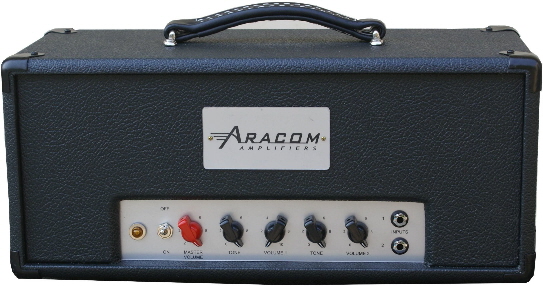
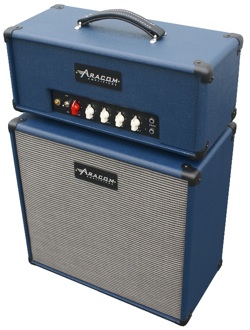
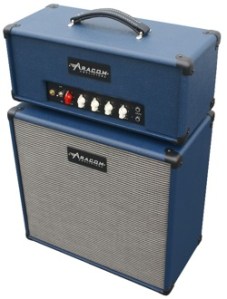
Aracom VRX22 Head with a custom Aracom 1 X 12 cabinet with a Jensen P12N

What an amp! I’ve shared with Jeff Aragaki, founder and designer of Aracom Amps, that the VRX22 is the perfect amp – at least to me. It’s a low power amp that packs a HUGE punch; both in tone and volume. It’s something I can use either in my home studio, or gigging. No matter what volume level I’m playing at, the VRX22 simply sounds awesome, never getting flabby in the low-end, and sporting what I consider to be the best Master Volume in the business.

For more information, check out the Aracom Amps web site.

Prestige Guitars Heritage Elite

The more I play this guitar, the more I fall in love with it. When I first got the guitar to evaluate it, I felt that all the adornments were a bit over the top. I’m a fairly uncomplicated guy, and I appreciate beauty in simplicity. But as time wore on, and I got to know this beauty queen better, the more she grew on me. So I decided to keep the guitar. Her new name is “Sugar” because amazingly enough, not only does she sound and play sweet, she actually smells like bubbling brown sugar! Could be because of the maple, but when I opened up the case for the first time, I was overtaken by the sweet smell of this guitar! So that’s how she got her name. She’s an incredibly expressive guitar, capable of producing gorgeous, ringing cleans to heavy grit. Brightly voiced, her tone just cuts through a mix like butter. I am really enjoying this guitar! Here’s a clip of both the VRX22 and the Heritage Elite:

For more information, go to the Prestige Guitars web site.

Saint Guitars Goldtop Messenger

In answer to my wife’s latest question, “Honey, how many guitars do you need?” I use the standard answer, “Just one more…” This was the exchange we had when I told her I was having Adam Hernandez, a close friend and founder of Saint Guitar Company, build me a guitar. It’s a Goldtop with a twist: Instead of the classic single cut body, I’m having the goldtop done on a double-cut. The body back is solid walnut with a maple top, and rock maple neck topped with an ebony fretboard. I wanted to go for a totally non-standard mix of woods that would produce a very bright tone. The bright tone, combined with the super sustain of Saint guitars in general, promises to be one sweet sounding tone machine. Of course, time will only tell, but I have high hopes for this guitar!

This isn’t even mentioning the smaller things I’ve purchased, but at least for now, I’m GASSED out – I’m also broke – again. 🙂

Read Full Post »

Roland Cube 80x

This is actually kind of exciting news: Roland has just released its most powerful Cube amp, the Cube 80x. Sporting 80 Watts of power through a 12″ speaker, this amp is poised to pack a serious punch. The Cube 60 has been quite successful since its inception a few years ago. Hell! Even I have a Cube 60 and I love it! The Cube 80x while being more powerful, also has some new features that are sure to turn heads (taken from the Roland web site):

* Powerful 80-watt output into a high performance 12″ speaker
* 10 COSM® amp models including new DLX Combo model
* Two channels: Clean and Lead plus new SOLO memory function
* New Spring Reverb modeling for vintage reverb sounds
* Easy to use Looper for unique live performance
* Convenient built in chromatic tuner
* Aux input for connecting MP-3 players or other audio sources

The Cube series amps have been known for their versatility. They sound great a pretty much any volume level, and they have enough features packed into them to make it easy to just pack the amp, a guitar and go. I have a couple of friends who use Cubes for club gigs!

There are a few of standout features that really pique my interest: 1. The ability to hook up an MP3 player to the amp to practice with; 2) The looper function, and finally; 3) The built-in chromatic tuner. This amp is made for gigging, and with the line out, you can go right into a board – which I’ve done many times with my Cube 60.

If you’re looking for a great, versatile amp, you can’t go wrong with a Cube. Just pick the one that suits the volume level you need (or the features you want), and you’re good to go!

For more information, visit the Roland Web Site!

Read Full Post »

5 Tone Bones - Gear has stellar performance, value, and quality. This is definitely top of the class, best of breed, and it's a no-brainer to add this to your gear lineup!

Aracom Amps VRX18 18 Watt Head

Aracom Amps VRX18 18 Watt Head

Aracom Amps VRX18 Watt Head

Summary: Based on the original “RoxBox” (no longer available), the VRX18 sports an improved master volume inherited from the VRX22, and a reworked, smoother overdrive profile.

Pros: As dynamic and expressive as its 22 Watt sibling, the VRX22, but oozing that bright, chimey EL84 goodness. When driven, produces a nice, tight overdrive.

Cons: None.

Price: $895 direct

Specs:

– (2) EL84 Power Tubes
– (2) 12AX7 & (1) 12AT7 Preamp Tubes
– S.S. Rectifier with “sag” circuit
– Hi/Low B+ voltage switch (18/9 watts)
– On/Off Switch
– Indicator Lamp
– Custom Heavy Duty Aluminum Chassis
– Custom Wound Transformers
– 4, 8, 16 ohm Speaker Jacks
– Custom Handcrafted
Turret Board
– Handwired
– Weight: ~35 lbs

Head Cabinet
Standard Tolex: Black Levant. See options below for other colors.
– Dimensions: 19″w x 8″h x 8.25″d
– Weight: 23 lbs

Also available in 1 X12 and 1 X 10 combos (or Jeff can custom build one to your liking)

Tone Bone Score: 5.0. When I can swing it, I’ll be getting this amp to complete the VRX Series!

Jeff Aragaki, founder and builder of Aracom Amps, always chuckles when I tell him that he’s onto something with his VRX (short for Vintage Rox) series amps. With the VRX22, he seemed to have stumbled onto a sweet spot that produced an amp that has an incredible and beautfully balanced tone that bring out the best tonal aspects of the 6V6 tube. He’s done it yet again with the updated RoxBox 18, now renamed the VRX18, but incorporating many of the same features he built into the VRX22.

I just purchased the VRX22, having fallen in love with the tone that it produces, and I’ve fallen love yet again, but now with the VRX18. I’m like a hopeless romantic that loves two women for their individual virtues, but in this case, the women don’t mind – they can co-exist with each other. Okay, bad analogy… 🙂

I originally reviewed the RoxBox 18 back in December. At the time, I totally dug its tone, but took marks off because of the mildly harsh breakup at lower volumes. There’s nothing harsh about the tone of this amp now – at any volume! It’s a great amp to play, and as expected, it’s pedal friendly, and responds really well to overdrive pedals. Also, I played four guitars through it, and it sounded incredible with all of them!

I won’t go into a lot of detail, since I already covered pretty much all the descriptive information I needed to in the original review, so I’m going to cover some important things I’ve learned about the VRX 18 and the VRX series in general. But first, as opposed to doing this last, here’s a short clip featuring the VRX18 to show you how kick-ass it sounds:

For this clip, I used a Strat with just the middle pickup, plugged directly into the VRX18. I just dig that EL84 grind! I had the Channel 2 volume dimed, and the master volume at halfway in full-power mode. It was very loud, much to the chagrin of my wife. 🙂 But I needed to capture at least some of that EL84 compression.

What’s cool about the EL84 is that it compresses nicely when pushed, but still seems to retain a certain openness in its overdrive. This is unlike something like a KT-66 that compresses so much when pushed you lose volume.

The Best Master Volume in the Business

I don’t say this lightly when I say Jeff has the best master volume in the business. I’ve played many amps. But when Jeff created the VRX22, he did something with the master volume that is pure magic. It has a nice, even volume sweep that seems to act independently of the channel volume. This means you can crank the channel volume to get some serious grind, but control the output via the master, and it won’t suck your tone! I’ve found this to be a real problem with other amps. That master volume is incorporated into the VRX18.

The Best Half-Power Switch in the Business

A lot of manufacturers use a pentode/triode switch to achieve half-power settings in their amps. I’ve played several amps with this feature. But in half power mode with the pentode/triode configuration, I’ve noticed a distinct tonal difference between the two modes in amps configured this way. It’s not that the tone is bad. In fact, many I’ve played around with sound great in half-power mode. But it’s like two different amps.

Jeff Aragaki takes a different approach and instead adjusts the B+ voltage to maintain the usage of all pins in the power tubes. I’m not an electrician, and can’t even begin to explain this technically, so I’ll just say it this way: When you switch to half-power mode in any Aracom Amp, the amp doesn’t change its tonal characteristics. It sounds and plays the same!

The Difference Between Old and New

In addition to the great master volume Jeff incorporated into the VRX18, the first thing I noticed was that it was nowhere near as easy to get this amp to overdrive in channel 2 as it was with the original RoxBox 18. This is not a negative thing at all because as I mentioned in my original review, the overdrive was pretty harsh at lower volume levels. I spoke to Jeff about this, and he said that based upon my original tests and review, he decided to mellow out the extra gain stage in the VRX18 so you could get a nice overdrive tone at any volume level.

You won’t get over-the-top gain with the VRX18. But for that, I have a simple fix-all: Get a great booster pedal like a Creation Audio Labs Mk.4.23 (again, the best booster on the planet), and SLAM the front-end of the amp. 🙂

But all that said, if you’re in a venue where you can dime both master and channel volumes, you will be rewarded with gorgeous harmonics and overtones and luscious feedback!

Overall Impressions

Like I said, this is my next amp… It just rocks the house! And at $895 for the head, you could get both the VRX22 and VRX18 for under the price of a single boutique amp! This isn’t a sales pitch. The value proposition of the VRX series is something that should be seriously considered. You’re not getting a production line amp that’s built overseas. With the VRX series of amps, you’re getting a US-made, handwired amp for under a grand!!!

Admittedly, I was a little skeptical when I first ran across Aracom Amps. But I’m now a believer, and a faithful customer!

Read Full Post »

Pick up one of the major guitar mags, and you might think that to be considered a “good” guitar player nowadays you have to be able to shred it up playing 64th notes up and down the fretboard non-stop. I know, that’s a bit of an exagerration, but the major mags’ focus on shred disenfranchises a very large sector of the guitar-playing population that either can’t play that fast, has no interest in that kind of music, or want to focus on other things rather than speed – like musicality and expressiveness.

Hands-down, Jeff Beck has earned the right to be called a Guitar God. No one sounds like him, and while many people have been able to glean certain Jeff Beck techniques, and can get somewhat close to what he can do with a guitar, duplicating his style of playing is next to impossible. But I’m not here to talk about technique. I’m here to talk about the whole musical package that Jeff Beck delivers in his guitar playing. It’s pure magic. He’s not fast by any stretch of the imagination, but his ability to communicate with his audience through his playing is unrivaled.

Sound like a bunch of hyperbole? Just watch the video below. But don’t just observe what he’s doing with his left hand, which really isn’t all that difficult. Look at what he’s doing with his right hand, manipulating the tremolo bar and volume and tone knobs to achieve different voicings. That’s the magic in the performance of the song! No one does it as well!

Let me be absolutely clear here: The things that Jeff Beck does with his right hand while playing aren’t just parlor tricks to show off. They’re done to ellicit specific responses from his guitar, and make it sing like no one else can. To me, being a good guitar player isn’t just about technique; it’s about getting your message across. As Albert King once said (and I’m paraphrasing Steven Segal here), “The challenge [speaking in reference to the blues, but can be applied to any style of music] is to get your message across in as few notes as possible.” Sometimes that takes a bunch of notes; more often than not though, you can say the same thing with just a few, but express them in a such a way to make your point.

I’m of the school of thought that playing music is having a conversation with your audience. The best conversationalists do it with an economy of language, fully conscious not only of their glossary of terms, but the expression and inflection that goes along with communicating.

Read Full Post »

runningaway

Ever been in one of those situations where you have to face up to something you’d said or done, but avoid it all costs because it gives you this feeling of impending doom? I was recently in a situation like this, and it wasn’t at all comfortable going through the emotional and psychic turmoil leading up to the conversation the ultimately resulted in – nothing. No slap on the wrist, no punishment. Just a good conversation where everyone involved learned from the experience.

Anyway, last night I was noodling on my guitar; my eyes were closed, letting my emotions drive my playing. Then I remembered that situation, and came up with the rhythm track for the song. It’s all instrumental – it’s not something I would ever want to put to words, but I did want to convey the emotions. Give it a listen let me know what you think:

Gear Used:

Rhythm Guitars: Strat and Prestige Heritage Elite
Lead: Prestige Heritage Elite
Amps: Hot Rod Deluxe (Strat); Aracom VRX22 (Heritage)

For the rhythm parts, the Strat/Hot Rod is panned to the left of the mix, and the Heritage/VRX22 (clean channel) is panned to the right. The lead part sits dead center.

I’m particularly pleased with the Hot Rod’s tone. The clean tone with that awesome spring reverb is to die for (though I had the reverb down pretty low on it to give the Strat more presence). I’m also diggin’ the Prestige Heritage Elite; especially after I set it up. In particular, I adjusted the pickup heights to smooth out the treble pickup, and to get less boom from the rhythm pickup. It’s now very balanced; and played through the VRX22, it sounds just awesome. I played the lead part through the drive channel of the amp, and set the volume so that it was just on the edge of breakup, so if I dug in a bit, I’d get just a touch of overdrive. I wanted to create an effect of subdued aggression, and the VRX22 is so dynamic, I can achieve that easily.

Read Full Post »

Over the weekend, and after a few years of owning it, I finally replaced the original speaker on my Hot Rod Deluxe with an Eminence Red Coat “The Governor.” I had already replaced the original tubes and had some other mods done to the amp to smooth out the drive channel, but there was always something missing, and that turned out to be the speaker. What a difference that has made! I feel like my Hot Rod is now no longer a Padawan but a true Jedi. 🙂

The Hot Rod was my very first tube amp, and when I bought it, I just loved the sound, but as time wore on and as I played some really great amps, my love for the amp faded, and while I’d use it for some applications, it just didn’t have a sound that I considered to be first class. With the new speaker, it is now – in my opinion – a first class sounding amp. The cleans are gorgeous and the overdrive tone is nice and open, but well-defined, with no flabby bottom end. I’m in love again! Now with my Aracom VRX22, I’ve got two great amps!

Here’s a clip I put together while playing around this evening that demonstrates how gorgeous the clean tones are:

I used my Strat for the rhythm part – amazingly in the middle pickup, which I’m really starting to love – and did the simple solo with my Prestige Guitars Heritage Elite with both pickups with about 60/40 mix of bridge and neck, respectively. The reverb you hear in the solo is the spring reverb in the Hot Rod. I have to say that Fender does reverb right. 🙂

Read Full Post »

Fender Hot Rod DeluxeAfter having my Fender Hot Rod Deluxe for a few years now, I finally decided to swap the stock speaker for an Eminence Red Coat “The Governor,” which is a moderately-priced ceramic speaker. What’s difference now? The Hot Rod Deluxe is a very mid-rangy amp in the first place, but at higher gain, the tone became a little flabby. In fact, when I knew I was going to play at gig volumes I had to dial down the bass to about 9 or 10 o’clock, and set the mid and high around 3pm to get a more crisp sound. I was able to alleviate a bit of that flabbiness with better tubes than the stock Groove Tubes, but I always suspected that the speaker had a lot to do with the flabby bottom end. I don’t know why I waited to do this simple, simple modification. It literally took 10 minutes to swap it out.

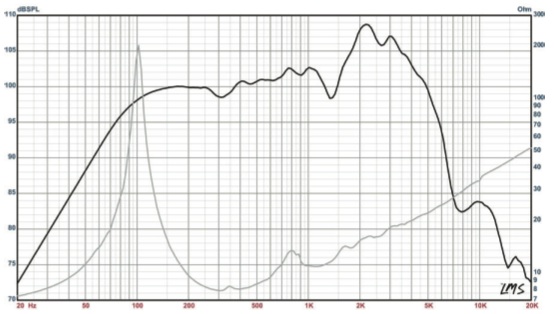
So why the Eminence Governor? Mainly because I wanted a nice mid-range focused speaker that had a smooth bottom end, and slightly sparkly highs. I had also played the Governor in a couple of different amps, and was really impressed with its brighter voicing. Here’s a frequency response chart for the Governor:

The Governor Frequency Response Chart

As you can see from the chart, the bottom end portion of the curve is a nice, smooth line. In the mid-range, the frequency response is fairly complex, then in the highs, you get some nice peaks in the 2-3 kHz range, finished off with some subtle motes above 10 kHz. The tone in the amp reflects this well. The bottom end is there, and very tame, and the mid- and high-freq response creates a gorgeous, and spacious tone. I’ll probably have some clips in the next few days, but here are clips directly off the Eminence site:

Clean

Heavy Distortion

Overdriven

All in all, this has got to be the most significant improvement to my Hot Rod’s tone!

Read Full Post »

Aracom Amps VRX22 - First in the series

Aracom Amps VRX22 - First in the series

You ever play some gear that from the moment you start playing, you feel like you’ve died and gone to tone heaven? In the last few years, and especially in the last couple since I started writing this blog, I’ve literally played hundreds of different types of gear, covering the spectrum of all things guitar, from guitars to effects to amps. I don’t have enough time to write about all the things I’ve played, but to keep my content fresh, and to satisfy my overwhelming curiosity about different types of gear, I’m constantly trying stuff out.

And in all that time, and through all that gear, I’ve only had some gear totally slay me once: That was when I played the very first prototype of the Aracom VRX22. The back story is pretty cool, so I’ll share it with you…

Several months back, Jeff Aragaki contacted me on my blog asking if he could buy ad space. I replied that I didn’t want to commercialize my site, but if he’d be willing to send me an amp to review I’d put his logo on my “The Dawg Digs” area if I really loved his product. Fortunately for both him and me, he only lives about 40 minutes away, so he delivered what was once called the “RoxBox,” an 18 Watt, EL84-based amp. I had this thing about EL84-based amps for awhile, and was really excited to try a non-brand-name amp; not to mention that I was entirely intrigued by the fact that that hand-wired head cost only $895! That evaluation turned into testing and reviewing several of Jeff’s amps over the next few months from heads to combos with different configurations. Talk about feeling lucky to have so much gear to play with!

Jeff and I have become fast friends. We’re contemporaries not only from our obsession with vintage gear (or any kind of gear for that matter), but we’re almost the same age, and are both local boys from the Silicon Valley. Jeff’s a great guy, and someone I really enjoy spending time with; plus he’s super smart, and I like to be around smart people. 🙂

Anyway, a couple of months ago, Jeff called me up and said, “Hey Brendan, I’ve been working on an experiment with the RoxBox, and popped a couple of 6V6’s in the amp to see what it would sound like.”

“Oh?” I replied, “That sounds quite interesting. I dig 6V6’s a lot. They have a sweet, open distortion when they’re saturated.”

“Yeah, they do,” said Jeff, “Anyway, I was wondering if you’d like to test it out.”

I immediately replied, “Need you ask? Bring it on over!”

A couple of days later, Jeff brought the amp over to the messy garage I call my home studio. We plugged it in, I hooked up my Strat, and Jeff switched on the amp. I took one test strum in the clean channel, stopped and asked, “What did you do? This f-in thing sounds incredible! Let me play a few licks…”

Jeff didn’t say anything. He just smiled, and let me play for awhile. After a few minutes he said, “Okay, try out channel 2, so you can hear the overdrive,” at which point he plugged me into the second channel, then cranked the volume.

The amp literally sang with this beautifully smooth overdrive tone, chock full of overtones and harmonics. The tone was on the bright side, similar to the Reason SM25 that I was testing, but was rich and thick, and ballsy. I just closed my eyes and smiled, luxuriating in pure tonal heaven!

When I came out of my trance, I looked at Jeff and said, “Dude, I think you’re onto something really special here. You know I’ve played tons of different amps, but this one’s special. It’s the best-sounding amp I’ve played of yours to date; and ranks very high on my overall list. Are you thinking of putting it into production?”

“Maybe. I wanted to get your feedback. I still have some stuff to do on it, but I’m really liking the tone of this amp,” Jeff replied.

“Yeah… You’ve just piqued my curiosity.”

Fast-forward a week and I get another call from Jeff. “Hey Brendan! I worked out the power handling of the amp. The one you tested wasn’t outputting at the full 22 Watts, so I made some adjustments and now it’s running at full power. To me, it sounds even better. Anyway, I’m going away on a business trip for a couple of weeks, and I’ll leave it with you to test.”

So Jeff dropped it off a couple of days later, and test it I did. I took it to gigs, recorded some clips with it, and fell in love with it even more. Jeff was right, the power handling adjustments he made turned that amp into a pure tone machine.

When Jeff got back from his trip, we met for lunch, so I could give the amp back, and give him feedback. He asked, “So how did you like the amp?”

I replied, “Uh… the word is love. I’ll keep on testing your other amps, but this is the amp I want to buy. Everything about it is perfect. The clean channel has oodles of clean headroom, and the sag you’ve built into the simulator makes it sound like the amp has a reverb. The drive channel is like nothing I’ve played before. Quite simply, Jeff, this is the perfect amp!”

Jeff just chuckled, and said a very understated, “Glad you like it.”

Since then, I’ve purchased the amp – I got the very first in the series! And while I realize that my excitement about this amp is purely subjective, other people who’ve played this amp – WAY, WAY better guitar players than me – have been just as blown away by its tone. The other day, Jeff asked me to meet him over at Gelb Music in Redwood City to show Jordan, the guitar department manager, my VRX22 (Gelb carries Aracom Amps on consignment – for now 🙂 ). I just chuckled when he plugged a guitar into the drive channel, cranked it up, and let it rip. He didn’t play more than 30 seconds before he said, “This amp rocks! It’s real ballsy and has tons of harmonics. Wow!”

Jordan had to help customers on the floor, so he gave the guitar over to another customer named Chris with whom Jeff and I had been chatting while waiting for Jordan. Chris sat down, and started to rip it up! He played with this hybrid picking technique that was just amazing to observe, and he made the VRX22 absolutely sing! I knew it sounded good, but in the hands of a truly gifted player like Chris, it was other-worldly!

Jordan returned a few minutes later to listen to Chris play. Mind you, it was loud. Chris was plugged into a 65 Amps 2 X12 cabinet and had the amp cranked. Jordan turned to me, and with a quizzical look on his face asked, “This is YOUR amp?”

I just laughed because I knew what he was thinking – he was hoping that it was an inventory amp so he could buy it himself. I said, “Yup. You thinking about getting one for yourself?”

Jordan just smiled and nodded his affirmative. We finally had to turn down the amp, and Jeff and I had to go, and as we were leaving, Jordan asked Jeff, “So what’s the turnaround time for when we order?”

Jeff said, “Between two to four weeks.”

“Cool. That’s just about right. Hey! Thanks for bringing the amp over, guys! Man that thing has f$ckin balls…” with a huge grin on his face, “That’s all we ask…” and he laughed.

I laughed with him. Jordan is a real bad-ass player himself, and when he has this type of reaction, I know he thinks it’s special. I told Jeff he better build two: One for the store, and one for Jordan.

Folks, I realize you might think I’m full of it when I say that the VRX22 is the perfect amp. But Jeff is really onto something with this amp. I’d put it head to head against a Dr. Z MAZ or a Buddha any day. I actually played a Dr. MAZ the other day. It’s a great amp. But guess what? The VRX22 is only $895 for the head! That’s almost half of what other hand-wired, boutique amps cost! Yeah, it doesn’t have a tube rectifier – the VRX22 is designed with a solid state rectifier for extra punch and it has a sag circuit to provide the vintage vibe. And in case you’re concerned that a solid-state rectifier means lower quality, I just have one thing to say: So what? Lots of vintage amps such as classic Marshall Plexi’s and many Fender amps use solid-state rectifiers. Besides, it’s the tone that matters, and compared to the MAZ, which is really nice, expressive amp, the VRX22 has a much bigger sound.

Fantastic sound for an unbelievable price? SOLD!

Disclaimer: I want to make it absolutely clear. Jeff doesn’t pay me to do reviews or pay me to give nothing but positive feedback. He calls me up to say he’s got some gear for me to test, and I test it, then write a review. To date, I haven’t received any bad gear from him, so I haven’t given his gear a less than stellar review. You might think this from the rave reviews I’m giving the VRX22, but just to alleviate any concerns about me having an affiliation with Jeff other than being a friend, remember that I clearly stated that I bought the amp. What I’m sharing is my excitement. And showing it to the folks at Gelb? That was purely a favor. I simply had the fortune of being able to play with the prototypes. It is truly a magical amp!

Click here for more information on the VRX22 and other excellent Aracom amps!

Share your slayer experience!

Read Full Post »

Just got home from my weekly gig at the restaurant where I was really able to put the Tuff-Tone Tri-Tip through its paces. I’ve never played with a Tri-Tip shaped pick, let alone gigged with a Tuff-Tone, so it promised to be interesting – especially if I didn’t like the pick – because like a dummy, I forgot to bring a spare! Fortunately, I didn’t need a spare. The Tuff-Tone worked out great!

Admittedly, I was a little nervous, not because of the Tuff-Tone material itself but because it’s a lot thinner than what I’m used to playing. If you’ve been following my blog, you’d know I’ve been using a V-Picks Snake and also a super-thick prototype Red Bear Tortis as of late. The Snake is 4.1 mm thick and the Red Bear is 4 mm. I believe the Tuff-Tones are only 1.75 mm thick. I really didn’t know if I could make a clean adjustment. All my nervousness was washed away within a few bars of the first song I played. The pick felt so natural in my fingers, I just played without thinking. Whew! That was a relief!

So how did it perform? Practically flawlessly. The Tuff-Tones feel a lot more rigid and dense than their Tortis counterparts, but the material seems to weigh much lighter. That perception could be due to having played with thick, weighty picks. But to be perfectly honest, I really loved playing with this Tuff-Tone. As I mentioned above, it felt very natural in my fingers, and all the accuracy that I’ve come to expect from rigid picks was there from the get go.

Dave mentioned that in blind tests there was no difference between the tones of the Tuff-Tones and Tortis picks produce. But I noticed a definite difference. The Tuff-Tone produces a much brighter, jangly tone than the Tortis picks. Tortis picks, on the other hand, produce a smoother, more evenly balanced tone. Neither is better than the other; they’re just different. For me, when I want a brighter tone, I’ll use a Tuff-Tone. But when I want a fatter tone, I’ll use a Tortis.

I played all sorts of tunes tonight, ranging from full-on strum songs to songs that combined strummed chords and single note runs. I could be as expressive as I wanted with this pick, and that’s really the test. Lighten up your grip and let the pick glide, and the tone it produces is marvelously bright and ringy. Dig in and be greeted with a nice snappy tone. Want to do some quick alternate picking runs? No sweat!

This is a great pick, people, and a pick I highly recommend trying out and adding to your arsenal! I know that kind of goes against the common thought of using one pick for everything, but I’ve come to realize that using different picks will produce different kinds of tones, and different “moods.” It’s kind of hard to explain, but I’m now a multi-pick player.

Read Full Post »

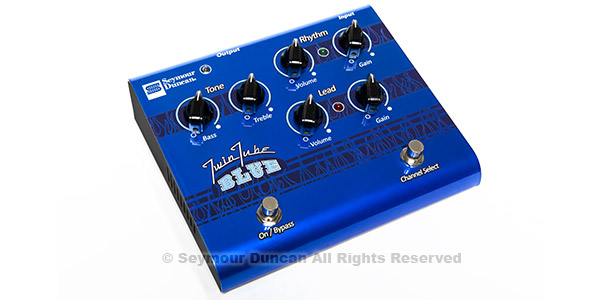
Seymour Duncan Twin Tube Blue Image c/o Seymour Duncan

Seymour Duncan Twin Tube Blue Image c/o Seymour Duncan

Seymour Duncan is known for its outstanding pickups, and I’ve known they’ve made pedals for awhile, but haven’t really paid attention until they came out with the Twin Tube Blue (SFX-11). This is a very cool little preamp/overdrive box that sits – gain-wise – right in the middle between their Twin Tube Classic and their Twin Tube Mayhem.

Run by two 6111 mil-spec, USA Philips-Sylvania tubes, the Blue can get you some nice, pre-amp snap, to sweet, sustained gain. Here’s the description from the Seymour Duncan site:

Too often, inexpensive tube gear runs in “starved plate mode,” where the tubes function like clipping diodes and do not actually amplify. The Twin Tube Blue’s high-plate voltage and 100% vacuum tube signal path allows the tubes to operate at their fullest potential and provide maximum dynamic range. This means you get the most gain and all the smooth tone you expect from a high-quality tube preamp. Two channels provide versatility. Like all Seymour Duncan stompboxes, the Twin Tube Blue is true bypass and features a fully encapsulated toroidal transformer for quiet operation. Heavy duty steel chassis.

Sounds impressive, huh? Here’s a video:

At about $229 street, it’s a bit on the pricey side, but it sure sounds good. Check it out at Seymour Duncan!

Read Full Post »

« Newer Posts - Older Posts »