Feeds:
Posts
Comments

Archive for the ‘aracom amps’ Category

5 Tone Bones - Gear has stellar performance, value, and quality. This is definitely top of the class, best of breed, and it's a no-brainer to add this to your gear lineup!

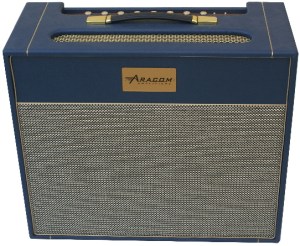
Aracom Amps VRX22 22 Watt Combo Amp
Aracom Amps VRX22 22 Watt Combo Amp

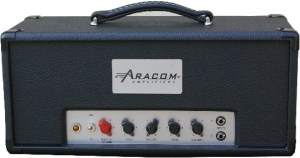
Aracom Amps VRX22 22 Watt Head

Aracom Amps VRX22 22 Watt Head

Aracom Amplifiers Vintage Rox 22 Watt Amplifier (a.k.a. VRX22)

Summary: This brand-new 22 watter is the newest in the Aracom low-wattage amp series now called the Vintage Rox or VRX series, which includes the original RoxBox 18 (now called the VRX18). Loaded with a pair of 6V6 power tubes, this amp oozes vintage American clean and dirty tone ala Stevie Ray Vaughn.

Pros: More clean headroom in Channel 1 as compared to its EL84-based 18 Watt sibling. And despite its lower wattage rating, this amp is capable of getting LOUD! Plus the VRX series sports what I think are the best power switching and master volume in the business!

Cons: None.

Price: $895 Head / $995-$1095 for Combo (dep. on speaker)

Specs:

– (2) 6V6 Power Tubes
– (3) 12AX7 Preamp Tubes
– S.S. Rectifier with “sag” circuit
– Hi/Low B+ voltage switch (22/10 watts)
– On/Off Switch
– Indicator Lamp
– Custom Heavy Duty Aluminum Chassis
– Custom Wound Transformers
– 4, 8, 16 ohm Speaker Jacks
– Custom Handcrafted
Turret Board
– HandwiredTone Bone Rating: 5.0 – Jeff Aragaki has hit the ball out of the park with this amp! I loved the original RoxBox 18, and gave it a 4.75, but with this amp, Jeff “fixed” the harshness of the breakup at lower volumes. To me, it’s the perfect amp!

Let’s roll back the clock a couple of months. I get a call from Jeff Aragaki. The conversation went something like this…

“Hey Brendan! How’s it going?” asks Jeff.

“Not bad. Howzit with you?” I ask.

“It’s going good. Listen, I’m experimenting with a new tube compliment for the RoxBox and put a pair of 6V6’s in it to see how it sounds,” says Jeff.”

“Oh REALLY? Kinda tryin’ to get an American voicing, are ya…”

“Yeah, plus the output rating should be bit higher at around 22-25 Watts,” Jeff states.

“Okay,” I say, “Now you’ve got my attention. When can I try it out?” I ask.

<chuckle> “Well, I called to see if could bring it over to you for you try out and give me some feedback,” replies Jeff.

“Brand new amp? Experiment? Need you ask to see if I’d like to try it out? I’m free Saturday morning!” I exclaimed.

Fast-forward to the following Saturday, and Jeff lets me try the amp for a couple of days before he has to take it back, and I immediately start taking it through its paces. I even gig with it. I’d instantly fallen in love with it! I call Jeff and tell him that I think he’s onto something with this amp. He’s glad for the feedback, then a couple of days later, he picks it up to finish it out.

A few days later, he calls and tells me that he had to tweak the circuits a bit to handle the increased power. Uh-oh. So I asked, “Did it change the tone?”

“Hahaha… not at all. In fact it was actually running at way below 22 Watts. Since I reworked the circuitry, it has tons of power now, and it sounds even better. I even adjusted Channel 1 so you get even more clean headroom, and Channel 2 breaks up real nicely now. In any case, I’m going on a business trip to Indonesia and you can play with the amp for a couple of weeks while I’m gone.”

And play I did! That was one of the most exhausting two weeks of my life because I was up till late (like 2-3 am) playing that amp. I just couldn’t get enough of it, especially playing “Goldie” (a Saint Guitar Goldtop I recently reviewed) through the amp. And in all that time, I wanted to write a review of it, but I had agreed with Jeff to not talk about it (though I hinted a lot) until he got back from Indonesia and turned it into a production amp.

Once he returned from Indonesia a couple of weeks ago, he came over to pick the amp up. He asks me the usual questions about how I liked it, and I just said, “Jeff, this is a PERFECT amp! I can’t say anything bad about at all. Channel 1 is gorgeous and works great with pedals. Channel 2 just rocks the house! It’s the channel I used the most, and it’s also real pedal-friendly. And for once in my life, I’m at a total loss for words; that’s how much this amp affects me to the core.”

Jeff just laughed, and said, “Well, I’ve got a couple of other amps for you to try out…”

I cut him off, and told him that it’s fine if he wanted me to review them, but as far as what amp I’d choose to go with for my personal amp, the VRX22 was it. Search over. He laughed again, and said he’d get started on it….

Okay… fast forward to yesterday…

Jeff called me up to give me a status on my amp, and that he talked to someone this past week who is also getting one, choosing the VRX22 over a well-known boutique manufacturer. So it was definitely going into production, and he was almost done with the web page and announcement. Of course, I couldn’t keep my mouth shut and immediately wrote an announcement, despite his recommendation to wait until today). 🙂 I just promised I wouldn’t say too much, which I didn’t because I wanted to write a review.

What’s in a name…

To create alignment in the series, Jeff has renamed the “RoxBox” line to the “Vintage Rox” or VRX series. If you recall, the original RoxBox 18 sported a pair of EL84 power tubes and is now called the VRX18; and the only difference between the two amps is that the VRX22 employs 6V6’s and circuits that can deal with the increased power. In essence, with the VRX series, Jeff is providing both British (VRX 18) and an American (VRX 22) voicing options. The EL84-based VRX18 breaks up very similarly to a VOX AC15, with a lot of high-freq shimmer. The VRX22, on the other hand, breaks up like a classic Tweed. Frankly, once I have the bucks, playing both together will sound absolutely awesome!!! And priced at $895 each for the head models, that’s A LOT cheaper than a single hand-wired amp from most boutique manufacturers.

Hand-wired goodness at an affordable price

I can’t stress this enough: The thing that originally blew me away with Aracom Amps was the price of the RoxBox. I couldn’t believe Jeff could sell a hand-wired amp for less than a grand – even with a solid-state rectifier! As I’ve gotten to know Jeff, and I’ve come to understand one thing about him: He’s an incredibly shrewd businessman. As he shared with me this morning, “It’s a matter of philosophy. Some guys make boutique gear, give their stuff a nice paint job, then charge a bunch of money for their gear. Then there are other guys who just want to make a few bucks off their gear, but sell it at a lower price so more people will play it.”

The net result is that we consumers reap the rewards of that philosophy, and probably one of the reasons why Jeff’s amps are starting to gain a lot of traction in the industry. And artists have started to find out about Jeff’s amps. Gene Baker of B3 Guitars fame plays an early-model Evolver, and just recorded his new album using the Evolver in all the songs. Obviously, a guy like this who gigs all the time is a believer. I’m nowhere near Gene’s abilities, but I totally dig his amps – I think you can tell. 🙂

How It Sounds

I’m not going to rehash features here, since the features are the same as the original RoxBox 18 that I reviewed a few months ago. Again, the fundamental difference is the use of 6V6’s.

If you’re looking for a classic American tone, this amp is it. Yeah, you COULD go with a classic Tweed from Fender or other boutique manufacturers. But you’d pay way more for the sound. But I also need to qualify that. The tone is “American-like.” It has a voicing that whether Jeff stumbled onto it or not, is a voicing that is at once familiar, but all its own at the same time. To me, I don’t give a rat’s ass about the power rating of this amp. All I know is that it sounds like nothing I’ve played before. That’s the feeling I get with the Reason SM25, which is another 6V6 beauty, but has a sound all it own.

Channel 1 is bright and gorgeous. It’s chimey as you’d expect from a classic Tweed sound, but it’s amazingly very lush as well – which is where this amp is really distinct. The words that come to mind with this clean channel are “subltely sensuous.” It’s not like a hot chick dressed in a tight mini skirt. It’s more akin to a gorgeous woman dressed in a simple cotton summer dress who doesn’t need any makeup to enhance her looks, and she has nothing to prove. She just looks to be all-woman. The net result is that you’re just drawn into aura without really knowing why – nor caring. The clean channel of the VRX22 has a similar effect on me. It’s just a gorgeous tone with any guitar (though I especially loved play “Pearl,” my Strat through it. The raw tone just draws you in, and when you add effects, it just handles them beautifully.

Channel 2 is also bright and ballsy, but its breakup is incredibly smooth. This is the channel where I think Jeff has really hit the ball out of the park. One of the things that has bugged me about the power tube distortion in a lot of Tweed-types of amps is the harsh grind from the power tubes that you oftentimes have to tame with some filter cap and capacitor changes – it’s a bit too open. Not so with this amp. The “hidden” gain stage that acts as a tube overdrive pedal that’s always on helps smooth out the distortion by making it a bit tighter, but not so much that you lose that openness that you expect from a Tweed-type amp. I loved slamming the front-end of the amp with tons of input gain, and pushing both pre-amp and power tubes at the same time. Talk about compression and sustain!

Here’s a clip I used for my review of “Goldie.” The amp is in Channel 2 for the lead, and I added just a tad of Tube Screamer to get a more punchy midrange response. The TS overdrive was maybe at 10 am – not much at all. Plus I layered on some reverb with my Hardwire RV-7 Reverb. The bulk of the breakup came from the amp. The rhythm track was recorded with Pearl on Channel 1.

Man! I just listened to that track again, and can’t get over how great the amp sounds. Normally I record at bedroom levels, but I wanted the amp to move a bit more air this time, and I recorded it at gig levels (for me, that’s around 90-100db, so it’s fairly loud but not over the top), and I used a  ribbon mic to pick up the ambient a bit better. The mic was placed at a 45 degree angle along the speaker cone about a foot and a half away from the amp.

Overall Impression

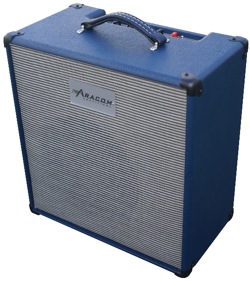
I just can’t rave about this amp more! To me, it’s the perfect balance of tone and power for practically all my needs! I’m getting the head with a 1X 12 cab, both wrapped in that awesome blue tolex that you see in the picture above!

Admittedly, the purist in me originally scoffed at the idea of a solid-state rectifier in the original RoxBox series. But as I told Jeff this morning, what people are typically after is the voltage sag you get with a tube rectifier. Jeff has built a custom “sag simulator” circuit that does the job so well that frankly, I can’t tell the difference. Besides, it’s what the amp sounds like that counts, not necessarily its components. Look at the classic Roland JC-120. That has to be one of my all-time favorite amps – even Satch played with one for years. It’s completely solid-state and it sounds freakin’ awesome!

But circling back to the VRX22. You can’t go wrong with this amp. Yes, it’s priced for value, but the tone that you get for that far surpasses anything that I’ve played at these lower wattages.
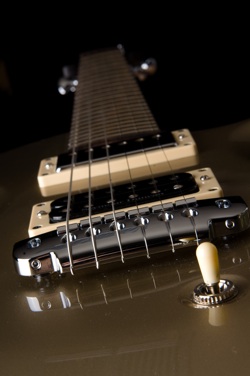
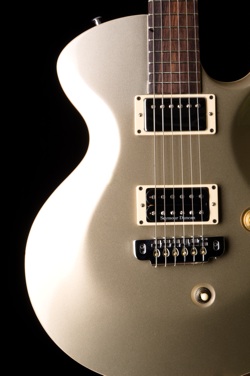
Read Full Post »

The Dawg always has his nose to the ground, trying to pick up the scent of new gear. And for the past few months with the economy in a deep recession, new gear has been tough to find; especially from the small-run manufacturers. Well, I just picked up the scent of a brand new amp from Aracom Amps, and despite the recommendations of its maker, Jeff Aragaki to wait until he updates his site, sorry Jeff, this alert just can’t wait!!! 🙂

The new amp is called the Vintage Rox Series, and is based upon his absolutely kick-ass RoxBox series, which is an EL84-based, 18 Watt head or combo. The Vintage Rox, or VRX, series on the other hand, uses the same chassis and layout as the RoxBox, but is 6V6-based, producing 22 Watts of output. Now you have a choice in low-wattage solutions from Aracom!

Time to come clean…

Okay, I’ll admit it: I didn’t just discover this amp. I was actually the primary tester for the amp (there are distinct advantages to being local to a manufacturer), and I have been literally waiting weeks and chomping at the bit to announce it. I’ve hinted at its existence in previous article, but couldn’t provide any details.

Why am I so excited? For lots of reasons. But I’ll name two. First, with this amp, I think Jeff has definitely hit the sweet spot for low-wattage amp solutions! With the RoxBox 18 and the VRX 22, players have a voicing choice that not many boutique builders offer. But even more special, both the RoxBox and VRX amps sell for significantly less; in many cases more than half as much as other boutique amps at the same or similar wattage.

Secondly, the tone this amp produces is freakin’ marvelous! So much so, that I’m taking delivery of the first production amp. When Jeff brought the first prototype to me several weeks ago as an “experiment” he was working on, my immediate feedback was that this was a special amp, and I couldn’t wait until he had a production model because that was the amp I wanted to get from him.

I’ll have a full review of the amp once I get some pictures from Jeff, but for now, start checking out the Aracom Amps site for the VRX 22 announcement. It should be up by tomorrow!

Folks, I haven’t been this excited about an amp since I reviewed the Reason SM25! It’s one special amp that really deserves your attention. Also, if you subscribe to Vintage Guitar mag, you should see a review of the Aracom Evolver there in the newest issue!

Read Full Post »

I recently started a friendship with Vinni Smith at V-Picks – what a cool dude! Not only does he make great picks, but that man can make an axe sing! Anyway, I was e-mailing him this evening about how his “The Snake” pickup has changed my life, and it got me to thinking about specific pieces of gear that have had a drastic effect on how I approach the guitar. I’ll share them here in kind of a loose chronology:

1. The Kyser Capo

Yeah, lots of people call ’em “cheaters,” but screw ’em. I couldn’t play lots of songs without one. But the Kyser capo in particular really changed my approach, especially after I saw James Taylor playing with one. For years, I used a standard nylon strap type of capo that just basically stayed in place. But then I saw JT playing with a Kyser. I always wondered how he did his mid-song key changes. I used to think he just changed his hand position and played barre chords. But I’ll be damned if he didn’t just slide the capo up, then just played open chords in another key. That was it! I was sold.

2. Ovation Celebrity Deluxe

After my beloved “Betsy” (a Yamaha FG-335 acoustic) broke in a terrible fall, I immediately went in search of a new guitar. I played all sorts in this used gear store and came across this gorgeous sunset burst Ovation. I wasn’t much of an Ovation fan – thought they were really tinny sounding. But when I played this one, it had a much deeper sound than the Ovations I’d played up to that point, and it was a shallow body, no less. When I plugged it into an amp, it sounded even better! That guitar got me into amplified sound. So of course, in addition to buying the guitar, I also got a small Roland 25 Watt practice amp. What a life changer that was.

3. Fender Hot Rod Deluxe

This was my very first tube amp, and an amp that I still use because of how good it sounds… er… I’ve had some modifications done to it, but nevertheless, being my first tube amp, it exposed me to a whole new world of tonal possibilities. Up to that point, I’d played only solid state amps from a Roland JC-12o to a Line 6 Flextone III to a Roland Cube 60 (which I still have – it’s an awesome amp). The Hot Rod showed me the wonders and beauty of tube amp distortion which is nothing like what you get with solid state amps.

4. Ibanez Tube Screamer

There are overdrive boxes, and there are overdrive boxes. But the Tube Screamer is THE classic overdrive box, and the oldest pedal on my board. I’ve of course fallen in love with other OD’s like the Creation Audio Labs Holy Fire, but the Tube Screamer had a real huge effect on how I looked at tone and established what pleases me the most with respect to breakup. It’s a great pedal (though I’m really psyched about testing the Tone Freak Effects Abunai 2).

5. Blizzard Pearl Fender 60th Diamond Anniversary Stratocaster

I love that classic, vintage sound, and this guitar delivered it from the moment I played it. Yeah, it’s made in Mexico, it cost me less than $400 new, but I chose it over Strats five times its price. Why? Because it kicked the shit out of the other guitars. It was THE guitar that convinced me that it’s not the price you pay but the tone you produce that matters. Since I’ve gotten her, I play “Pearl” every day. She’s the first guitar I go to when working on a new song. What a wonderful instrument.

6. Saint Guitar Company “Baby Blue” Benchmark

This isn’t my guitar, and I no longer have it in my studio, but this was the very first guitar that was made to my personal specifications. There is nothing like playing a guitar that’s made to order. The experience is surreal, and started me down this path of playing a custom guitar. Adam’s going to be building me one in the next few months – I’m keeping that one. 🙂

7. Reason Amps SM25 Combo

Even though I love my Hot Rod, the SM25 marks a time when I’ve gotten super-serious about my tone. I’d played a bunch of amps, but this amp showed me that sometimes you do have to pay to get stellar tone – and it’s worth every penny. Lots of manufacturers have created amps that run their channels in series, but I haven’t come across one amp yet that does it as well as Obeid Kahn and Anthony Bonadio. They’ve come up with an amp, cab, and speaker combo that’s like nothing I’ve played before – and I’ve played some awesome amps.

8. Creation Audio Labs Mk.4.23 Clean Boost

I used to think clean boosts were just to help punch a solo through the mix. I didn’t know that they could be used to slam the pre-amps of a tube amp to produce super-overdrive in an amp that no distortion or overdrive pedal can give you. But this one’s very special in that it adds no tonal artifacts of its own – it’s uncanny. What it does is boost the natural sound of your guitar, and when slamming the front-end of amp, gives you the true overdriven tone of your amp. This is a piece of gear that I cannot do without any longer, and it now has a permanent place on my board.

9. Red Bear Picks

I never thought I’d buy a handmade pick, nor pay $20 for one no less. But Red Bear Trading TortisTM picks truly changed my life. I now use Red Bears exclusively for playing acoustic guitar. They sound great with electric as well – I’ll get to that below when I talk about V-Picks – but no pick I’ve ever played has made my Ovation sound so good. These picks look and feel like natural tortoise shell, but they’re made from a polymer of milk protein. No matter, they’re awesome picks!

10. Aracom Amps RoxBox 22 Watt (soon to be released)

This diminutive amp oozes 6V6 goodness. It’s still kind of in the prototype phase so I can’t really write too much about it, but I think my friend Jeff Aragaki has hit a real sweet spot with this amp. Get this: It’s hand-wired, though it uses a solid state rectifier, and it costs less than $1000! The profound thing about this is you can indeed get boutique caliber gear at a great price. But for me personally, this amp is the very first boutique amp I’m buying. Oh, I’ll eventually get the Reason SM25 to run in parallel with this one, 🙂 but this amp is special because it’s the first boutique amp I will ever have owned.

11. V-Picks “The Snake”

As I mentioned above, I’ve befriended Vinni Smith, and I just dig the dude! He knows so much about guitar, and we’ve shared a lot of the same experiences, and love the same kind of music (his favorite guitar solo is the lead break in the middel of Frampton’s Do You Feel Like We Do – my favorite as well). When we first met, Vinni sent me a large sample of his picks, which I compared head-to-head with my Red Bear picks. Of course, I love my Red Bear Classic B-style Heavy, but when I played the comparable V-Picks Standard on my electric guitars, I just couldn’t believe this sound and action I was getting! So I decided to use my Red Bears for acoustic – as I said, nothing sounds better than a Red Bear on acoustic. But for electric, it was going to be V-Picks all the way. Then during a conversation we were having a couple of weeks ago, Vinni told me he’d send me his Snake picks. These are a whopping 4.1 mm thick, with a different bevel than his others. Since I’ve gotten them, I’m never going to use anything on electric guitar than the Snake! I use the rounded for a smoother, fatter tone, and use the pointy for bright attack tones – especially when I’m doing stuff on the bridge pickup! These two picks have totally changed my approach to playing electric. Thick picks in general did that, but these are the thickest I’ve played, and they absolutely ROCK THE HOUSE!

12. May 30, 2010 – I know, a bit late on the uptake here with this one, but life-changing nonetheless, and that is my Aracom Power Rox PRX150-Pro attenuator. This is the first attenuator that I’ve used that truly stays transparent down to bedroom levels. It is the only attenuator that accurately gives me my cranked up tone at low volume levels, and it is absolutely wonderful! I know there are others out there, but knowing that they’re modeled after existing attenuator designs that I know don’t sound very good at low volume levels, it was a no-brainer for me to choose this one. As Doug Doppler said to me in a recent visit to his home, “This thing has saved my ears!” Even Joe Satriani uses one of these units and loves it! That’s how good it is!

Okay, that’s it for me… Anyone care to share what gear has changed their lives?

Read Full Post »

Saint Guitar Company Goldtop Benchmark

Saint Guitar Company Goldtop Benchmark

You ever pick up a guitar and just can’t seem to put it down? For the past few years, that has been “Pearl” my Blizzard Pearl Strat. I just love the way she sings, and she sings oh so sweetly. But ever since I got “Goldie,” a Saint Guitars Goldtop Benchmark to test out, I just can’t seem to put her down. It’s tough because ever since she arrived, I’ve been splitting my time between the two… Wish I had the problem with women when I was single. 🙂 <sigh> Oh well…

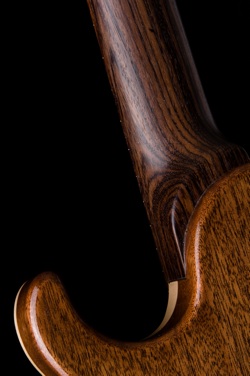
“Goldie” is a very special guitar, with a mahogany body, maple top, and solid rosewood neck. I know, I’ve already reviewed her, but she’s absolutely the perfect guitar – at least to me. The tone from the woods are so balanced and warm that when you play her, you have to just close your eyes and let her take you for a ride. And her neck… ah, her neck! What a thing of grace and beauty. The open-pore finish of the rosewood is so wonderful to the touch, you just want to run your hands up and down the fretboard and feel the sensuousness of her gentle curves. I know, I’m sounding kind of weird, but it’s the best I can come up with to draw a metaphor of how it feels to play this guitar!

Tonight, after I returned home from a quiet date for a cup of tea with the love of my life for Valentine’s Day, I retired to my studio to play around with Goldie. I was just noodling when I played a phrase that just begged to be laid down. So I figured out the chord progression that would go with the phrase, and here’s what I came up with:

Goldie has a bright, big voice, and true to all Saint guitars that I’ve had the priviledge to play, she has an even, dynamic range in all strings, up and down the fretboard. Unlike other guitars where you pluck the top two strings, and you get a loss in volume, forcing you to dig in when you play those strings, especially about the 12th fret, not so with any Saint guitar – it’s uncanny, and a mark of the care Adam Hernandez has put into his designs to ensure his guitars are resonant in any frequency!

Having a great amp to bring out the best in a guitar doesn’t hurt either. The amp I used is a soon-to-be-released prototype Aracom Amp, based upon the RoxBox 18 Watt, but with different tubes, and slightly different power handling. Sorry, I can’t be more descriptive at Jeff Aragaki’s request. You can be assured that once Jeff gives me the go-ahead, I’ll be writing a review of it, and it will be good. 🙂 This amp in particular is very pedal friendly, and I used a Tube Screamer to give me some grit on the lead, plus my new Hardwire Reverb.

In any case, I just wanted to share my excitement about this guitar. It simpy kicks ass, and paired with a dynamite amp, I’ve got a winning combination on my hands!!!

Read Full Post »

5 Tone Bones - Gear has stellar performance, value, and quality. This is definitely top of the class, best of breed, and it's a no-brainer to add this to your gear lineup!

Saint Guitar Company Goldtop Benchmark

Saint Guitar Company Goldtop Benchmark

Saint Guitars Goldtop Benchmark

Summary: I never ceased to be amazed at the guitars Adam Hernandez builds. Here is yet another incredible tone machine but with classic looks and even better sounds.

Pros: This guitar oozes both visual and tonal bliss. The rosewood neck, mahogany body, and maple top combine to create thick but bright resonance that just stirs the inspiration juices.

Cons: None. None at all.

Price: $5000

Specs:

  • Mahogany Body
  • Maple Top
  • Brazilian Rosewood Neck
  • Rosewood Fretboard
  • Seymour Duncan SH-TB-PG1b Pearly Gates Humbucker (Neck)
  • Seymour Duncan SH-14 Custom 5 Humbucker (Bridge)
  • 25-1/4″ Scale
  • Wide, C-shape neck
  • Dual-action truss rod
  • Wide/Pyramid fret wire
  • Blind Dovetail neck joint
  • Gotoh bridge and tuners
  • Volume and Tone Control
  • Cleverly placed pickup switch

Tone Bone Rating: 5.0 – There is literally nothing not to like on this guitar. It truly rocks the house!

Like a lot of folks, I love vintage and vintage-style gear. There’s a certain, je ne sais quoi, perhaps mojo (I know, it’s an overused term) about vintage gear that seems to harken back to the “good ol’ days” when things were handmade and sturdy. But when that style is expressed in a modern way, at least for me, something stirs in my soul, and I’m totally inspired. It has been this way with every Saint guitar I’ve had the priviledge to play, and that continues with the Goldtop Benchmark.

The Goldtop's Bridge

The Goldtop's Bridge

When I did my first Saint Guitars review of the Faded Blue Jeans model, I couldn’t believe how perfect the guitar was. The walnut body and neck, combined with the quilted maple top produced a bright and resonant tone that just begged to be explored to eek out all the possible tonal variations. With the Goldtop, the experience is still the same, but with that absolutely gorgeous finish, I’m experiencing a bliss that’s coming from both visual and aural sources.

Fit and Finish

The Goldtop's Body and Neck

The Goldtop's Body and Neck

I’ve come to realize that there are some things in life that you can’t avoid describing with the heavy use of grandiose phrases, and the Goldtop definitely falls within this category with respect to how it looks. It’s perfect in every way. The creamy gold finish that almost looks white under light is a wonder to behold, but that’s just part of the equation. The gloss-finished mahogany body and open-pore rosewood neck add a certain sensuousness to the look of the guitar. I love that Adam had the foresight to keep the rosewood in as natural and organic state as possible. It feels absolutely wonderful when you grip the neck.

If I were to come up with a metaphor for how this guitar looks, it’s like admiring a beautiful woman that’s nicely dressed, but doesn’t need any makeup or other adornments to enhance her beauty. She’s self-aware and confident in how she looks, but doesn’t come across as aloof or unapproachable. In other words, this is a woman that has a purely natural and organic magnetism, and someone to whom I’d want to be close. That’s the response I have to this guitar.

Playability

I love the feel of natural grain, which is probably why I love my Strat so much with its maple neck. Again, for me there’s a certain sensousness in feeling the wood’s grain in my hand, and the Goldtop doesn’t disappoint in this department. When I first held the guitar, I was surprised and a little worried about the neck profile, which is wide by design, but add to that the C-shape, and I didn’t know if my relatively short fingers could reach all the frets, especially in the upper registers to hit the 6th string. But to my very pleasant surprise, I could get to those notes with ease.

As with all Saint’s that I’ve played, the Goldtop has a fast neck. The frets are just how I like them: Not too deep, but really lending themselves to a nice vibrato when you dig in a bit. And moving up and down the fretboard is a pure joy. The fret spacing is just right. As a guitar player himself, Adam really took great pains to get this part of the guitar right. For me, as I’ve said in the past, I’m not a really great improv guy, but I do play chords up and down the fretboard, and being able to move and nail the chords is very important. It’s as if precision was built into this guitar!

Adding to the playability is the arrangement of the neck and body. It’s very Les Paul-like, and that’s a good thing, which means that the higher frets are very easy to reach when the guitar hangs naturally from the straps. With my Strat, to get to the high frets, I have to physically shift the guitar to the left a couple of inches. Of course, part of that has to do with my gut 🙂 and it’s not really a problem, but I don’t have to shift the Goldtop at all.

How It Sounds

This is one of the best pickup combinations I’ve ever heard. The Pearly Gates in the neck has a nice, sweet, and smooth vintage tone. I liken it to a sip of a 25 year old Scotch. It’s warm and sweet and totally comforting. The Custom 5 is bright, but with a nice, taut low-end. When you turn up the gain on this pickup, you get the expected bright bridge tone, but because of the solid bottom-end, there is absolutely no “tinniness.” It’s just brighter sounding. This is a trait I’ve become accostomed to with all Saint Guitars. They’re the only guitars I’ve ever played that at least to me, have a usable bridge pickup. Combine the two in the middle switch position, and it’s pure heavenly tone. I could keep the guitar in this setting for practically everything I play, unless I wanted to get a super-smooth tone (neck), or need a bright tone to cut through the mix for a lead (bridge).

To me, the mark of a truly great guitar is balance in the dynamic response; more pointedly, that when you play high notes, the guitars volume doesn’t suddenly dive down. I don’t know how many guitars I’ve played that when I get above the 12th fret, the first three strings’ volumes literally sink, forcing you to really dig in with your pick to make them sound louder. That makes for a much more difficult playing approach, and is one thing that bugs me about my PRS SE II Soapbar. With that guitar, the first three strings are quite a bit lower in volume than string four through six. I’ve learned to compensate with my volume knob which thankfully is in a good position for on-the-fly tweaking. But with the Goldtop, and all the Saint’s I’ve played, this is not a problem. The dynamic response is balanced through all strings. It’s a testament to the resonance of the guitar. It picks up all the frequencies!

One thing I’ve learned about testing guitars is that the really important tonal properties are exposed when you play the guitar clean. I’ve played a lot of guitars that sound great when they distort, but just sound weak and hollow when you play them clean. Remember the beautiful woman I described above? This is her speaking voice: It’s rich and sensuous, and something you can listen to and never tire of it. Here’s a clip to prove the point:

I used an Aracom Amps Custom 45R that was re-tubed with 6L6’s from the stock KT-66 tubes, and Jeff kindly installed a Jensen Alnico speaker, replacing the Governor that I was testing with it. Both served to really open up the tone quite a bit with much more midrange – it started out very low-end focused.

What was amazing about this clip was that I wrote it earlier in the day, then recorded it 15 minutes before I had to leave to take my son to his lacrosse game, and just saved the audio file. When I finally sat down to listen to it, I couldn’t believe what I was hearing. Mind you, the clip is not EQ’d or mastered in any way. That’s the natural sound of the guitar out of the Custom 45R. I added just a touch of reverb on the amp, but other than that, it’s just the guitar, and the tone is – at least to me – amazing! It almost gives off a chorus effect. I thought it was due to the reverb at first, but when I came home, I played the song without any effects, and that chorusy tone was still there! I was blown away!

Overall Impressions

I didn’t think you could improve upon perfection, but the Goldtop is now my standard of perfection. As I wrote in a previous article, I’ve been in a bit of rut with writing music as of late, but with the Goldtop, I’m getting inspired again. It’s a marvelous guitar!

Read Full Post »

I just dig it when I find a great guitar and amp combo! Featured in this Jam Track are the Saint Guitar Company Messenger Baritone and the Aracom Amps Custom 45R, both of which I’ve reviewed previously. (Messenger Review | Custom 45R Review). The Custom 45 has a really beefy low-end and a slight scooped tone, and the Messenger, while a baritone, has this incredibly bright-sounding voice. The two complement each other particularly well! Here’s the Jam Track:

You have just over 6 minutes to play around with this one. For the rhythm part, I used a fairly basic rock beat, but I also added some Latin drums underneath to take the edge off the heavy downbeat. And by the way, there’s no bass in this track at all. All of that is provided by the Messenger!

Read Full Post »

4.75 Tone Bones - Almost perfect but not quite

Aracom Amps Custom 45R

Aracom Amps Custom 45R

Aracom Amps Custom 45R

Summary: A great take on the classic Marshall JTM45, with some extra goodies like tube-driven spring reverb, a fantastic master volume (post phase inverter), half power switch (40 to 20 Watts), and bright and bite switches to add hi and hi-mid EQ bumps for more tonal contouring.

Pros: Very versatile amp with a tonal palette that can serve up gorgeous clean tones to thick, super-compressed power tube distortion.

Cons: Heavy – weighs in at 60lbs.

Price: $2195 street (as tested with 1 X 12 Combo)

Specs:

  • Pre-amp tubes: (3) 12AX7, (1) 6BM8
  • Power Amp Tubes: (2) 6L6GC or KT66 (as tested)
  • Rectifier: (1) GZ34 (5AR4)
  • Reverb Tank: Accutronics Long TankHi/Low B+ voltage switch (40/20 watts)
  • On/Off Switch
  • Standby Switch
  • Indicator Lamp
  • Custom Heavy Duty Aluminum Chassis
  • Custom Wound Transformers
  • Impedance Switch:  4, 8, 16 ohm
  • (2) Speaker Jacks
  • Custom Handcrafted Turret Board
  • Handwired

Tone Bone Rating: 4.75 – Sweet amp with lots of tonal variety, but very heavy at 60 lbs. in a 1 X 12 combo! I would definitely get casters for this amp.

One thing I’ve learned about reviewing gear is to never have preconceptions about what something might sound like, especially with guitars and amps, regardless of what the manufacturer might say. When Jeff Aragaki of Aracom Amps dropped his latest amp off at my house, then explained that it was modeled off a Marshall JTM45, but with a few enhancements, despite my normal resistance to those suggestions, I still made a few assumptions about what the amp would sound like. Mistake. I was expecting a Marshall tone; it’s there, but it’s also different. But let’s get into some detail, shall we?

Fit and Finish

All Aracom amps are very well built and constructed. The amp I tested uses the cabinet shown above, but is covered in green tolex, and the same acoutrements as the cabinet above. The cabinet itself is very sturdy and very resonant. The metal grille at the top of the amp is a nice touch, as you can see into the chassis and see the tubes all lit up. I dig that kind of stuff. Jeff uses all high-quality material from the chassis to the knobs, and everything is well laid out.

How It Sounds

This is one awesome-sounding amp! I was actually expecting a real scooped tone, but was very surprised that the amp is actually voiced quite evenly through the EQ range, with just a tad bit of lower-mid range. This gives the tone a darker, almost fatter feel. But still, the cleans are rich and crisp, not chimey like an EL-84 would sound. The huge KT-66’s this amp packs probably account for that.

The reverb is subtle – very subtle – but I really like the effect it has. It definitely won’t do surf. It was as if Jeff wanted to add the reverb as a nice decoration for the amp’s tone. If you’re looking for a deep ‘verb, this won’t do it, but the reverb it does give you, for lack of a better word, just “fits.” Here’s a sound sample that I recorded with my Strat playing the amp clean in the Normal channel with all the EQ’s set to their midpoints:

By the way, the clip is the raw recording, with no EQ or mastering or level adjustments (which accounts for a bit of the distortion as I didn’t apply a limiter). As you can tell, the clean tone is sweet and well, clean. And it has TONS of clean headroom in the Normal channel.

As far as distortion is concerned, before this, I had never played with a KT-66-based amp, so I didn’t quite know what to expect, but this amp can produce some serious distortion. When saturated, the KT-66’s really compress the tone, and the compression comes on with even just a bit of breakup. It’s a great sound, but it’s difficult to cut through a mix with that amount of compression. But hitting the bite switch adds a bit of high-mid-frequency gain, so that compensates for the compression by sort of shifting the EQ up a bit.

The bite switch works with both channels, but the bright switch only works on the Normal Channel. This switch boosts the upper-mids and highs. Don’t expect a ringy sound out of this – it’s more like an instance presence control, though the amp sports a sweepable presence knob as well.

I wish I had a sound sample for my test with a Saint Guitars Baritone Messenger. Even though it’s a baritone, the walnut gives it a fairly bright tone, and that is really complimented by the Custom 45R. I was enjoying myself so much with the baritone, I totally forgot to record a clip! Maybe later… In any case, this amp just LOVED the Baritone! The Messenger also sports two Duncan active ‘buckers, and the drive they produce really made the amp growl with a real savage tone. It was very heavy, and I was just diggin’ it! Yowza!

Overall Impressions

While I really like the tone of this amp, and am having a lot of fun playing with it, admittedly I still lean towards that chimey EL-84 tone or that “Fender” tone that 6L6’s produce. The Marshall-esque tone never has been for me, but if I were to be on the lookout for an amp with that type of tone, I’d definitely give this amp some serious consideration.

Read Full Post »

New Year's ResolutionI normally don’t make New Year’s resolutions. Haven’t done it in years. I’ve always felt there was something innately dishonest about making resolutions like “I’m going to be a better person,” or “I’m going to do something nice for someone everyday.” Not that those aren’t noble pursuits, but in a lot of cases, they demand an enormous amount of self-discipline, self-sacrifice and changes in normal behavior that most of us can’t persevere. We’re good for a few days or maybe a couple of weeks, but something will happen and it all goes to pot.
In lieu of lofty resolutions, I’ve instead set concrete goals that in order to achieve, require changes in behavior and changes in thinking. I’ll share some of these goals here:

  • I will continue on my five-year plan of getting on the road and touring. I’m just starting my third year in the plan, and it’s going pretty well. I’ve release an album, and am working on my second one; a few of the songs of which I’ve entered into an international songwriters competition. I don’t expect to win, but the feedback that I get will be invaluable. Furthermore, going on the road will require that I get in shape, so I have been eating better and getting exercise in anticipation of going back on stage. I love to eat, so this has been a tough thing for me, but I’ve lost 25 lbs so far, so I’m well on my way.
  • I will study more music theory; especially scalar modes. I already started doing this a few months ago, but really want to master it in the coming year. First, because I want my improvisation to be better, and with an understanding of the intervalic nature of music, I’ll be able to move around the fretboard much easier. I don’t want to necessarily learn patterns that I chain together, I want to get to the point where I can jam in any key, and be confident that the next note I hit works well harmonically and musically with what I’m improvising. Also, mastering scales and modes will make me a better teacher. Don’t get me wrong, I have a very firm intellectual understanding of music theory, and can actually cold read charts, but in actual execution, I feel I’m lacking, so my aim is to meld the two.
  • I will have a custom amplifier built for me. I’m currently working with Jeff Aragaki of Aracom Amps to build me an amp around his RoxBox 18 Watt design. I’m “going off the reservation” with this one because I want a different speaker than what he offers, a bigger cabinet and a reverb tank, plus a built-in resistive attenuator for low volume applications. If you haven’t checked out the RoxBox, I suggest you do. It’s a great 18 Watt design that’s also a great value stock.
  • I will purchase a Reason amp. Not sure which will come first: Having Jeff finally construct my amp, or purchasing a Reason. I love the SM25 I have right now, but since I’m a StackMode freak, I’m also leaning towards the SM40 head. We’ll see.
  • I will have Adam Hernandez at Saint Gutiars build me a guitar. I’m so grateful to be able to test Adam’s guitars. We’ve already talked about what I might like in a guitar, but I really want one of my own.
  • As far as GuitarGear.org is concerned, I will rebuild the site to make it a lot easier to find things. I’ve already started doing this, but I really need to rethink the design of the site. I will probably go to a three-column layout so I can get more things “above the line” that is, the part of a page that you first see when a web page loads. Right now, the site is a bit narrow, so lots of things fall below the line that I’d like people to see; especially the companies I personally endorse.

Okay, that’s it for me. Anyone willing to share?

Read Full Post »

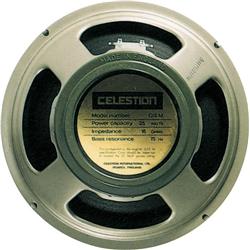
Celestion GreenbackMy good friend Phil of Phil ‘N The Blanks has been bugging me to write about speakers for the last couple of weeks. I’d talk about this speaker or that in some amp or cab, and he’d say, “There’s your next article, dude. You gotta write about speakers.” Admittedly, I’ve been a bit reticent about the subject because of all guitar parts, what makes a speaker sound good is purely a subjective thing; that is, someone’s assessment of a speaker’s tonal quality is entirely personal.

Oh yeah, you can argue the case of alnico vs. ceramic. You can argue vintage vs. modern voicing. You can argue about the materials used in a particular speaker. But in the end, none of that matters unless it sounds good to… well… you.

Phil has been trying to get me to write about certain speakers, but that’s something I just won’t do because again, it’s personal preference. For instance, Jeff Aragaki of Aracom Amps came over to my house today and we talked at length about his RoxBox 18 Watt Combo. I love the amp, but really wasn’t moved by the Eminence Red Coat Red Fang, which uses an alnico driver. On the other hand, I love the RoxBox head plugged into the Reason SM25 speaker cabinet that sports a Red Coat “The Governor,” which uses a ceramic driver. To me, it has a deeper sound. I kind of lean towards the “woman tone,” and “The Governor” is voiced a lot like a Celestion Greenback, which is known for its rich tones. Combined with my Strat I can get that tone. It just wasn’t happening for me with the Red Fang, though for really heavy rock stuff, the Red Fang really shines when it’s pumped up, as it compresses very nicely at high gain output. But that’s not the style I play, so it was hard for me to truly appreciate its virtues.

That said, Jeff mentioned another guitarist who just loves that setup. He’s more of a pure rock player, and loves the warmth and brightness that the Red Fang produces. See what I mean? To talk about this speaker or that is akin to starting a holy war. And you can’t tell anyone a particular speaker is bad or good because that’s just an opinion.

So here’s my advice if you want to switch to a different speaker: Go to a place where you can try speakers out and pick the one YOU like. Use reviews and sound bites as guides only. They’ll generally get you into the ballpark of the tone you want to achieve. And don’t be surprised if you get a speaker for cheap. Remember, as far as gear is concerned, something that costs more a lot of times just costs more – it may not sound any better to you. A good comparison to make is with the speakers I mentioned above. The Red Fang costs about $129, while The Governor costs $89. But I like the sound The Governor produces. If the prices were switched, I’d still go with The Governor.

So don’t be fooled by any marketing mumbo-jumbo. Go out and test for yourself! 🙂

There Phil, I wrote an article about speakers…

Read Full Post »

4.75 Tone Bones - Almost perfect but not quite. Still way above average!

Aracom Amps RoxBox 18 Watt Combo Amp

Aracom Amps RoxBox 18 Watt Combo Amp

Aracom Amps RoxBox 18 Watt Combo

Summary: The RoxBox is an ideal small to medium size venue amp. Don’t let it’s diminutive size fool you. This amp is LOUD, and packs a real punch. Oodles of clean headroom in Channel 1 and capable of super-sinister drive in Channel 2 due to the “hidden” extra gain stage. Very pedal friendly.

Pros: Crystal-clear clean tone in either channel, though the second will break up earlier. Switchable from 18 Watts down to 9 Watts, so you can use this on stage and in the bedroom. Master volume kicks ass, and acts very similar to an effects loop attenuator. At 18 Watts, it’s loud enough to blow your ears off! Very pedal friendly.

Cons: Only a nit, but I wish this thing had a spring reverb. Also, overdrive can be a bit harsh at lower volumes, especially with single coils, though it’s gorgeous at louder volumes and moderate volumes using hubuckers.

Price: $895 direct

Specs:

– (2) EL84 Power Tubes
– (2) 12AX7 & (1) 12AT7 Preamp Tubes
– S.S. Rectifier with “sag” circuit
– Hi/Low B+ voltage switch (18/9 watts)
– On/Off Switch
– Indicator Lamp
– Custom Heavy Duty Aluminum Chassis
– Custom Wound Transformers
– 4, 8, 16 ohm Speaker Jacks
– Custom Handcrafted
Turret Board
– Handwired
– Weight: ~35 lbs

Combo Cabinets
Standard Tolex: Navy Blue Levant (as tested)
– Dimensions
1×10 Combo: 18″w x 19h x 10″d
1×12 Combo: 18″w x 19h x 10″d
– Weight
1×10 Combo: 36 lbs
1×12 Combo: 39 lbs

Tone Bone Score: 4.75 On value alone, this would get a 5, but the mildly harsh breakup at lower volumes gives it just a slight mark off. Still, it’s a great amp!

Jeff Aragaki, the owner and designer/builder of Aracom Amps is on a mission to transition from his telecommunications business entirely into his amp building business. I’d say that based upon playing just this one amp (both the head and combo versions), and having a look at a couple of other amps in his line (which I will probably review in time), he’s well on his way to successfully completing that mission. And Jeff’s not alone in this quest. A few folks I know here in the Silicon Valley have preceded Jeff, moving from their high-tech careers into the music equipment business; and while they may not have become super-wealthy off these new endeavors, they’re certainly living their dreams.

It’s like that in the Silicon Valley which, for decades has been a hotbed of innovation and dream-chasing. And while its star has faded somewhat as the global technology leader and the market has opened up allowing more players to the tech scene (China and India, for instance), the spirit of innovation and going after your dreams upon which “The Valley” was built remains alive and well, as evidenced by guys like Jeff. And true to Silicon Valley form, what these guys produce is quality stuff, and Aracom amps definitely follows suit!

When Jeff and I first hooked up, I was really excited about his 18 Watt RoxBox. First of all, I just dig the EL-84 tone, and secondly, I was amazed that he could offer this amp for less than a grand, and it’s a hand-wired amp, for goodness sake! I knew I had to check it out. And lucky for me, the city where Jeff lives is a half-hour away (if the traffic’s good), so two days after I first spoke with him, he personally delivered a head and a combo. I’ve been playing with both since (though I was so excited, I let my buddy borrow the head for a couple of days to see how he likes it). I’ve tested both amps in the studio as well as at gigs, but I’m writing this review about the combo. If you want to hear how the head sounds, check out this clip:

My Tests

For my tests, I used my Strat, my PRS SE Soapbar II with P-90’s, and a Saint Baritone Messenger that I’m also testing. The amp performed excellently with all three guitars, but was especially responsive to the baritone which has active humbuckers in Channel 2. But before I get ahead of myself, let first me go over the amp’s features apart from its technical specs.

Controls and Equipment

The RoxBox features two independently voiced channels, each equipped with a volume and tone knob. The Tone control functions similarly to a high-freq sweep. It also has a Master volume which is available to both channels. The Master volume is very cool as it functions as an attenuator between the pre-amps and the power tubes, so you can slam the front of the amp with tons of input gain to get that sweet, mid-rangy pre-amp distortion while keeping the output volume at bedroom levels. Great for edgy blues and classic rock tones. The combo I tested also sports an Eminence Red Fang Red Coat 12″ speaker. Operating at 30W, this sucker has a lot of balls! As expected, the sound was a little harsh when I first tried it out, but after several hours of playing, it’s starting to break in and the tone is starting to become a lot more smooth. Now with that out of the way, let’s get into some details.

Channels

Channel 1 would be considered a normal channel, while Channel 2 is a drive channel that will break up a lot earlier. But with Channel 1, the name of the game is “clean.” With my Strat plugged in, this channel has so much clean headroom that I had to really dig into the strings to produce even a slight amount of grind. My PRS with P-90’s and the Saint Messenger could only produce moderate amounts of grind when the volume was dimed. That’s pretty impressive, and definitely not what I expected. With so much clean headroom, Channel 1 is VERY pedal friendly.

Channel 2 on the other hand definitely breaks up early and is voiced just a tad brighter than Channel 1. But it also has a lot of clean headroom as well. With my Strat, I had to turn the volume knob past 7 to get some decent grind, and had to peg my guitar volume. Believe me, that’s not a bad thing either. On the other hand, My PRS SE Soapbar II and the Saint Messenger had no problems producing grind. I could get breakup at around 4 with the Messenger, and around 5 with the PRS.

To get earlier breakup, Channel 2 actually has a third “hidden” pre-amp gain stage in series behind the pre-amp you plug into with fixed settings. It’s voiced a bit hot, and as Jeff puts it, it’s like having a built in tube overdrive. The end result is you get breakup a lot earlier. I have to say that while I like Channel 1’s tone, for pure versatility, Channel 2 really does it for me, as it is lively and responsive to changes in attack and guitar volume. And putting a booster in front of this Channel really brings on the growl that this channel is capable of producing.

How It Sounds

Tonally, this is definitely an EL-84 amp. It’s bright and chimey, and with the Red Fang, it also has lots of balls. For sweet, clean tones, Channel 1 produces a lush clean tone, and my Strat in the Neck/Middle position sounds gorgeous through this channel. As I mentioned, it’s a bit brighter than Channel 1, which made me tweak my guitar tone knobs a bit, but not so much so that it’s unusable. And where this amp really shines in the tone department is when it’s moving lots of air. Plugged into Channel 2 with the volume turned up around 12-2 o’clock, and the Master past three, the amp simply sings its heart out, though at those volume levels in an enclosed space like a home studio, the assault on your eardrums can get a bit uncomfortable.

And while I don’t want to say anything negative because I truly dig this amp, I have to say that at lower to moderate volumes with a Strat, a driven Channel 2 (Volume around 8, Master around 2) seems a little flat sounding. At this level, the pre-amps are distorting with little contribution from the power tubes. Don’t get me wrong: It’s not bad sounding, it’s just a bit uninspiring. But turn the master up so that the second gain stage starts clipping and the power tubes start getting hit, and the world is made right again. I did, however, find a couple of workarounds to this. The first was easy: Just engage my Tube Screamer to add to the grind produced by the pre-amps at lower volumes; instant sweetness. Also, slamming the front-end with input gain from my booster worked wonders as well. The best solution I found that will also engage the power tubes was to use my Dr. Z Air Brake Attenuator. The world definitely became right with that in the signal path.

Versatility

The RoxBox is very versatile and is comfortable on both the stage n in the studio. I really dig the master volume on this because that’s really what makes this amp so versatile. And one feature that is mentioned in the specs but something I’ve found incredibly useful is that the amp is switchable from 18 Watts to 9 Watts with the flick of a toggle switch underneath the amp chassis. For home studio use, this is a godsend as the lower wattage allows the tubes to saturate earlier, which means you can get grind at lower volume levels. Some people think this means lower volume – it doesn’t – for any variable wattage amp. All it means is that the amp breaks up earlier. But having this capability means that you can gig with it at 18 Watts, then bring it into your home studio and get some great tube distortion without keeping the neighbors up late at night while you’re wailing on your guitar.

Also, as opposed to having a single output jack for external speakers, the RoxBox sports three, for 4, 8, and 16 ohm extension cabs.

Overall Comments

This is an amp that I’ll definitely be considering to add to my arsenal because of its tonal similarity to the classic Vox AC15, plus its gorgeous and plentiful clean headroom in Channel 1, but also for its value. At $995 for the combo the tonal versatility you get for the price is well worth the expense. If I had a nit, it would be the same nit I have with the Reason SM25, and that is the absence of a nice spring reverb. But that is just a nit because both amps sound great without it – it would just be icing on the cake.

Read Full Post »

« Newer Posts - Older Posts »