Feeds:
Posts
Comments

Archive for the ‘guitar’ Category

I admit it: I’m an incurable GEAR SLUT! I jones for vintage and vintage style gear, as the music I play leans toward the blues and classic rock. And to satisfy that never-ending craving, I pore over the Internet and various magazines in search of all sorts of gear; hence, the existence of GuitarGear.org where I share with you, dear reader, the things that I come across.

Now in my search for gear, I occasionally buy things. They tend to be vintage-style modern gear because I just don’t have the money to buy real vintage gear; and that usually means I gravitate towards boutique gear; but not just any boutique gear. Remember, I don’t usually have all that much money to afford the real high-end stuff, so I spend a lot of my scouring my information resources to find boutique gear that I can afford. That’s what gravitated me towards Aracom Amps.

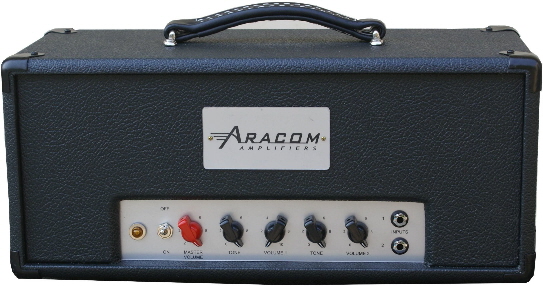
When I saw the price of a VRX series amp, my jaw dropped! Here was a hand-wired, vintage-style tube amp for $895!!! When I finally hooked up with Jeff Aragaki (founder of Aracom), and got a chance to play the VRX18, he shared that one of the ways he was able to keep the cost down was by using a solid-state sag simulating rectifier circuit. When I heard the words “solid-state,” the purist in me started reeling a bit. But then that amp sounded so freakin’ good that I didn’t give a flying you-know-what about the rectifier!

And that’s the point of this article. When you’re looking for and buying gear, don’t let yourself be swayed by an instrument’s or equipment’s pedigree or “all-tubeness” or lack thereof. LISTEN to the fuckin’ thing, and see if it turns you on! If it sounds good, and it works for YOU, then that’s all that matters, in my not so humble opinion on the subject. 🙂 If I had let the purist in me take over, I would’ve never ended up with my VRX22! And for the record, I’ve listened to many, many, many amps, with and without tube rectifiers, and the circuit that Jeff Aragaki employs in the VRX series simulates the sag of a rectifier tube so well, I can’t tell the difference. And if there is one, it’s probably so minute that it doesn’t matter anyway. I’ll put that amp up against any other boutique amp in the same wattage range, and it’ll sound just as good, if not better. And I paid less than half the price of a similarly configured amp!

Give the following clip a listen. I’m playing my Strat plugged straight into the clean channel of the VRX22. In some sections you could swear that the amp has a reverb, but that’s the solid-state rectifier simulating the sag of a tube rectifier. Also, this is the raw recording of the amp: No EQ, no filtering. The master volume was flat out, with the gain control around midway. My mic was about about 10″ away pointed directly at the center of the speaker cone.

I originally recorded that clip with my Prestige Heritage Elite. But that guitar has so much inherent sustain, it would’ve been cheating. 🙂 A Strat on the other hand doesn’t have that much sustain, so it brings out the sustaining quality of the amp much better. The result is just amazing.

And as to the tube vs. solid state rectifier issue, at least in the Aracom VRX series, it doesn’t make one whit of difference, especially when you’re playing live at gig levels. When I’m gigging, I almost never use reverb unless it’s a song where I can really isolate my guitar. Sag gives the effect of reverb, but at loud gig levels, you’ll never hear it.

Another great example of buying what sounds good to you is my friend Vinni Smith of V-Picks. That dude is one of the best guitarists I’ve ever known, and he gigs all the time! You know what he plays through? A freakin’ Roland Cube 30 cranked all the way up and miked into the PA. When he told me that, I almost flipped. Here was a true pro guitarist,  playing through a $200 amp!

So don’t be taken in by pedigree. Buy what sounds good to you, and what you can make sound good. After all, 90% of your tone is in your hands.
Read Full Post »

audrey_hypnosis

I recently read a press release on Harmony Central where this company, Hypnobusters, has just released a self-hypnosis audio to improve your guitar playing. I snickered at first because when the word “hypnosis” is mentioned, my gut reaction is, “Yeah, right… just some more of that New Age crap…” But then again, over the years, I’ve developed meditation techniques to help focus and quiet my consciousness to develop and extend my “chi” (for those martial artists out there), and even so far as performing self-healing. In a way, those meditation techniques are a form of self-hypnosis. And if I’ve used self-hypnosis to accomplish different things, why not apply it to guitar playing?

The mind is a very powerful tool. And if you have the ability to quiet your consciousness, and filter out the hustle and bustle of your waking mind, you’ll find that you can much more clearly analyze different subjects or help steer yourself towards accomplishing many things. It’s not hocus-pocus. It’s pure focus.

For instance, have you ever been playing guitar at a gig or in the studio, and you close your eyes because you’re so in tune with the song that what you’re doing is just pure expression? While you’re in that “groove,” nothing else exists. It’s just you and your axe reverberating with the song. That, my friends, is a form of self-hypnosis. That’s happened to me many times in my studio, and when I listen to the printed track, I’m sometimes in total disbelief that I actually played what I played! I’m not really all that good of a soloist, so I suppose any clean take is a good take. 🙂

In any case, I went to the HypnoBusters site, and found their guitar improvement page. The audio session only costs $9.95, so I said, “What the hell? I’ll give it a whirl. Besides, I could use a little mind quieting time.” And really, that’s what it’s all about – quieting your mind, and allowing yourself to explore the limits of your playing. I’ve often found that the limits of my skills on guitar aren’t merely technical – there is definitely that – but also because my conscious mind often tells me “You can’t do that.” It’s like an inherent fear. But as I break through those boundaries, I find that my actual limits are much further than what my conscious mind tells me.

I’ll give this audio a try, and report back. I’m not sure that it’ll make me a better player – that’s purely up to me. But one thing I know about things like this: They help you give yourself the permission to improve.

Read Full Post »

VOX Time MachineCan’t believe I missed the announcement of its release – I’m usually good about keeping on top of new gear – especially since VOX has been coming out with some pretty awesome stuff as of late. But here it is, the VOX Time Machine Delay. As with the other pedals of this VOX line, this pedal is the result of a very close collaboration between VOX and Professor Satchfunkilus (Joe Satriani). This pedal completes the three pedal line.

The Time Machine Delay features two delay modes (Modern and Vintage) and two EQ modes (Hi-Fi and Lo-Fi). The Modern delay mode provides a transparent delay to retain your orginal tone, while the vintage mode mimicks a vintage analog tape delay. The Hi-Fi/Lo-Fi switch does something similar to the delay modes. Hi-Fi retains your tonal color, while the Lo-Fi mode delivers a “distinctive EQ, combining both high-pass and low-pass filters” to blend better in a mix.

But the thing that I think is pretty incredible is that the pedal has up to 5600 milliseconds of delay – that’s almost 6 seconds! With that you could really do a nice lead loop that you can play over! Damn! Six seconds is a LOT of time. There are lots of layering possibilities with that! That length of delay alone compels me to try the pedal out!

While there are several demos, there aren’t a lot of reviews. Reviews on Harmony Central are mixed. Sound-wise it gets high marks, but one user did point out that the switches seemed a little “rattly,” with no click. Hmmm…. that could be a potential problem. But so far, I haven’t seen any quality issues – but the pedal’s new, so that remains to be seen.

The pedal ain’t cheap, coming it a $199 street, but it has some really great features that definitely worth consideration. Me? I’m really leaning towards the TC Electronic Nova Repeater, mainly because it’s no frills and the tap tempo function using the strum of your guitar is friggin’ awesome – it’s also only $150 street. And based upon the venerable, Nova Delay, it’s a known quantity. However, to be fair, I’m going to have to an A/B to see how the two pedals stack up.

For more information, go to the VOX Time Machine web page.

Read Full Post »

depression This is one of the toughest songs I ever wrote; not from a technical standpoint, but from an emotional one. It’s really an emotional purging. I’m glad I got through it!


Anyway, give it a listen and let me know what you think! Thanks!

Gear Used:

Guitars: Prestige Heritage Elite and Strat

Amps: Aracom VRX22 and Fender Hot Rod Deluxe

The VRX22/Heritage combo is just insane! You gotta check this gear out!

Aracom Amps : http://www.aracom-amps.com
Prestige Guitars: http://www.prestigeguitars.com

The only effect I used was my lovely Hardwire RV-7 reverb on my VRX22 (this is by far one of the best reverbs I’ve ever used). I also used the spring reverb in the Hot Rod.

And lest I forget, I used my trusty V-Picks “The Snake” pick for the lead. What an incredible tone it produces.

Read Full Post »

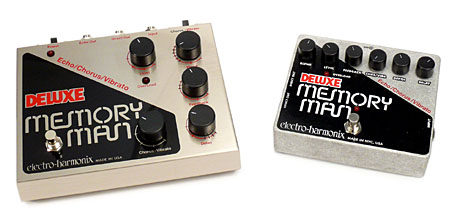
Electro-Harmonix Deluxe Memory Man Old and New

When I first saw the pictures of the new Deluxe Memory Man, I wasn’t too impressed only because I didn’t see the actual size difference between the old and the new version. But Electro-Harmonix has done it: They’ve made a DMM with a smaller footprint. I’ve played the DMM before, and really dug it. There is a certain mojo about this analog delay. But I never considered it because of the real estate it would require on my already space-starved board (though admittedly, it’s time to get a bigger board if I want all my pedals on a single board). Now, with it’s smaller size, this is definitely a pedal I’m going to consider – especially since I’m in the market for a good delay pedal. In any case, here’s the press release from EH:

The original Deluxe Memory Man is considered to be the finest analog delay ever designed. Organic and musical, it has been used by rock and Roll legends and countless musicians since its introduction in 1978. With the desire to make a flawless and smooth transition, Electro-Harmonix proudly announces the “new” Deluxe Memory Man in our rugged and pedal board friendly die-cast enclosure.

Exactly the same components are used in order to maintain the superior analog sound with exactly the same performance qualities. In this case, downsizing to a more rugged chassis was important and only second to maintaining the legendary sound. The exact same sound!

The original Deluxe Memory Man will still be available for a limited time. Musicians in the US and UK can now choose to get the new Deluxe Memory Man, or opt to get the classic. Musicians in the EU can now choose to get the classic original (as right now they only get the die-cast)

Read Full Post »

depression

Lindsay Buckingham of Fleetwood Mac once said (paraphrasing), “Ask any songwriter how music comes to them, and they’ll probably say, ‘I don’t know.'” This tune came to me several years ago during one of the darkest and bleakest points in my life. The market collapsed and I was out of a job, and couldn’t find one; I had been bitten by a poisonous spider that left me bedridden for months; my relationship with my wife was tepid at best. Then on top of that, I had a bad case of sleep apnea that hadn’t been diagnosed at that point. The net effect was that I was suicidal; or short of that, wishing my life would end.

In a particularly bleak moment, where I was contemplating ending my life, this tune came into my head, accompanied by a mental slideshow of images from my entire life: Growing up, my own family. It was if someone out there was using the tune and the images to show me what really mattered in life. Since I first heard the song in my head, it has never left. It pops up now and then, though the pictures have changed as I have changed and my kids are getting older. It’s both a reminder of how bad it was for me, but also a reminder of how good my life has been and still is.

Putting this song down – and mind you, it’s pre-pre-production right now – was very difficult because of the emotions that came with it. But I thought I’d finally lay it down to share it. Someone suggested adding words, but I think the only thing I’ll add is a clean guitar solo on top. By the way, the background sounds you hear on this version are from my three-year-old playing floor hockey in my garage/studio. 🙂 Without further ado, here’s the song:

Equipment Used:
Electric Piano
Prestige Guitars Heritage Elite (sounds acoustic on this song!)
Fender Hot Rod Deluxe (left)
Aracom VRX22 (right)

Read Full Post »

PMS

What’s the difference between a terrorist and a woman with PMS? You can negotiate with a terrorist. 🙂

Joking aside, I’m actually serious that PMS can be a good thing, especially for the guitar-playing husband. Let me share my story…

My wife gets PMS – BADLY. It comes on suddenly, sneaking up from behind, and whacking me smack in the back of the head before I have any time to react. One day I’m Super Man and can do no wrong. The next day I’m the Antichrist and everything that’s wrong in her world is all my fault.

Sound familiar?

I used to fight back all the time, and we’d get into these huge shouting matches, usually with me leaving in a huff, calling my best friend, then going down to the local watering hole so both of us could complain about our PMS-ing wives while burying our anger in a cocktail or four (honestly, we have a two-drink maximum because we usually have to work the next day).

But I’ve learned a new tactic: That is simply to not put any energy into fighting back against something I can’t control – and neither can my wonderful wife. Instead, I play the guitar. As in the second line of the graphic, I “Move out of the way.” I will also do some simple maintenance things around the house like scrubbing the kitchen floors (it’s actually a big job) before she has time to complain that I’m not doing anything. Once I’m done with my little chore, I then retreat to my garage/studio to play and let out the pent-up stress by practicing or writing music.

A lot of my best stuff has come from pining away, pondering why I’m going through my private hell at the hands of the woman I love, who doesn’t realize how ragingly bitchy she’s being. In fact, my latest instrumental, “Running from the Future” was written when I just got my feelings trampled, “hiding out” and sipping a shot of fine scotch in my studio. The ultimate thought that triggered the song had nothing to do with how I was feeling about my wife, but that melancholy surely helped me through the writing process. Funny enough, some of the feedback I’ve gotten is that the song is really uplifting. I guess that was my response to how shitty I was feeling. I needed something to pick me up!

All that said, PMS has been a great thing. My wife leaves me alone when I do the chores, and I can be free to play guitar. Hmmm…. looks like the kitchen counters need clearing. 🙂

Care to share your PMS Protection Plan? 🙂

Read Full Post »

For the last couple of years, I’ve had a serious case of GAS – not that I pulled the trigger and bought a bunch of stuff during that time – I did get a couple of pedals here and there to slake my appetite, but no major purchases until recently. Now I can say I’m gassed out – at least for now. If you’ve followed my blog for any amount of time, you’ll know what I’ve purchased, but I’ll recap the major purchases I’ve made in the last couple of months.

Aracom VRX22 Head with a custom Aracom 1 X 12 cabinet with a Jensen P12N

What an amp! I’ve shared with Jeff Aragaki, founder and designer of Aracom Amps, that the VRX22 is the perfect amp – at least to me. It’s a low power amp that packs a HUGE punch; both in tone and volume. It’s something I can use either in my home studio, or gigging. No matter what volume level I’m playing at, the VRX22 simply sounds awesome, never getting flabby in the low-end, and sporting what I consider to be the best Master Volume in the business.

For more information, check out the Aracom Amps web site.

Prestige Guitars Heritage Elite

The more I play this guitar, the more I fall in love with it. When I first got the guitar to evaluate it, I felt that all the adornments were a bit over the top. I’m a fairly uncomplicated guy, and I appreciate beauty in simplicity. But as time wore on, and I got to know this beauty queen better, the more she grew on me. So I decided to keep the guitar. Her new name is “Sugar” because amazingly enough, not only does she sound and play sweet, she actually smells like bubbling brown sugar! Could be because of the maple, but when I opened up the case for the first time, I was overtaken by the sweet smell of this guitar! So that’s how she got her name. She’s an incredibly expressive guitar, capable of producing gorgeous, ringing cleans to heavy grit. Brightly voiced, her tone just cuts through a mix like butter. I am really enjoying this guitar! Here’s a clip of both the VRX22 and the Heritage Elite:

For more information, go to the Prestige Guitars web site.

Saint Guitars Goldtop Messenger

In answer to my wife’s latest question, “Honey, how many guitars do you need?” I use the standard answer, “Just one more…” This was the exchange we had when I told her I was having Adam Hernandez, a close friend and founder of Saint Guitar Company, build me a guitar. It’s a Goldtop with a twist: Instead of the classic single cut body, I’m having the goldtop done on a double-cut. The body back is solid walnut with a maple top, and rock maple neck topped with an ebony fretboard. I wanted to go for a totally non-standard mix of woods that would produce a very bright tone. The bright tone, combined with the super sustain of Saint guitars in general, promises to be one sweet sounding tone machine. Of course, time will only tell, but I have high hopes for this guitar!

This isn’t even mentioning the smaller things I’ve purchased, but at least for now, I’m GASSED out – I’m also broke – again. 🙂

Read Full Post »

5 Tone Bones - Gear has stellar performance, value, and quality. This is definitely top of the class, best of breed, and it's a no-brainer to add this to your gear lineup!

Aracom Amps VRX18 18 Watt Head

Aracom Amps VRX18 18 Watt Head

Aracom Amps VRX18 Watt Head

Summary: Based on the original “RoxBox” (no longer available), the VRX18 sports an improved master volume inherited from the VRX22, and a reworked, smoother overdrive profile.

Pros: As dynamic and expressive as its 22 Watt sibling, the VRX22, but oozing that bright, chimey EL84 goodness. When driven, produces a nice, tight overdrive.

Cons: None.

Price: $895 direct

Specs:

– (2) EL84 Power Tubes
– (2) 12AX7 & (1) 12AT7 Preamp Tubes
– S.S. Rectifier with “sag” circuit
– Hi/Low B+ voltage switch (18/9 watts)
– On/Off Switch
– Indicator Lamp
– Custom Heavy Duty Aluminum Chassis
– Custom Wound Transformers
– 4, 8, 16 ohm Speaker Jacks
– Custom Handcrafted
Turret Board
– Handwired
– Weight: ~35 lbs

Head Cabinet
Standard Tolex: Black Levant. See options below for other colors.
– Dimensions: 19″w x 8″h x 8.25″d
– Weight: 23 lbs

Also available in 1 X12 and 1 X 10 combos (or Jeff can custom build one to your liking)

Tone Bone Score: 5.0. When I can swing it, I’ll be getting this amp to complete the VRX Series!

Jeff Aragaki, founder and builder of Aracom Amps, always chuckles when I tell him that he’s onto something with his VRX (short for Vintage Rox) series amps. With the VRX22, he seemed to have stumbled onto a sweet spot that produced an amp that has an incredible and beautfully balanced tone that bring out the best tonal aspects of the 6V6 tube. He’s done it yet again with the updated RoxBox 18, now renamed the VRX18, but incorporating many of the same features he built into the VRX22.

I just purchased the VRX22, having fallen in love with the tone that it produces, and I’ve fallen love yet again, but now with the VRX18. I’m like a hopeless romantic that loves two women for their individual virtues, but in this case, the women don’t mind – they can co-exist with each other. Okay, bad analogy… 🙂

I originally reviewed the RoxBox 18 back in December. At the time, I totally dug its tone, but took marks off because of the mildly harsh breakup at lower volumes. There’s nothing harsh about the tone of this amp now – at any volume! It’s a great amp to play, and as expected, it’s pedal friendly, and responds really well to overdrive pedals. Also, I played four guitars through it, and it sounded incredible with all of them!

I won’t go into a lot of detail, since I already covered pretty much all the descriptive information I needed to in the original review, so I’m going to cover some important things I’ve learned about the VRX 18 and the VRX series in general. But first, as opposed to doing this last, here’s a short clip featuring the VRX18 to show you how kick-ass it sounds:

For this clip, I used a Strat with just the middle pickup, plugged directly into the VRX18. I just dig that EL84 grind! I had the Channel 2 volume dimed, and the master volume at halfway in full-power mode. It was very loud, much to the chagrin of my wife. 🙂 But I needed to capture at least some of that EL84 compression.

What’s cool about the EL84 is that it compresses nicely when pushed, but still seems to retain a certain openness in its overdrive. This is unlike something like a KT-66 that compresses so much when pushed you lose volume.

The Best Master Volume in the Business

I don’t say this lightly when I say Jeff has the best master volume in the business. I’ve played many amps. But when Jeff created the VRX22, he did something with the master volume that is pure magic. It has a nice, even volume sweep that seems to act independently of the channel volume. This means you can crank the channel volume to get some serious grind, but control the output via the master, and it won’t suck your tone! I’ve found this to be a real problem with other amps. That master volume is incorporated into the VRX18.

The Best Half-Power Switch in the Business

A lot of manufacturers use a pentode/triode switch to achieve half-power settings in their amps. I’ve played several amps with this feature. But in half power mode with the pentode/triode configuration, I’ve noticed a distinct tonal difference between the two modes in amps configured this way. It’s not that the tone is bad. In fact, many I’ve played around with sound great in half-power mode. But it’s like two different amps.

Jeff Aragaki takes a different approach and instead adjusts the B+ voltage to maintain the usage of all pins in the power tubes. I’m not an electrician, and can’t even begin to explain this technically, so I’ll just say it this way: When you switch to half-power mode in any Aracom Amp, the amp doesn’t change its tonal characteristics. It sounds and plays the same!

The Difference Between Old and New

In addition to the great master volume Jeff incorporated into the VRX18, the first thing I noticed was that it was nowhere near as easy to get this amp to overdrive in channel 2 as it was with the original RoxBox 18. This is not a negative thing at all because as I mentioned in my original review, the overdrive was pretty harsh at lower volume levels. I spoke to Jeff about this, and he said that based upon my original tests and review, he decided to mellow out the extra gain stage in the VRX18 so you could get a nice overdrive tone at any volume level.

You won’t get over-the-top gain with the VRX18. But for that, I have a simple fix-all: Get a great booster pedal like a Creation Audio Labs Mk.4.23 (again, the best booster on the planet), and SLAM the front-end of the amp. 🙂

But all that said, if you’re in a venue where you can dime both master and channel volumes, you will be rewarded with gorgeous harmonics and overtones and luscious feedback!

Overall Impressions

Like I said, this is my next amp… It just rocks the house! And at $895 for the head, you could get both the VRX22 and VRX18 for under the price of a single boutique amp! This isn’t a sales pitch. The value proposition of the VRX series is something that should be seriously considered. You’re not getting a production line amp that’s built overseas. With the VRX series of amps, you’re getting a US-made, handwired amp for under a grand!!!

Admittedly, I was a little skeptical when I first ran across Aracom Amps. But I’m now a believer, and a faithful customer!

Read Full Post »

Pick up one of the major guitar mags, and you might think that to be considered a “good” guitar player nowadays you have to be able to shred it up playing 64th notes up and down the fretboard non-stop. I know, that’s a bit of an exagerration, but the major mags’ focus on shred disenfranchises a very large sector of the guitar-playing population that either can’t play that fast, has no interest in that kind of music, or want to focus on other things rather than speed – like musicality and expressiveness.

Hands-down, Jeff Beck has earned the right to be called a Guitar God. No one sounds like him, and while many people have been able to glean certain Jeff Beck techniques, and can get somewhat close to what he can do with a guitar, duplicating his style of playing is next to impossible. But I’m not here to talk about technique. I’m here to talk about the whole musical package that Jeff Beck delivers in his guitar playing. It’s pure magic. He’s not fast by any stretch of the imagination, but his ability to communicate with his audience through his playing is unrivaled.

Sound like a bunch of hyperbole? Just watch the video below. But don’t just observe what he’s doing with his left hand, which really isn’t all that difficult. Look at what he’s doing with his right hand, manipulating the tremolo bar and volume and tone knobs to achieve different voicings. That’s the magic in the performance of the song! No one does it as well!

Let me be absolutely clear here: The things that Jeff Beck does with his right hand while playing aren’t just parlor tricks to show off. They’re done to ellicit specific responses from his guitar, and make it sing like no one else can. To me, being a good guitar player isn’t just about technique; it’s about getting your message across. As Albert King once said (and I’m paraphrasing Steven Segal here), “The challenge [speaking in reference to the blues, but can be applied to any style of music] is to get your message across in as few notes as possible.” Sometimes that takes a bunch of notes; more often than not though, you can say the same thing with just a few, but express them in a such a way to make your point.

I’m of the school of thought that playing music is having a conversation with your audience. The best conversationalists do it with an economy of language, fully conscious not only of their glossary of terms, but the expression and inflection that goes along with communicating.

Read Full Post »

« Newer Posts - Older Posts »