The title kind of sounds like a spam ad, doesn’t it? But it’s totally serious!
We’ve all heard of or even personally experienced guitars straps coming off their strap buttons, potentially causing serious harm to them. I’ve played for years without mishap without using strap locks. I’ve had some close calls, but no catastrophic accidents. My buddy Phil warned me awhile back that I was just asking for trouble by not having them on my guitars. I just said, “Yeah, I know I should do it, but hey, I’ve been lucky so far…”
Well, my luck almost ran out because I almost had a terrible mishap the other day. If you follow my blog, you know that I’ve just gotten my new Prestige Heritage Elite. I was in my studio jamming, and at the end of the song I was jamming to, I did a harmless thing: I reached over to my amp to turn it down; at which point, my body must’ve been at the right angle, and the strap came off the bottom strap button. My guitar quickly swung toward my amp, aimed straight at the grille cloth! Luckily for me, I was able to catch the guitar and press it against my leg to prevent it from doing any serious damage to either itself or the amp!
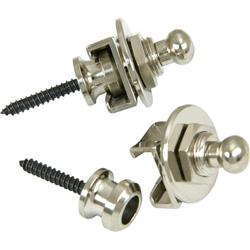
Soon after, I put the guitar down, turned off my amp, walked back into the house, told my wife I was going down to the local music store, got in my car and got a set of strap locks. I will NEVER be without strap locks again! Once I got them, it literally took five minutes to install them, and I thought that this would be good forum to share my experience, and to share how I installed them.
Installing the Strap Locks
I got Schaller strap locks because I could also use the locks on my Strat that came stock with Schaller butttons (Fender owns Schaller), so it was a no brainer to decide. So here’s how I did it:
First, remove the original buttons with a screwdriver.
When they come out, you’ll probably notice that the screws are a bit thicker with wider threads than the Schallers. This is not a problem.
To be safe, as opposed to using pure wood filler (I used Plastic Wood because it dries evenly), I happened to have really thin dowel material that I could use as a shim in addition the wood filler. I placed the dowel in the screw hole, and marked where it would be flush with the surface of the guitar, then simply cut that length.
Once the dowel was cut, I put some Plastic Wood into the screw hole, and with a toothpick, spread it up and down the hole. Take your time with this, and be as neat as possible. Then I wiped off the excess from the hole, then inserted my dowel. This made some Plastic Wood ooze a bit, so I cleaned that up as well.
Then with my little power drill, I screwed in the new Schaller button.
Repeat steps 3 – 5 for the next hole.
Let it dry for a couple of days.
Install the locks on your strap. That’s it!
That process took literally ten minutes! My strap ain’t coming off any time soon!
This is one of the toughest songs I ever wrote; not from a technical standpoint, but from an emotional one. It’s really an emotional purging. I’m glad I got through it!
Anyway, give it a listen and let me know what you think! Thanks!
Gear Used:
Guitars: Prestige Heritage Elite and Strat
Amps: Aracom VRX22 and Fender Hot Rod Deluxe
The VRX22/Heritage combo is just insane! You gotta check this gear out!
The only effect I used was my lovely Hardwire RV-7 reverb on my VRX22 (this is by far one of the best reverbs I’ve ever used). I also used the spring reverb in the Hot Rod.
And lest I forget, I used my trusty V-Picks “The Snake” pick for the lead. What an incredible tone it produces.
When I first saw the pictures of the new Deluxe Memory Man, I wasn’t too impressed only because I didn’t see the actual size difference between the old and the new version. But Electro-Harmonix has done it: They’ve made a DMM with a smaller footprint. I’ve played the DMM before, and really dug it. There is a certain mojo about this analog delay. But I never considered it because of the real estate it would require on my already space-starved board (though admittedly, it’s time to get a bigger board if I want all my pedals on a single board). Now, with it’s smaller size, this is definitely a pedal I’m going to consider – especially since I’m in the market for a good delay pedal. In any case, here’s the press release from EH:
The original Deluxe Memory Man is considered to be the finest analog delay ever designed. Organic and musical, it has been used by rock and Roll legends and countless musicians since its introduction in 1978. With the desire to make a flawless and smooth transition, Electro-Harmonix proudly announces the “new” Deluxe Memory Man in our rugged and pedal board friendly die-cast enclosure.
Exactly the same components are used in order to maintain the superior analog sound with exactly the same performance qualities. In this case, downsizing to a more rugged chassis was important and only second to maintaining the legendary sound. The exact same sound!
The original Deluxe Memory Man will still be available for a limited time. Musicians in the US and UK can now choose to get the new Deluxe Memory Man, or opt to get the classic. Musicians in the EU can now choose to get the classic original (as right now they only get the die-cast)
Lindsay Buckingham of Fleetwood Mac once said (paraphrasing), “Ask any songwriter how music comes to them, and they’ll probably say, ‘I don’t know.'” This tune came to me several years ago during one of the darkest and bleakest points in my life. The market collapsed and I was out of a job, and couldn’t find one; I had been bitten by a poisonous spider that left me bedridden for months; my relationship with my wife was tepid at best. Then on top of that, I had a bad case of sleep apnea that hadn’t been diagnosed at that point. The net effect was that I was suicidal; or short of that, wishing my life would end.
In a particularly bleak moment, where I was contemplating ending my life, this tune came into my head, accompanied by a mental slideshow of images from my entire life: Growing up, my own family. It was if someone out there was using the tune and the images to show me what really mattered in life. Since I first heard the song in my head, it has never left. It pops up now and then, though the pictures have changed as I have changed and my kids are getting older. It’s both a reminder of how bad it was for me, but also a reminder of how good my life has been and still is.
Putting this song down – and mind you, it’s pre-pre-production right now – was very difficult because of the emotions that came with it. But I thought I’d finally lay it down to share it. Someone suggested adding words, but I think the only thing I’ll add is a clean guitar solo on top. By the way, the background sounds you hear on this version are from my three-year-old playing floor hockey in my garage/studio. 🙂 Without further ado, here’s the song:
Equipment Used:
Electric Piano
Prestige Guitars Heritage Elite (sounds acoustic on this song!)
Fender Hot Rod Deluxe (left)
Aracom VRX22 (right)
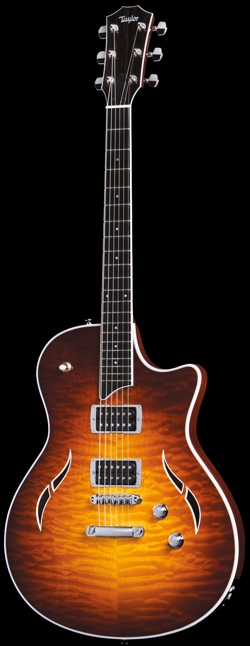
I wasn’t too wild about the T5 when it came out a couple of years ago. No doubt it’s a gorgeous-looking and great-playing guitar. But as I feel about any hybrid, I feel that it was a compromise; not quite an acoustic, not quite an electric. And despite bearing the high-quality of all Taylor guitars I’ve played, the T5 wasn’t a guitar that I’d spend $2700 to buy. For that money, I’d get two dedicated electric and acoustic guitars, and be happy with switching between the two – which I do anyway, so it’s not a stretch.
Enter the T3 semi-hollowbody. This is a dedicated electric guitar, and something I think is definitely worth checking out. With a mahogany back and neck and maple top, it promises to produce a big, expansive tone. Not only that, the T3 sports a push-pull knob that when engaged, pushes the mids up – nice touch. By the way, the “B” model of the T3 includes a Bigsby tremolo with roller bridge.
Ranging in price from $2249 to $2399 street, this is by no means a cheap guitar, but it certainly bears taking a good look at, even if I don’t ever buy one – but I’ve been known to say that, and turn around get something if I totally fall in love it; though it would be pretty difficult to justify that kind of expense with my wife, especially since I spent that much just recently getting a couple of guitars and an amp… ☺ That’s another article…
In any case, check out this video demo of the T3 from the 2009 NAMM show.
From the clips, even though the T3 has humbuckers, it’s amazingly bright, and sounds a lot like a deeper voiced Tele. That tone alone is worth taking a good look at this guitar!
This is actually kind of exciting news: Roland has just released its most powerful Cube amp, the Cube 80x. Sporting 80 Watts of power through a 12″ speaker, this amp is poised to pack a serious punch. The Cube 60 has been quite successful since its inception a few years ago. Hell! Even I have a Cube 60 and I love it! The Cube 80x while being more powerful, also has some new features that are sure to turn heads (taken from the Roland web site):
* Powerful 80-watt output into a high performance 12″ speaker
* 10 COSM® amp models including new DLX Combo model
* Two channels: Clean and Lead plus new SOLO memory function
* New Spring Reverb modeling for vintage reverb sounds
* Easy to use Looper for unique live performance
* Convenient built in chromatic tuner
* Aux input for connecting MP-3 players or other audio sources
The Cube series amps have been known for their versatility. They sound great a pretty much any volume level, and they have enough features packed into them to make it easy to just pack the amp, a guitar and go. I have a couple of friends who use Cubes for club gigs!
There are a few of standout features that really pique my interest: 1. The ability to hook up an MP3 player to the amp to practice with; 2) The looper function, and finally; 3) The built-in chromatic tuner. This amp is made for gigging, and with the line out, you can go right into a board – which I’ve done many times with my Cube 60.
If you’re looking for a great, versatile amp, you can’t go wrong with a Cube. Just pick the one that suits the volume level you need (or the features you want), and you’re good to go!
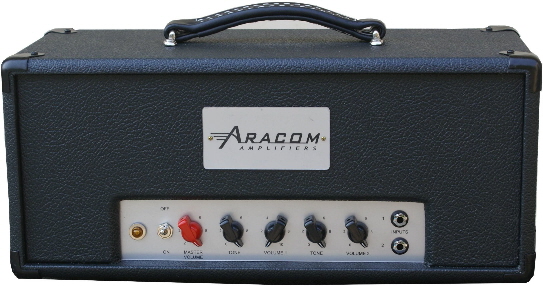
Summary: Based on the original “RoxBox” (no longer available), the VRX18 sports an improved master volume inherited from the VRX22, and a reworked, smoother overdrive profile.
Pros: As dynamic and expressive as its 22 Watt sibling, the VRX22, but oozing that bright, chimey EL84 goodness. When driven, produces a nice, tight overdrive.
Head Cabinet
Standard Tolex: Black Levant. See options below for other colors.
– Dimensions: 19″w x 8″h x 8.25″d
– Weight: 23 lbs
Also available in 1 X12 and 1 X 10 combos (or Jeff can custom build one to your liking)
Tone Bone Score: 5.0. When I can swing it, I’ll be getting this amp to complete the VRX Series!
Jeff Aragaki, founder and builder of Aracom Amps, always chuckles when I tell him that he’s onto something with his VRX (short for Vintage Rox) series amps. With the VRX22, he seemed to have stumbled onto a sweet spot that produced an amp that has an incredible and beautfully balanced tone that bring out the best tonal aspects of the 6V6 tube. He’s done it yet again with the updated RoxBox 18, now renamed the VRX18, but incorporating many of the same features he built into the VRX22.
I just purchased the VRX22, having fallen in love with the tone that it produces, and I’ve fallen love yet again, but now with the VRX18. I’m like a hopeless romantic that loves two women for their individual virtues, but in this case, the women don’t mind – they can co-exist with each other. Okay, bad analogy… 🙂
I originally reviewed the RoxBox 18 back in December. At the time, I totally dug its tone, but took marks off because of the mildly harsh breakup at lower volumes. There’s nothing harsh about the tone of this amp now – at any volume! It’s a great amp to play, and as expected, it’s pedal friendly, and responds really well to overdrive pedals. Also, I played four guitars through it, and it sounded incredible with all of them!
I won’t go into a lot of detail, since I already covered pretty much all the descriptive information I needed to in the original review, so I’m going to cover some important things I’ve learned about the VRX 18 and the VRX series in general. But first, as opposed to doing this last, here’s a short clip featuring the VRX18 to show you how kick-ass it sounds:
For this clip, I used a Strat with just the middle pickup, plugged directly into the VRX18. I just dig that EL84 grind! I had the Channel 2 volume dimed, and the master volume at halfway in full-power mode. It was very loud, much to the chagrin of my wife. 🙂 But I needed to capture at least some of that EL84 compression.
What’s cool about the EL84 is that it compresses nicely when pushed, but still seems to retain a certain openness in its overdrive. This is unlike something like a KT-66 that compresses so much when pushed you lose volume.
The Best Master Volume in the Business
I don’t say this lightly when I say Jeff has the best master volume in the business. I’ve played many amps. But when Jeff created the VRX22, he did something with the master volume that is pure magic. It has a nice, even volume sweep that seems to act independently of the channel volume. This means you can crank the channel volume to get some serious grind, but control the output via the master, and it won’t suck your tone! I’ve found this to be a real problem with other amps. That master volume is incorporated into the VRX18.
The Best Half-Power Switch in the Business
A lot of manufacturers use a pentode/triode switch to achieve half-power settings in their amps. I’ve played several amps with this feature. But in half power mode with the pentode/triode configuration, I’ve noticed a distinct tonal difference between the two modes in amps configured this way. It’s not that the tone is bad. In fact, many I’ve played around with sound great in half-power mode. But it’s like two different amps.
Jeff Aragaki takes a different approach and instead adjusts the B+ voltage to maintain the usage of all pins in the power tubes. I’m not an electrician, and can’t even begin to explain this technically, so I’ll just say it this way: When you switch to half-power mode in any Aracom Amp, the amp doesn’t change its tonal characteristics. It sounds and plays the same!
The Difference Between Old and New
In addition to the great master volume Jeff incorporated into the VRX18, the first thing I noticed was that it was nowhere near as easy to get this amp to overdrive in channel 2 as it was with the original RoxBox 18. This is not a negative thing at all because as I mentioned in my original review, the overdrive was pretty harsh at lower volume levels. I spoke to Jeff about this, and he said that based upon my original tests and review, he decided to mellow out the extra gain stage in the VRX18 so you could get a nice overdrive tone at any volume level.
You won’t get over-the-top gain with the VRX18. But for that, I have a simple fix-all: Get a great booster pedal like a Creation Audio Labs Mk.4.23 (again, the best booster on the planet), and SLAM the front-end of the amp. 🙂
But all that said, if you’re in a venue where you can dime both master and channel volumes, you will be rewarded with gorgeous harmonics and overtones and luscious feedback!
Overall Impressions
Like I said, this is my next amp… It just rocks the house! And at $895 for the head, you could get both the VRX22 and VRX18 for under the price of a single boutique amp! This isn’t a sales pitch. The value proposition of the VRX series is something that should be seriously considered. You’re not getting a production line amp that’s built overseas. With the VRX series of amps, you’re getting a US-made, handwired amp for under a grand!!!
Admittedly, I was a little skeptical when I first ran across Aracom Amps. But I’m now a believer, and a faithful customer!
Pick up one of the major guitar mags, and you might think that to be considered a “good” guitar player nowadays you have to be able to shred it up playing 64th notes up and down the fretboard non-stop. I know, that’s a bit of an exagerration, but the major mags’ focus on shred disenfranchises a very large sector of the guitar-playing population that either can’t play that fast, has no interest in that kind of music, or want to focus on other things rather than speed – like musicality and expressiveness.
Hands-down, Jeff Beck has earned the right to be called a Guitar God. No one sounds like him, and while many people have been able to glean certain Jeff Beck techniques, and can get somewhat close to what he can do with a guitar, duplicating his style of playing is next to impossible. But I’m not here to talk about technique. I’m here to talk about the whole musical package that Jeff Beck delivers in his guitar playing. It’s pure magic. He’s not fast by any stretch of the imagination, but his ability to communicate with his audience through his playing is unrivaled.
Sound like a bunch of hyperbole? Just watch the video below. But don’t just observe what he’s doing with his left hand, which really isn’t all that difficult. Look at what he’s doing with his right hand, manipulating the tremolo bar and volume and tone knobs to achieve different voicings. That’s the magic in the performance of the song! No one does it as well!
Let me be absolutely clear here: The things that Jeff Beck does with his right hand while playing aren’t just parlor tricks to show off. They’re done to ellicit specific responses from his guitar, and make it sing like no one else can. To me, being a good guitar player isn’t just about technique; it’s about getting your message across. As Albert King once said (and I’m paraphrasing Steven Segal here), “The challenge [speaking in reference to the blues, but can be applied to any style of music] is to get your message across in as few notes as possible.” Sometimes that takes a bunch of notes; more often than not though, you can say the same thing with just a few, but express them in a such a way to make your point.
I’m of the school of thought that playing music is having a conversation with your audience. The best conversationalists do it with an economy of language, fully conscious not only of their glossary of terms, but the expression and inflection that goes along with communicating.
Ever been in one of those situations where you have to face up to something you’d said or done, but avoid it all costs because it gives you this feeling of impending doom? I was recently in a situation like this, and it wasn’t at all comfortable going through the emotional and psychic turmoil leading up to the conversation the ultimately resulted in – nothing. No slap on the wrist, no punishment. Just a good conversation where everyone involved learned from the experience.
Anyway, last night I was noodling on my guitar; my eyes were closed, letting my emotions drive my playing. Then I remembered that situation, and came up with the rhythm track for the song. It’s all instrumental – it’s not something I would ever want to put to words, but I did want to convey the emotions. Give it a listen let me know what you think:
For the rhythm parts, the Strat/Hot Rod is panned to the left of the mix, and the Heritage/VRX22 (clean channel) is panned to the right. The lead part sits dead center.
I’m particularly pleased with the Hot Rod’s tone. The clean tone with that awesome spring reverb is to die for (though I had the reverb down pretty low on it to give the Strat more presence). I’m also diggin’ the Prestige Heritage Elite; especially after I set it up. In particular, I adjusted the pickup heights to smooth out the treble pickup, and to get less boom from the rhythm pickup. It’s now very balanced; and played through the VRX22, it sounds just awesome. I played the lead part through the drive channel of the amp, and set the volume so that it was just on the edge of breakup, so if I dug in a bit, I’d get just a touch of overdrive. I wanted to create an effect of subdued aggression, and the VRX22 is so dynamic, I can achieve that easily.
I was just perusing my favorite forum, The Gear Page, and ran across a thread about Ted Weber being in the hospital. Apparently, Ted’s really sick. Here’s an excerpt from a quote of his: “As for my health, I have pulmonary sarcoidosis, a hardening of the lungs. I’m on oxygen 24-7 and am waiting to be qualified for a transplant. Transplants are around 50% success rate at 5 years, so I’m not doing any long range planning.” I’ve never bought a thing from Ted, but I have e-mailed him about different types of gear, and he’s always been so gracious. Please join me in sending him some good vibes!
 This is one of the toughest songs I ever wrote; not from a technical standpoint, but from an emotional one. It’s really an emotional purging. I’m glad I got through it!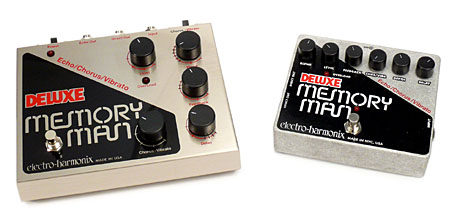

 I wasn’t too wild about the T5 when it came out a couple of years ago. No doubt it’s a gorgeous-looking and great-playing guitar. But as I feel about any hybrid, I feel that it was a compromise; not quite an acoustic, not quite an electric. And despite bearing the high-quality of all Taylor guitars I’ve played, the T5 wasn’t a guitar that I’d spend $2700 to buy. For that money, I’d get two dedicated electric and acoustic guitars, and be happy with switching between the two – which I do anyway, so it’s not a stretch.


 Guitar Gear