Visit any online forum and you’ll see countless topics in the form of, “How can I get this sound?” or “Tell me what I need to sound just like ______________.” These are quite popular threads as people will chime in with their knowledge; however complete or incomplete, with the gear that a particular guitarist used. The discussions sometimes get quite lively as some personalities collide in an ego-fed frenzy. Okay, I’m exaggerating… 🙂 But they do get quite lively. I read through those threads both for pure amusement, but also to get educated about others’ approaches to achieving a particular kind of tone. It’s amazing the gear that I’ve discovered just because of these kinds of threads.
One of the most amusing topics I’ve run across in the recent past is people asking how they can sound like The Edge from U2. Let’s face it: The Edge’s rig has got to be one of the most complex arrangements of gear around. No one really knows what his complete signal chain is except his techs who set all his gear up, yet so many people chime in (albeit in an effort to assist, and that’s a great thing) with their suggestions. Unfortunately, all they can really produce is a fraction of the picture, and considering The Edge’s rig, probably a minute fraction at best. For instance, I once read he runs something like a 40 foot cable between some devices so there is a built-in lag. Damn!
Mind you, I’m not trying to put anyone down, but to me, discussions about how to faithfully, flawlessly reproduce a particular tone is almost futile; and as much I hate to rain on anyone’s parade, and as much as someone would like to produce a tone exactly as they’ve heard, they may get close – real close – but they’ll never get there 100%. Why? Because there are lots of factors that contribute to tone; not the least of which is the guitarist who originally created the tone in the first place! On top of that, you’d have to have the same guitar, with the same strings, with the same amp, with the same pedals (if applicable), the same pick; not to mention the exact same cables that were used. Then you’d have to try to produce live what was a recorded sound, and you can bet that guitar signal went through quite a bit of audio processing to produce the recorded tone. Get the picture?
Like I said, I’m not trying to rain on anyone’s parade, and perhaps these questions asked on the boards are purely out of curiosity, but I’m of the mind that if you truly aspire to be a great musician, let alone a great guitarist, you need to find the tone that pleases you. You may end up sounding similar to someone, but I think the best guitarists out there – no matter what their technical level is – are the ones that sound like themselves.
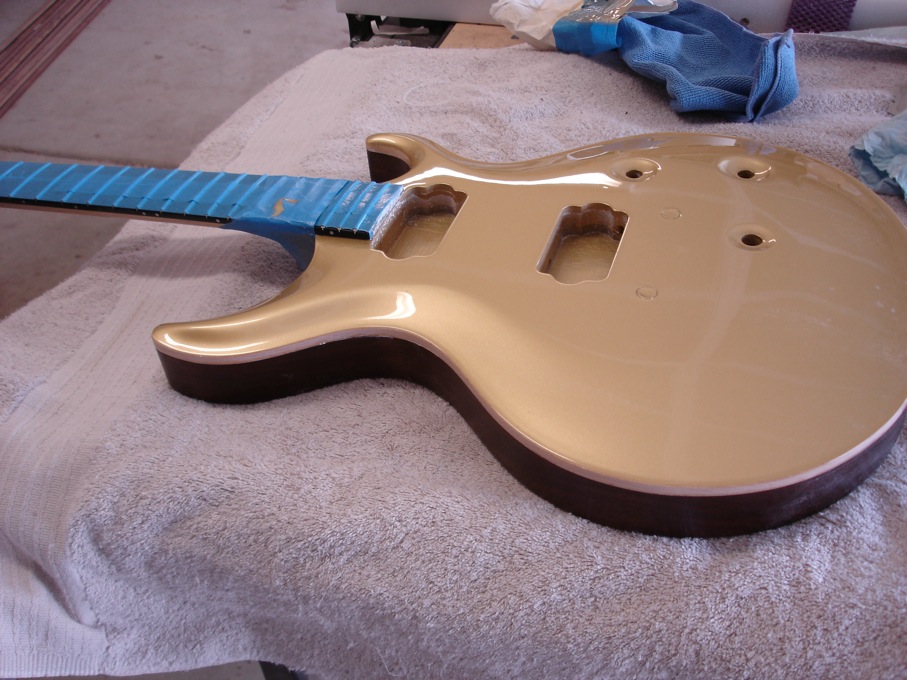
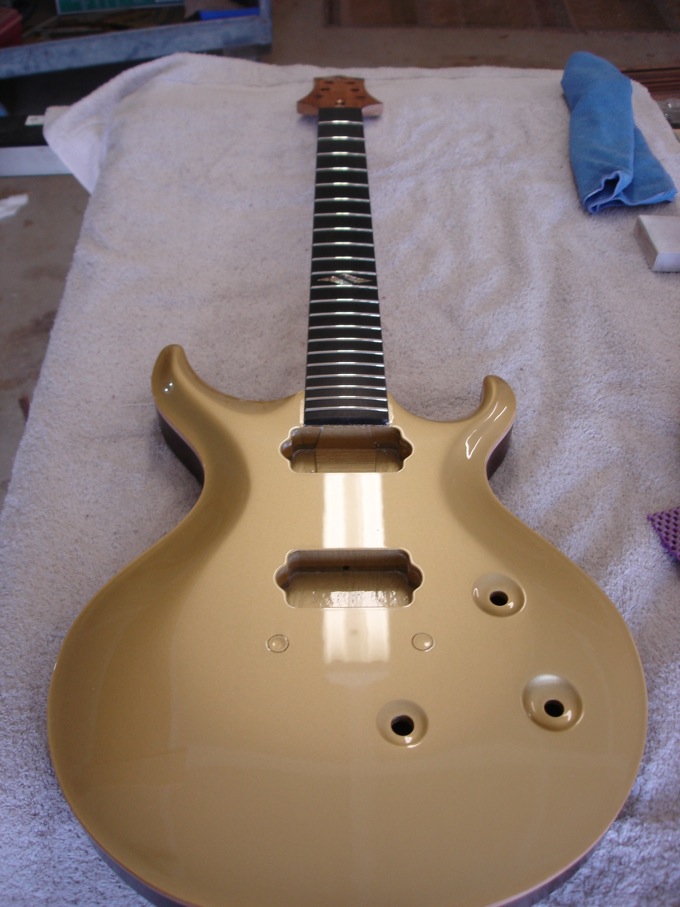
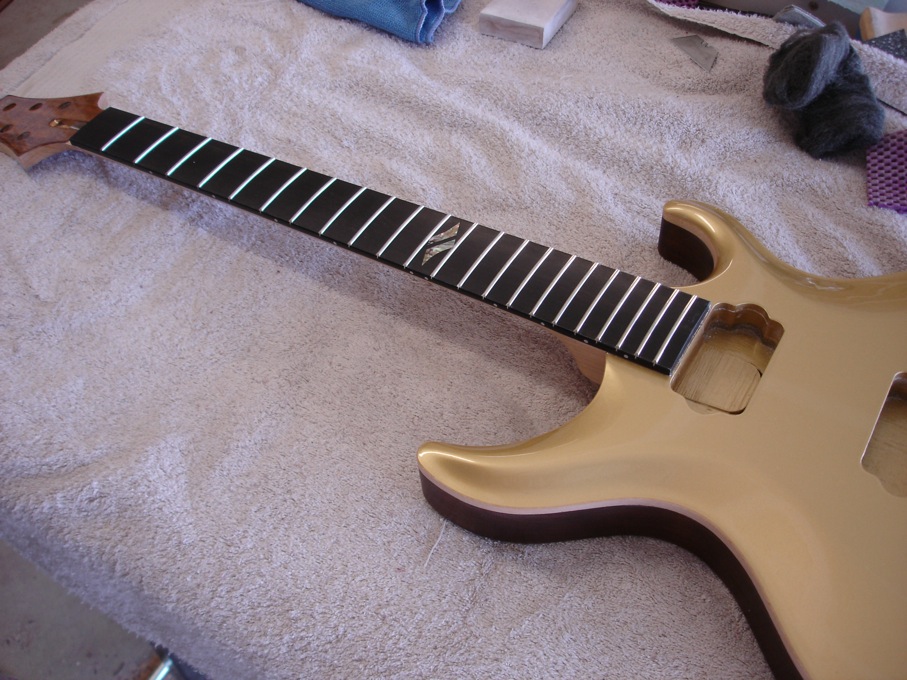
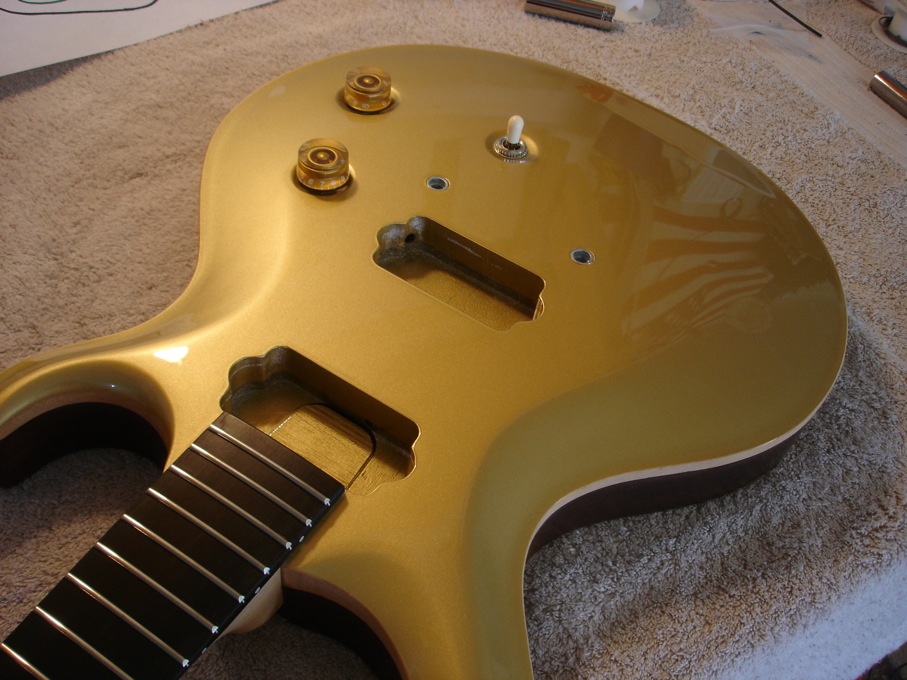
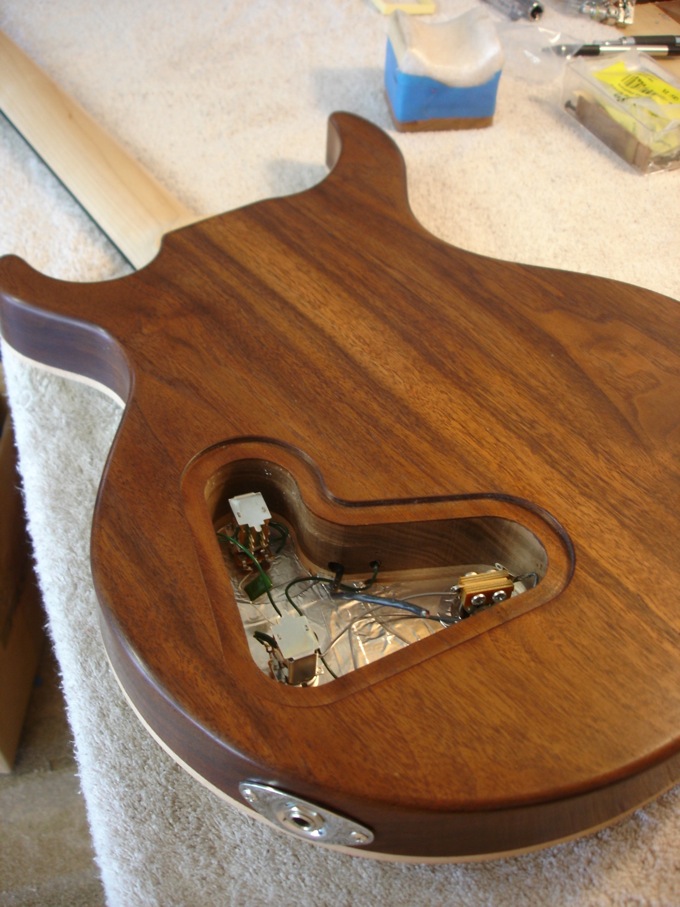
Ever since I started this blog back in 2007, I’m always tickled by how I sometimes just stumble upon gear manufacturers. With Tone Freak Effects, I happened to do a search on “tone freaks” to see if there were any interesting site out there. I found Red Bear Trading picks at a local guitar shop, and bought a couple after trying them out as I was curious what a $20 pick would play like (it was wonderful, of course). In other cases like Saint Guitar Company, a visitor to GuitarGear.org happened to mention that he had just got one in a comment. I at first thought the comment was spam, but decided to do some research. I’m glad I did because I’m going to soon take delivery of my first custom Saint Guitar Company Goldtop Messenger!
A couple of days ago, I was viewing a video of Tonic Amps, and noticed a guitar that I had never seen before (click on the video link, and you’ll see it at about 1:50). It was gorgeous! Birdeye maple top, solid maple body and neck from a company I had never heard of before called Sweetwood Guitar Company. Of course, The Dawg rarely passes up the opportunity to sniff out new gear to activate his GAS, so I did a search and found the Sweetwood Guitars site. These are VERY NICE guitars! Very simple and straight-forward in their design, with a real vintage vibe going on.
Not wanting to stop at just looking at pictures, I went to the contact page, and was blown away! Sweetwood Guitars is local to me! In fact, they’re only about 15 minutes away from my house! Shit! I’m in trouble! 🙂 But it’s a good trouble!
Anyway, I gave Glenn, Sweetwood Guitars’ owner and luthier a call, and will soon be doing a test run on a couple of his guitars. When I called him, he was on the road traveling back up to the Silicon Valley from LA, where he has the finishes done, and he was bring back a bunch of guitars! I can’t wait to hook up with him and try out these beauties!
Lots of people – manufacturers and end-users alike – boast about the “transparency” of a particular device. Manufacturers like to use that buzz-word as a marketing ploy, but after spending the last few years evaluating tons of gear, I’ve learned to be very wary of manufacturers,’ and especially end-users’ claims of a device’s “transparency.” So to test out their claims, I’ve come up with a little test that doesn’t require measuring voltages or impedance curves or force you to perform complex mathematical analyses to prove a device’s transparency.
In fact, the test is so simple that when I tell you how to perform it, you’ll probably laugh! But believe me, to me this test is the ONLY transparency test that matters!
First off, let’s establish what we mean by “transparency” so we have a common reference from which to build. What seems to be the prevalent perception about transparency is that it is a function of both tone and dynamics; that is, a device’s transparency means that when it is engaged, you still hear your original tone, and you feel or perceive the same or similar dynamics of your original signal. Notice, no calculations or measurements. And mind you, I’m not just making this up. Go to any gear discussion board and search on transparency, and invariably the descriptions you will be given will be based upon what people hear. So given that reference point, let’s get into the test, shall we?
The Transparency Test
Attach your device where it is supposed to sit in your signal chain, but do not engage it.
Play a simple riff or strum a chord and remember what you just played with the device disengaged to establish your base tone.
Engage the device.
Play exactly what you played in Step 2 in exactly the same way.
Make a note – either mentally or by writing it down. Are your tone and dynamics retained?
Repeat steps 2 to 5 with a variety of settings on the device.
The test is so simple, you may be chuckling right now. But once you’ve done the test, if you’ve detected an audible difference in tone and dynamics, then the device isn’t transparent. I’m sorry, but there’s no arguing that. But lack of transparency is not necessarily a bad thing. But what we’re really talking about then is what’s acceptable tone, and there is a HUGE difference between what’s acceptable and what’s transparent.
Take, for instance, the Ultimate Attenuator. I hate to keep on picking on this device, but I’ve always had problems with the manufacturer’s and user’s claims of the Ultimate Attenuator’s transparency. This is an incredibly popular attenuator – probably the most popular out there. People love it, and as you know, I will never fault people for purchasing gear that sounds pleasing to them. So if the tone that the UA produces is acceptable and pleasing to you, keep on using it!
But let’s be clear here: The UA is NOT transparent. There is no way it can be transparent simply because once you hook up your amp to the UA, you are immediately hit with a non-reactive, 30 ohm, fixed resistor that essentially flatlines the load that your amp sees. This is compensated for by the UA’s built-in solid state amplifier, but that is the amp that is now reacting with your speaker. All the original amp is doing at that point is providing a base signal that is then re-amped with the solid state amplifier to produce the output signal. An amp’s tone is a function of its reactance with the speaker. In the case of the UA, it is the solid state amplifier that is providing the reactance with the speaker. But hey! The UA sounds good to lots of people, so I won’t knock the device itself. But what I’m illustrating here is the difference between acceptable tone and transparent tone.
So let’s circle back a bit. The point of this article is that you should be wary of people’s claims of a device’s transparency. If you do the test above, and find that the device really isn’t transparent, then you have to ask yourself if the tone it produces is acceptable to you? If it is acceptable and pleasing to you, that’s really all that matters!
Don’t you love double entendres, especially when they’re said completely by accident?
I was on the GuitarGearHeads.com forum this evening checking on a thread I posted to, mssmith, posted this in reference to the new Reason Bambino:
Last night my wife asked me what I want for Christmas, so I said a Bambino (we have 4 girls already) and she almost had a heart attack. Then I told her what I meant and got snubbed. Go figure….
I almost fell out of my chair when I read this! I have to pass this on to the Reason guys!
I love living in the Silicon Valley. While it might not be considered a “destination” for music and culture like San Francisco, New York, Nashville, and Saint Louis, it is a destination for technology, and for decades has led the world in many of the technological advancements we enjoy today. Having lived in the Silicon Valley all my life, and watching it transform from a largely agrarian economy to the mecca of high-tech and venture capital, one thing has remained the same: The Silicon Valley has a certain magic about it that inspires innovation and invention.
So it is no surprise that there are several boutique amp manufacturers in the area. I’ve written about a couple in the past, namely Aracom Amps and King Amplification, but recently, I hooked up with Tonic Amps, located in Mountain View; less than 10 minutes from my home!
Darin Ellingson contacted me last week, and invited me to come to his shop. While I knew he built amps, what I didn’t know until I did a bit of research is that Darin is Fane International’s North American distributor for Fane speakers! That got me really interested in Tonic – especially Darin’s cabs. Over the years, I’ve heard so much about Fane speakers, but have never had the chance to hear how they sound. And what great fortune that the North American distributor is 10 minutes away from my house!
In a nutshell, I played through three types of Fanes in 2 X 12 and 4 X 14 cabs: Studio 12L, AXA12, and Medusa 150. Plus, I got a sneak peak at some prototype Fanes Darin is having specially made. Through Tonic cabs, the Fanes sound drop-dead gorgeous! I hooked up three different amps to various Tonic Amps: A Reason Bambino, Aracom VRX18 (tube rectified), and a Tonic Torpedo. No matter what amp I played through, the Fanes sounded crisp, articulate and incredibly dynamic. Folks, this is the way to evaluate speakers. Frequency response charts are useful, but until you’ve got the speakers loaded into a cab, you will never know how they truly perform. Tonic cabinets are absolutely top-notch, and if you’re in the market for a great cabinet, you can’t go wrong with these. They’re all solid wood (no pressboard here), and the dimensions Darin has specified really bring out the best character of the Fane speakers.
What was my favorite? It’s a toss-up between the Medusa 150 and Darin’s prototype that he will hopefully bring into production soon. I love the scooped tones of the Medusa and the mid-ranginess of the prototype. Hmmm… can you say 2 X 12 cab with these in it? HAHAHAHAHAHA!!! Dammit! Gave myself GAS again! It’s probably a good thing I can’t afford them right now – I will have to save my pennies. The speakers and cabinets don’t come cheap, but for this tonal quality, it’s worth every penny. You wouldn’t put a great speaker in a cheap cabinet… maybe… No, I won’t even get into that debate… 🙂
Torpedoes Away
Based upon the classic Trainwreck circuitry, the Torpedo is a pedal lover’s wet dream! I played the 50 Watt version, which is powered by a pair of EL-34’s! Folks, we’re talking clean headroom with this amp, with minimal breakup at the top end of the volume sweep. The tone is thick and rich and very well-balanced. I didn’t notice an overabundance in any part of the EQ range… well… it did have just the slightest amount of midrange, but that’s good though, because this amp’s tone will play nicely in a mix.
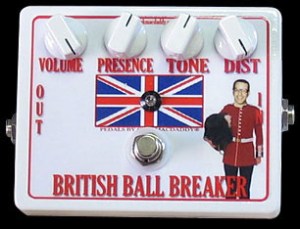
At any volume level, the amp sounds great, but its true character comes out when you dime the volume and play it through a 4 X 12 cabinet. Throw a couple of pedals in front of it (we used the British Ball Breaker and a prototype GeekDriver/GeekRanger pedal in front of the amp), and the amp’s tone combined with the 4 X 12 will knock you across the fuckin’ room! Can you say wicked overdrive that makes the hairs on the back of your neck stand up? It was amazing to witness!!!
The “Torpedo” moniker is totally appropriate for this amp. It is meant to fire out a shot of gorgeous tone, blow you out of the water, and knock you into tone heaven! Even at the volumes we were playing at, this tone isn’t a face-peeling raucous. Granted, a lot of that quality had to do with the Fane speakers we were playing through, but just as with you not putting great speakers in a shitty cabinet well, you don’t play a great amp with shitty speakers either.
If you live in the Silicon Valley, I encourage you to contact Darin and check out his workshop. It’s set up for jamming, so bring an axe or two! Darin’s even got beer! Though next time I go to his shop, I’ll bring a 12 pack. BTW, he like Tecate. 🙂 For more information, check out the Tonic Amps web site! To get a reference for how great Tonic Amps sound, check out Darin’s YouTube site at: http://www.youtube.com/user/MrTonicAmps.
I had such a great evening tonight! Darin from Tonic Amps invited me over to his shop to try some amps through his excellent speaker cabinets (be on the lookout for a review in the next day or so). He has a very cool workshop that he also shares with “GeekMacDaddy,” who makes some absolutely KICK-ASS pedals! I got to try out a few of them tonight, and absolutely fell in love with the British Ball Breaker, which GeekMacDaddy touts as a classic Marshall Plexi in a box. He’s not kidding, either. This is a helluva pedal, with rich, thick, overdriven Marshall tone. Just set your amp on clean, crank the master volume, engage the British Ball Breaker, and you’ll be rewarded with gorgeous Marshall-esque overdrive!!! YOWEE!!!
You gotta check out these pedals! They just rock! In addition, GeekMacDaddy is just about to release another freakin’ fantastic pedal called the GeekDriver that is a totally awesome take on a drive pedal. It sounds awesome by itself, but this pedal was built to be stacked, providing the foundation tone, then driving another fuzz or overdrive pedal. Rockin’!!!
Damn! Two freakin’ awesome pedals that I will have to get – as if I need more! But hey! You know me and overdrive pedals! I just can’t get enough of them!
Here’s a great demo video of both the British Ball Breaker and the GeekDriver from PremierGuitar:
Notice that GeekMacDaddy’s playing through a Tonic Amp! Those amps just rock as well! However, I’m getting ahead of myself!
I was a bit of a latecomer to playing the blues, but I always dug Albert King. He had this way with playing single note blues that has had a real influence on how I approach playing blues runs. His style is so economical, and listening to him, you always hear a story as he plays. I just dig it! Here’s a great video of him the great song, “I’ll Play the Blues for You.” This video was shot later in his life. Even then, the man could just make that guitar sing.
The title roughly translates into “honesty in singing or playing a musical instrument.” I’m constantly coming to terms with my own playing and singing – especially when I’m doing my solo gigs. And while I’m not the best singer and God knows I’ve got a long way to go before I truly consider myself a great guitarist, one thing that I’ve always strived for is honesty in my performance; that is, I want to stay true to myself while I’m performing. That’s not to say I’m not open to learning new stuff. I’m an eternal student when it comes to music. But when I’m performing, what possesses me is expressing a song or my part of a song in an honest way. I guess you might say, just being me in the song, and expressing it in my own unique way. For me, that’s not many bells and whistles and it’s not many tricks. I wouldn’t call it a comfort zone per se; I just do my best to express a song from my collective experience, not trying to do what someone else might do; though admittedly, my musical influences definitely come out when I play, however subconsciously that may be.
I’ve had many years to develop that sense of honesty, and it comes from being attracted to the sound of musicians over the years who I believe have taken an honest approach to their music. To name a few, musicians such as Elvis Costello, Sting, James Taylor, Peter Frampton, Peter Gabriel, Elton John, John Lennon, Paul Simon, Joe Satriani, Santana, Journey, Sarah McLachlan, U2 and, of course, Neil Young, whom I wrote about yesterday. I know, it’s kind of an eclectic mix of musicians, but that’s the beauty of it! Each of these musicians has their own sound, their own approach to making and playing music. I love Elvis Costello’s versatility, the cerebral nature of Peter Gabriel. But one thing that commonly resounds between all these musicians is an almost uncompromising drive to write and play music on their own terms.
For instance, I had the good fortune to catch a broadcast of Elvis Costello doing Burt Bacharach music – with Burt on the piano! He took some timeless tunes from the Bacharach and David period and sang the shit out of them! At a Sting concert several years ago, after opening up with the expected “All This Time” from the Soul Cages tour, he surprised the entire crowd by breaking out into Purple Haze! It freakin’ ROCKED!!! It didn’t sound like Jimi – it was all Sting and his band.
When I first heard Sarah McLachlan, I was absolutely blown away. This was a chick who had a totally new take on pop. And while she experienced considerable success for a short period of time, what most people didn’t know was that before “In the Arms of the Angels,” she had a few albums to her credit that up until that time saw very little commercial success though lots of critical acclaim. But I thought that some of her best work came from her earlier albums. Like the others mentioned, she writes and performs music on her own terms!
The point to all this is that I’ve learned an important lesson in my own performance. I can only be who I am, and not someone else. I can only sound and play like me. It’s daunting and even humbling realizing how much I DON’T know, yet it’s also what inspires me to keep getting better and developing my own musicality. When I work with younger musicians, I always tell them to never be afraid to experiment, to break out of the patterns of their lessons. The lessons are great; let’s make no mistake about it, but music is expression. The very nature of music is such that how it is performed is a highly subjective, interpretive affair. Mechanics will only take you so far. You need only look at some of the names I’ve mentioned, and you’ll see what I mean.
In the latest issue of Guitar World, Neil Young was quoted saying (when it comes to his guitar playing), “I suck. I’ve heard myself!” That made me laugh when I read this, but it also got me thinking. From a purely technical standpoint, I will agree 100% with him. But despite that, I still love the way he plays, and have always loved his sound, and for the very simple reason that his playing is completely honest.
It’s clear to me every time I listen to a Neil Young song that he is clear with how he uses his guitar; and that is to express his musical message. You listen to his solos, and if you’re a technique snob, you’ll most probably say, “Yikes! What is he doing.” But try to put any other guitarist in the lead role, and the solo just wouldn’t work. Bad technique or good, Neil Young’s playing is integral with his music. It’s simply an extension of who he is, and while on the surface you might be lead to believe that his playing is simple, and you’d be right, but place his playing within the context of the whole song, and you realize that what he is doing with his guitar is meant to be simple. It’s meant to fit with the song. It’s not meant to show off his chops or showcase tricks that he can perform. It’s meant to act as a color on his palette as he paints the picture of his song.
From that perspective, I’ve always believed that he was a true genius at guitar. He may not rip it up, but even he says that his guitar playing is secondary to the song and the band. It’s only a part of the presentation. But it’s an integral part of Neil’s music that fits in perfectly with his musical vision.
 Visit any online forum and you’ll see countless topics in the form of, “How can I get this sound?” or “Tell me what I need to sound just like ______________.” These are quite popular threads as people will chime in with their knowledge; however complete or incomplete, with the gear that a particular guitarist used. The discussions sometimes get quite lively as some personalities collide in an ego-fed frenzy. Okay, I’m exaggerating… 🙂 But they do get quite lively. I read through those threads both for pure amusement, but also to get educated about others’ approaches to achieving a particular kind of tone. It’s amazing the gear that I’ve discovered just because of these kinds of threads.
 Ever since I started this blog back in 2007, I’m always tickled by how I sometimes just stumble upon gear manufacturers. With
 Don’t you love double entendres, especially when they’re said completely by accident?

 In the latest issue of Guitar World, Neil Young was quoted saying (when it comes to his guitar playing), “I suck. I’ve heard myself!” That made me laugh when I read this, but it also got me thinking. From a purely technical standpoint, I will agree 100% with him. But despite that, I still love the way he plays, and have always loved his sound, and for the very simple reason that his playing is completely honest.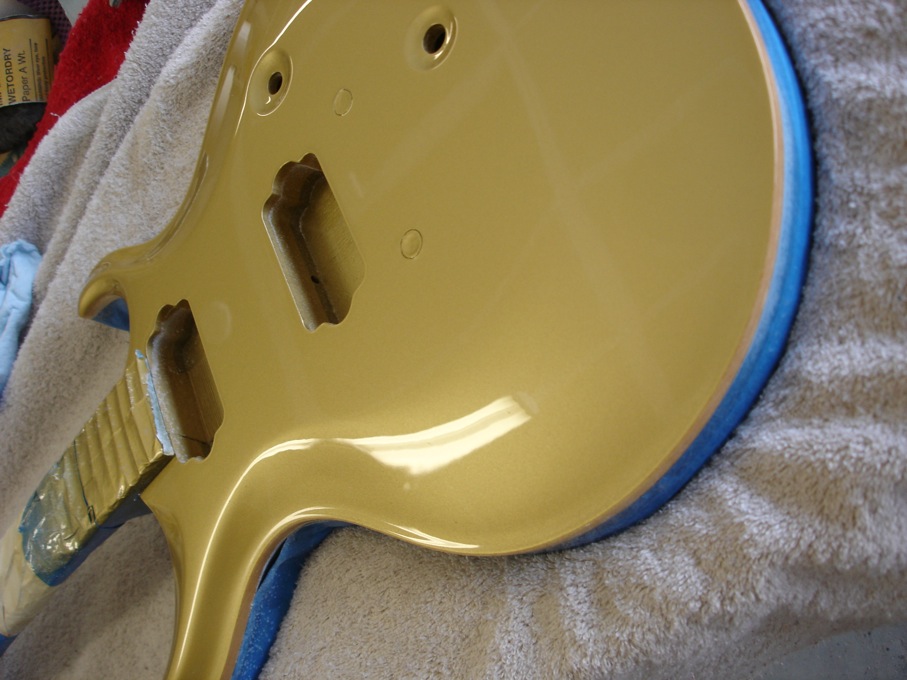
 Guitar Gear