Feeds:
Posts
Comments

Red Bear Trading Style B Heavy Pick

v_pick_medium_rounded1

As many may know, after 35+ years of playing, I switched from my favorite picks, medium Dunlop Tortex, to Red Bear picks. Since then, my playing has really taken on a different dimension. I feel a lot more confident with my playing as these thick, natural feeling picks have made me much more accurate, and really bring out the tone of my guitars. It’s truly amazing!

But over the past weekend, my friend Adam Hernandez of Saint Guitar Company, called me up and told me about his friend Vinni Smith, creator of the V-Pick, another high-end pick. In our conversation, he shared that he had told Vinni about my site, and told him to contact me to see if I’d review his picks.

I had heard of V-Picks from people on the various forums I either lurk or participate in, and I was very curious about them, and wondered how they’d compare to my beloved Red Bears. So I beat Vinni to the punch, and contact him, at which point he said he’d send me a few to check out.

I finally got them yesterday. I guess Vinni’s idea of “sending a few” is much different than mine. I was thinking he’d send maybe three or four; instead, he sent me pretty much the spectrum of the picks he makes! What a guy!

Anyway, I was too tired to test them out last night, so I decided to try a few out at a church service I did this morning. I also took my Red Bears to do a head-to-head comparison. Just as expected, these picks had the same effect on me that the Red Bears have. When you’re playing effortlessly, and the strings chime like they’ve never chimed before, it evokes a visceral, almost primitive feeling that takes you to another dimension. That’s what playing with a great pick does for me, at least.

So considering how V-Picks also evoke the same type of emotions in me as my Red Bears, how do I rate them? Well, of course, I have to give them a 5 Tone Bones score. But if you were ask me which are better, I’m going to be completely non-committal and say that it really boils down to personal preference. To me, they both kick ass! But let me take some time to share some of my insights on how they stack up against each other:

Feel

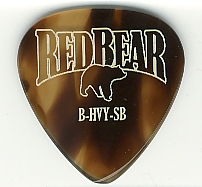
With respect to feel in my hand, both Red Bear and V-Picks feel great. But the big difference for me is that the Red Bears feel – for lack of a better word – natural. They really do feel like natural tortoise shell. Please don’t read this as a negative with respect to a V-Pick. It also feels great. It’s just different.

Tone

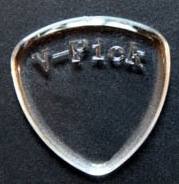
For this test, I chose a similarly sized and pointed V-Pick to compare against a Red Bear Style B Heavy pick. With strumming, both picks produced gorgeous, warm and ringing tone. But I could detect a bit more highs out of the V-Pick, which made the tone sound just a tad bit more lively, while a strum with the Red Bear was much more balanced. Both tones were fantastic, though, so no clear winner in this department. However, I did also test out a couple of the really pointy V-Picks that Vinni sent to me, and whoa! These sounded awesome for picking individual strings. They also produced a very bright, almost jangly tone during strumming. Since I didn’t have anything equivalent with a Red Bear, I couldn’t make a comparison, though I imagine the response would be similar.

But here’s a very interesting thing that I found myself inadvertently doing during my little gig this morning. Depending upon the song, I’d use a different pick to elicit different sounds from my acoustic. When I wanted a really bright sound, I’d use the V-Picks pointy. When I wanted a warm, rich strum, I’d use the Red Bear. Something in the middle, I’d use a rounded V-Pick. I don’t know how practical that is with a full band, but it sure worked for me working solo, where it was just me and my acoustic.

And the winner is…

Neither or Both. Er… There is no winner. For me what it boils down to is personal preference. Both picks are awesome-sounding. And based upon my experience this morning, I’m going to start buying both kinds because of the different shades of tones I can get out each. I’ve read some lively discussions comparing these, but frankly, most of the people who contributed to these discussions had played only one kind of either. I’ve had the fortune to play a few styles of both, which explains while I’m very non-committal about declaring a clear winner; because from my point of view, there simply isn’t one with respect to feel and tone.

So I’m going to endorse both picks because they’re both great. But if you’re after advice on which to choose, then choose one based on how it feels. I love the feel of the Red Bear, maybe a tad bit better than the V-Pick. But that doesn’t necessarily make it a better pick, which is why I recommend you play both kinds and make a decision on what feels best for you. I will add that Red Bear doesn’t have a super pointy pick, so if you’re after something like that, then V-Picks is what you’re looking for!

Notice I didn’t mention anything about price. If it boiled down to that, then V-Picks wins hands-down. Most V-Picks cost $4.00, while Red Bears cost $20.00. But be aware that Red Bear picks are rough-cut, then hand shaped, so there’s lot of labor that goes into them, plus you’re dealing with a polymer made from a natural source. On the other hand, V-Picks are molded, then buffed, so the labor is a lot less.

CORRECTION: (2/11/09 )Vinni contacted me about how he makes his picks. Actually only a few are molded, the rest are cut and hand ground. So my bad…

Personally, price of the picks is one topic on this blog where I’ll say that is less important a factor in the decision-making process, which kind of goes against the grain of what GuitarGear.org is all about. The reason I’m de-emphasizing price is because on the grand scale of things, once you’ve spent a few grand on guitars and amps, whether you spend $4 or $20 on a pick is pretty inconsequential. So the decision should rest on how the pick feels and sounds to you.

Finally…

The one thing that V-Picks does have over Red Bear picks, is that because the picks are made from acrylic, Vinni can offer a much greater range of thicknesses with his picks. For instance, he can go all the way down to .5mm. I have one of these and while it flexes like my Dunlop Tortex, it still beats the shit out of it. On the other hand, because of the material, Red Bear picks start at 1.0 mm. But I do have to say that I don’t know for sure if there is a lower limit. It could be there is, but perhaps there’s just not demand for picks thinner than a millimeter. Be that as it may, with either V-Picks are Red Bear, you have a variety of styles to choose from.

Another thing you might consider is durability. V-Picks are acrylic, and that is a VERY hard material. It’s tough to scratch, and from what I could tell, these picks will not wear down very quickly. Red Bear picks on the other hand, do wear down, and as they are made from a natural material, need some special care. You occasionally have to rebuff them. But frankly, it’s something I’d expect from a more expensive pick made from natural material. But if you don’t want to fuss with that kind of stuff, then V-Picks is the answer.

As a special treat, I found a video of Vinni Smith giving a lesson on YouTube. This dude is a BAD-ASS guitar player! Rock on, Vinni!
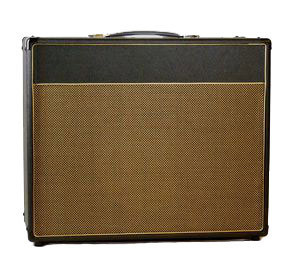

Blues Jack 112 - Studio

Blues Jack 112 - Studio

Recognize the cabinet? It looks an aweful lot like a Reason Amps cabinet, doesn’t it? That’s because the one of the founders of Reason Amp, Anthony Bonadio, also owns a cabinet making company called Stage Craft Gear, a not very widely known cabinet maker – at least among consumers. They’ve actually made their start as an OEM cabinet supplier for a lot of amp companies through their parent company, Rhyme Musical Enclosures LLC. But as an OEM, they don’t get their logo on the cabs, and believe me, there are some heavy hitters who use their stuff.

In any case, they’re launching a brand new site at http://www.stagecraftgear.com – very soon – like today or the next! I’ve seen the look of the new site, and it totally kicks the shit out of the old one! Their designers did a great job!

Get a Free Cabinet!!!

I don’t have all the details around this, but Anthony did tell me about a cabinet giveaway that they’re having. You’ll have to go to the site and sign up. I only saw some sub-pages when I went to the site that have the new look, and the home page hadn’t been updated yet – I imagine the giveaway ad will be there.

Okay, let’s get down to business…

Yeah, it’s great that Stage Craft Gear has a new site, and even better that they’re giving one away (I hope I’m the lucky winner 🙂 ), but that’s just airy-fairy stuff, in my opinion. What’s really important about Stage Craft Gear is the fact that they make the cabs for Reason Amps. It’s amazing how you read a lot about amps, but IMO, there’s just not enough attention paid to the cabinet. It’s the resonance chamber for the speaker, for chrissake! And it can make or break an amps’s sound!

My personal experience with the SM25 112 Combo is that it’s sound is “open.” It’s not a tight-sounding amp at all, which is a really good thing when you’re on stage, and a lot of that has to do with the cabinet. It’s tall, and not very deep, but it projects a gorgeous, bright tone that really complements the big sound that comes out of the standard Eminence Governor that’s installed in the cab. The Governor works AWESOME in that cabinet. On the other hand, I used a Governor in a deeper, heftier cabinet (made by another manufacturer), and it sounded like shit! Way too tight, and high-mid to high-freq tones were really subdued.

The point to this is that my experience with a single Stage Craft cabinet leads me to believe that these guys make very special cabinets. It’s no surprise that several boutique amp manufacturers use them. They kick ass!

Ensuing Cab Review

I’m going to be reviewing a cabinet from Stage Craft really soon. Check back here. If my previous experience is any indicator, this cab promises to be very special. Stay tuned!

I don’t know about you, but as a songwriter, it bugs me when I go for long periods without writing songs; or more precisely to the point, when the inspiration to write doesn’t come to me. I’m not a calculating songwriter, and completely rely on that inner voice that inexplicably sends music to my head. For the past couple of months, I haven’t had the inspiration. Oh, I’ve written short clips of stuff, and I’ve had the beginnings of song ideas; in fact, I just counted last night, and in the last couple of months have recorded 25 song ideas. With some of these, I even recorded several instrument tracks. But none of these developed into full songs.

But over the weekend, I got a new guitar from Adam Hernandez of Saint Guitars (read the review here). This functional piece of artwork stirred something in my soul and I got the inspiration to write a song – it’s about time! The song is based upon Psalm 146; yeah, it’s religious, but hey, a song is a song in my book. Besides, I haven’t written a religious song in awhile, and it’s actually where I started, so nothing like going back to my roots. But more importantly, just getting that one song out has made my creative juices start flowing again, and that’s a good thing. Give it a listen:

Being naturally introspective, I took a look at how I got the inspiration. Sure, the trigger was probably that gorgeous guitar, but more importantly, it had the effect of changing my current perspective. And I think that’s the key to inspiration. When you’re feeling in a rut, do something else or try out some other gear. The idea is to derail the status quo.

5 Tone Bones - Gear has stellar performance, value, and quality. This is definitely top of the class, best of breed, and it's a no-brainer to add this to your gear lineup!

Saint Guitar Company Goldtop Benchmark

Saint Guitar Company Goldtop Benchmark

Saint Guitars Goldtop Benchmark

Summary: I never ceased to be amazed at the guitars Adam Hernandez builds. Here is yet another incredible tone machine but with classic looks and even better sounds.

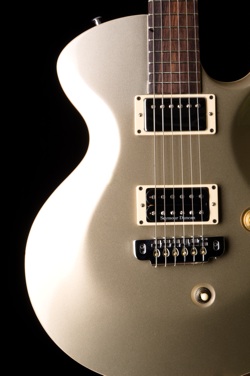
Pros: This guitar oozes both visual and tonal bliss. The rosewood neck, mahogany body, and maple top combine to create thick but bright resonance that just stirs the inspiration juices.

Cons: None. None at all.

Price: $5000

Specs:

  • Mahogany Body
  • Maple Top
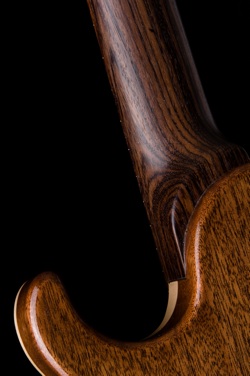
  • Brazilian Rosewood Neck
  • Rosewood Fretboard
  • Seymour Duncan SH-TB-PG1b Pearly Gates Humbucker (Neck)
  • Seymour Duncan SH-14 Custom 5 Humbucker (Bridge)
  • 25-1/4″ Scale
  • Wide, C-shape neck
  • Dual-action truss rod
  • Wide/Pyramid fret wire
  • Blind Dovetail neck joint
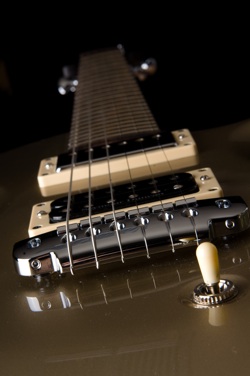
  • Gotoh bridge and tuners
  • Volume and Tone Control
  • Cleverly placed pickup switch

Tone Bone Rating: 5.0 – There is literally nothing not to like on this guitar. It truly rocks the house!

Like a lot of folks, I love vintage and vintage-style gear. There’s a certain, je ne sais quoi, perhaps mojo (I know, it’s an overused term) about vintage gear that seems to harken back to the “good ol’ days” when things were handmade and sturdy. But when that style is expressed in a modern way, at least for me, something stirs in my soul, and I’m totally inspired. It has been this way with every Saint guitar I’ve had the priviledge to play, and that continues with the Goldtop Benchmark.

The Goldtop's Bridge

The Goldtop's Bridge

When I did my first Saint Guitars review of the Faded Blue Jeans model, I couldn’t believe how perfect the guitar was. The walnut body and neck, combined with the quilted maple top produced a bright and resonant tone that just begged to be explored to eek out all the possible tonal variations. With the Goldtop, the experience is still the same, but with that absolutely gorgeous finish, I’m experiencing a bliss that’s coming from both visual and aural sources.

Fit and Finish

The Goldtop's Body and Neck

The Goldtop's Body and Neck

I’ve come to realize that there are some things in life that you can’t avoid describing with the heavy use of grandiose phrases, and the Goldtop definitely falls within this category with respect to how it looks. It’s perfect in every way. The creamy gold finish that almost looks white under light is a wonder to behold, but that’s just part of the equation. The gloss-finished mahogany body and open-pore rosewood neck add a certain sensuousness to the look of the guitar. I love that Adam had the foresight to keep the rosewood in as natural and organic state as possible. It feels absolutely wonderful when you grip the neck.

If I were to come up with a metaphor for how this guitar looks, it’s like admiring a beautiful woman that’s nicely dressed, but doesn’t need any makeup or other adornments to enhance her beauty. She’s self-aware and confident in how she looks, but doesn’t come across as aloof or unapproachable. In other words, this is a woman that has a purely natural and organic magnetism, and someone to whom I’d want to be close. That’s the response I have to this guitar.

Playability

I love the feel of natural grain, which is probably why I love my Strat so much with its maple neck. Again, for me there’s a certain sensousness in feeling the wood’s grain in my hand, and the Goldtop doesn’t disappoint in this department. When I first held the guitar, I was surprised and a little worried about the neck profile, which is wide by design, but add to that the C-shape, and I didn’t know if my relatively short fingers could reach all the frets, especially in the upper registers to hit the 6th string. But to my very pleasant surprise, I could get to those notes with ease.

As with all Saint’s that I’ve played, the Goldtop has a fast neck. The frets are just how I like them: Not too deep, but really lending themselves to a nice vibrato when you dig in a bit. And moving up and down the fretboard is a pure joy. The fret spacing is just right. As a guitar player himself, Adam really took great pains to get this part of the guitar right. For me, as I’ve said in the past, I’m not a really great improv guy, but I do play chords up and down the fretboard, and being able to move and nail the chords is very important. It’s as if precision was built into this guitar!

Adding to the playability is the arrangement of the neck and body. It’s very Les Paul-like, and that’s a good thing, which means that the higher frets are very easy to reach when the guitar hangs naturally from the straps. With my Strat, to get to the high frets, I have to physically shift the guitar to the left a couple of inches. Of course, part of that has to do with my gut 🙂 and it’s not really a problem, but I don’t have to shift the Goldtop at all.

How It Sounds

This is one of the best pickup combinations I’ve ever heard. The Pearly Gates in the neck has a nice, sweet, and smooth vintage tone. I liken it to a sip of a 25 year old Scotch. It’s warm and sweet and totally comforting. The Custom 5 is bright, but with a nice, taut low-end. When you turn up the gain on this pickup, you get the expected bright bridge tone, but because of the solid bottom-end, there is absolutely no “tinniness.” It’s just brighter sounding. This is a trait I’ve become accostomed to with all Saint Guitars. They’re the only guitars I’ve ever played that at least to me, have a usable bridge pickup. Combine the two in the middle switch position, and it’s pure heavenly tone. I could keep the guitar in this setting for practically everything I play, unless I wanted to get a super-smooth tone (neck), or need a bright tone to cut through the mix for a lead (bridge).

To me, the mark of a truly great guitar is balance in the dynamic response; more pointedly, that when you play high notes, the guitars volume doesn’t suddenly dive down. I don’t know how many guitars I’ve played that when I get above the 12th fret, the first three strings’ volumes literally sink, forcing you to really dig in with your pick to make them sound louder. That makes for a much more difficult playing approach, and is one thing that bugs me about my PRS SE II Soapbar. With that guitar, the first three strings are quite a bit lower in volume than string four through six. I’ve learned to compensate with my volume knob which thankfully is in a good position for on-the-fly tweaking. But with the Goldtop, and all the Saint’s I’ve played, this is not a problem. The dynamic response is balanced through all strings. It’s a testament to the resonance of the guitar. It picks up all the frequencies!

One thing I’ve learned about testing guitars is that the really important tonal properties are exposed when you play the guitar clean. I’ve played a lot of guitars that sound great when they distort, but just sound weak and hollow when you play them clean. Remember the beautiful woman I described above? This is her speaking voice: It’s rich and sensuous, and something you can listen to and never tire of it. Here’s a clip to prove the point:

I used an Aracom Amps Custom 45R that was re-tubed with 6L6’s from the stock KT-66 tubes, and Jeff kindly installed a Jensen Alnico speaker, replacing the Governor that I was testing with it. Both served to really open up the tone quite a bit with much more midrange – it started out very low-end focused.

What was amazing about this clip was that I wrote it earlier in the day, then recorded it 15 minutes before I had to leave to take my son to his lacrosse game, and just saved the audio file. When I finally sat down to listen to it, I couldn’t believe what I was hearing. Mind you, the clip is not EQ’d or mastered in any way. That’s the natural sound of the guitar out of the Custom 45R. I added just a touch of reverb on the amp, but other than that, it’s just the guitar, and the tone is – at least to me – amazing! It almost gives off a chorus effect. I thought it was due to the reverb at first, but when I came home, I played the song without any effects, and that chorusy tone was still there! I was blown away!

Overall Impressions

I didn’t think you could improve upon perfection, but the Goldtop is now my standard of perfection. As I wrote in a previous article, I’ve been in a bit of rut with writing music as of late, but with the Goldtop, I’m getting inspired again. It’s a marvelous guitar!

Ran across these demos on YouTube, and thought I’d share them here. This first one is from VOX at the NAMM show, and sound quality stinks, but the dude’s explanation of the differences between the two different voices (British or American):

This next clip comes from someone apparently in Japan, where the pedal was recently released. The sound quality is much better, and he inserted little conversation bubbles to show his settings. Picture quality isn’t that great but the quality of the sound makes up for it. Plus, it’s kind of amazing that this dude has such clever and articulate feet that he can make all the adjustments with his toes! HA! He’s not bad at guitar either! Check it out!

Especially after viewing the second clip (despite Mr. Clever Toes), this is definitely my next pedal – at least until after I try it out for myself. 🙂

Fender Price Hike!!! OMG!

Fender Hot Rod Deluxe
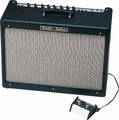
If you’ve had your ear to the ground about the oncoming Fender price hike well, it’s real, and it’s here. I was in a shop today, and a brand new Fender Hot Rod Deluxe – the exact same amp I own that I got for $599, for a whopping $839, with a list of $1200! For cryin’ out loud! This amp is NOT a boutique amp. While a tube amp, it has a solid state well, everything. All the electronics are on PCB boards, and the damn thing’s not even assembled in the USA!

If I was looking for my first tube amp, at these prices, I’d ignore Fender, and get something like an Orange Tiny Terror, or an Aracom RoxBox. The Tiny Terror costs $550 new, and RoxBox head is $895. I’ve played both, and they both sound way better (at least to my ears) right out of the box than the Hot Rod, which I had to spend even more money on mods and better tubes than the stock GrooveTubes that come with it.

Make no bones about it: Fender amps at this level ain’t boutique, not in the slightest, but they’re approaching boutique amp prices. Well, I guess it’s the sign of the economic times.

5 Tone Bones - Gear has stellar performance, value, and quality. This is definitely top of the class, best of breed, and it's a no-brainer to add this to your gear lineup!

Hardwire RV-7 Stereo Reverb

Hardwire RV-7 Stereo Reverb

Summary: With seven (7) licensed Lexicon reverb models, this is one bad-ass reverb pedal, and a great value proposition given the relatively inexpensive price of $149.99 for a true bypass pedal. With the Hardwire series, Digitech has really hit a home run!

Pros: Just about the best-sounding spring and plate reverbs I’ve ever heard in a digital reverb. Capable of subtle reverb, to thick, rich and wet surf.

Cons: None. I dig this pedal!

Price: $149.99 street

Features (from Digitech):

  • Reverb Types
    • Room – Fast decaying reverb; great for a touch of ambience
    • Plate – Renowned studio reverb heard on classic recordings
    • Reverse – Reverb in reverse; gradually crescendos to full volume
    • Modulated – Lush, modulating, reverb ideal for chords
    • Gated – Unique reverb with abrupt decay; good for percussive playing
    • Hall – Large, encompassing reverb with warm decay
    • Spring – Classic “surf” reverb; great for Rockabilly too!
  • Tails On/Off Switch – When on, reverb tails are not cut off in bypass
  • True Bypass circuitry preserves your tone in bypass
  • Constant high-voltage operation for tonal quality and noise reduction
  • HardWire Pedals include the following stage accessories
    • Stomplock™ knob guards lock your tone in place and prevent tampering or accidental knob adjustments onstage
    • Green gaffer tape helps you locate the pedal in adverse stage lighting
    • Custom-cut Velcro® pads attach and lock your pedals to your pedalboard

Tone Bone Rating: 5.0 – I did a review of this awhile back, but I finally bought one, and I am oh so pleased with how it sounds!

Yeah, yeah, say what you will about Digitech being known for “consumer” grade pedals, and I’m as much of a boutique pedal snob as the next guy, but there’s no denying the quality workmanship that has gone into the Digitech Hardwire series of pedals. And yes, I know, I reviewed this pedal before, but that review was based upon a test at my local Guitar Center, while competing against the flailing of a wanker sitting next to me, trying to look cool and and trying to play metal licks and failing horribly. Okay, enough of the ranting… Y’all know how I feel about wankers… (search GG for “wankers”).

And say what you will about a digital effect box, but the fact the RV-7 has seven licensed Lexicon reverb voices inside give this pedal LOTS of credibility in my book. As I mentioned in my previous review, I’ve used a Lexicon rackmount for vocals at my Church, and have absolutely loved the reverb effects it contains. Though digital, Lexicon has figured it out, so it’s no surprise that they’re pretty much the standard for digital reverb.

In any case, despite the conditions I had to play within during my initial test, the RV-7 blew me away. Honestly, at the time, I didn’t think Digitech was capable of making a truly great-sounding pedal. Make no mistake, I’ve had Digitech pedals in the past, and they’re all quite functional, but I would never give them a “best in class” rating. They tend to offer great value for the money you pay – which isn’t much for their standard stuff; at least until I discovered the Hardwire series – especially the RV-7!

Since I reviewed the RV-7, I’ve tried several, and even came close to buying an EH Holy Grail. It too is a great sounding reverb, but there was something about its room reverb model which just didn’t do it for me. It’s a great pedal though, but I still liked the RV-7 better.

Recently, I had the chance to go to the local music shop near my work (B Street Music in San Mateo, CA) to perform an A/B test between the Holy Grail and the RV-7. Head-to-head the pedals were pretty close in performance, but the RV-7 beat the Holy Grail with the types of reverb voices it offered, plus the room reverb model on the RV-7 was superb! While the Holy Grail just edged out the RV-7 with the spring reverb, I found I could dial in a great sounding spring reverb with the RV-7 just the same, so that, combined with the awesome room reverb was what sold me. But let’s get into some specifics…

Fit and Finish

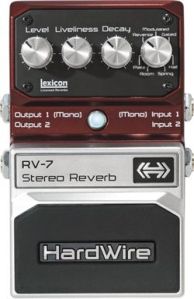
All the Hardwire pedals are solidly built with a cool, flat metallic finish. These pedals are very well-built, and surprisingly heavy – definitely gig-worthy. The RV-7 has a purplish, flat metallic finish on the body with a flat silver switch plate that has a nice rubber pad with the Hardwire logo. The pedal featurs a cool, light-blue LED indicator light. The RV-7 has four control knobs: Level, Liveliness, Delay, and a Voice selector knob. The first three knobs are not smooth sweep knobs. They have – for lack of a better term – micro-notches that really add to the whole industrial vibe that the Hardwire pedals have going on. When you look at the pedal, what’s not to like? 🙂 Of course, how it sounds is where it’s at, isn’t it?

Controls

Level – Controls the Wet/Dry amount. Fully clockwise is 100% wet.
Liveliness – This is actually hi-cut filter to add or reduce the amount of high-end freqs that come through
Delay – Controls how long the reverb effect decays after striking a note or chord
Voice Selector – pretty self-explanatory

How It Sounds

In a word, AWESOME! I used it in my weekly acoustic gig this evening, and was thanking the heavens for such a great pedal. My guitar maintained its clarity, no matter how much I upped the level knob. It must have a slight pre-delay built in; whatever, the fact that I could clearly hear the notes and chords I was playing and not having them washed out by the effect was truly an inspiring experience. Add to the fact that it is true bypass, so when it’s off, it’s really off, is yet another reason to love this pedal; no hum, no buzz.

To be fair, I have no idea what to do with the reverse reverb other than to add some interesting effect with single notes in a song. But other than that, I’m really digging this pedal!

Sound Samples

Here are some sound samples I quickly created… Please excuse the recording quality. I just recorded in an open room with no filtering. BTW, I used a Strat with a prototype Aracom RoxBox 18 Watt Amp with a Jensen 1 X10 speaker. In almost every case, all the dials were at 12 o’clock, except for the Hall and Spring, where I set Level and Decay to about 2pm. I prefer a more subtle reverb effect, but as you’ll hear, the RV-7 is crystal clear, and produces a very nice reverb effect.

Room

Plate

Reverse

Modulated

Gated

Hall

Spring

Orange Amps Dual Terror

Orange Amps Dual Terror

I’ve always associated Orange Amps with metal until I actually played a Tiny Terror. What a great amp! It’s got nice, bright EL-84 tone, and for $550 new, it’s a great little amp! Hmmm…. looks like I should do a review of it… 🙂

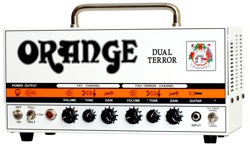
But Orange is taking the amp a step further and has just announced the Dual Terror, which is a 30 Watt, dual channel amp that is switchable down to 15 and 7 Watts! Oooo… From the announcement I read, it looks like this will be a real versatile amp! Can’t wait to test one out. FYI, here’s a copy of the press release I just got from Orange….

Orange Amplification launches ‘Dual Terror’

British amplifier manufacturer, Orange Amps launched the Tiny Terror amp in 2006 and has already sold over 30,000 units, making it one of the most in-demand amps in the world. The concept of the Tiny Terror was simple: squeeze every drop of Orange’s unique signature tone into a lunch-box sized amp to create 15 watts of unmistakable Orange Class A Tone weighing only a few kilos – and at a price every guitarist can afford.

Orange can now announce the next generation of the Tiny Terror concept – the ‘Dual Terror’: a twin channel, 30-watt head, switchable from 30 to 15 or 7 watts giving more choice and options shrunk into a size that belies its power!

The 30 watt Class A dual channel amp incorporates the unique Tiny Terror channel and a new ‘Fat Channel’ bringing a new ‘fatter’ chunkier sound, whilst keeping the classic Tiny Terror sound.

The power options make this a truly versatile amp, capable of dominating at bigger venues and subtle enough to be perfect for recording, studio work and home playing. Switchable between 30, 15 and 7 watts and switchable between 4 and 2 output valves, the combinations of options provide for unmatched levels of performance and flexibility.

The Dual Terror OS-DT30-H is built to the usual Orange high quality standards, using top quality components and its roadworthy rugged construction (supplied with padded gig bag ) is everything you’d expect from an Orange amp. The proven ‘Orange Terror’ concept of combining portability, versatility and delivering most importantly a great sound, is all here.

The original Tiny Terror has legions of fans, with users including Gary Moore, Mark Knopfler, Steve Jones, Eddie Van Halen, Andy Dunlop, Kaiser Chiefs and Eddie Kramer. The new Dual Terror will have even wider appeal to professional users and enthusiasts alike.

For further information contact:
USA info@orangeusa.com or outside USA info@omec.com

home


Tel ; +44 208 905 2828
Fax ; +44 208 905 2868

Stuck in a Rut

…but there’s a light at the end of the tunnel… At least I hope so. 🙂

For the past few weeks, I’ve been in kind of a rut with writing music. I’ve got eight songs for my new record, which I recorded pretty regularly over the course of about three months. And it wasn’t just eight songs I wrote. I wrote and recorded about 20 other songs before deciding on the ones that made the final cut. The process was incredible! A song would come to me, I’d grab my guitar or sit at the piano, and in a relatively short amount of time, I’d have a song. Then I’d spark up my DAW, and record a raw piece to make sure I captured it. No sweat.

But as soon as Christmas season hit, it seems that the stress of getting stuff done at work before taking a vacaction, then Christmas itself just sucked the creative juices out of me. Okay, I’ve written some jam tracks and recorded some short snippets of songs, but to date, I really haven’t gotten the inspiration to write a full song. But in spite of that, I’m feeling really positive as there is a bright side to this lack of creative energy.

As you know, I’ve lately been driven to be more academic about what I’m playing; partly because I want to be able to effectively teach what I’m learning, but also because I just want to be a better player. So in lieu of writing music, I’ve been working on my improv skills, and I’ve been really happy with the progress I’ve been making! All this practice is just making me a better player, and that is inspiring in and of itself!

For instance, as many may know, one of my regular gigs is to play at church. Before any naysayers start ripping me about playing at church, understand this: Do a worship service of ANY kind poses particular challenges. For instance, you can’t just rock out all your songs or pick music that is always up-tempo. Worship services need to take people through an emotion journey with respect to the music. Typically, the beginning and the ending songs are pretty upbeat, while the middle songs are much more subdued or, if you do have a more upbeat song, you don’t go all out and rock. The idea is that the music is not the focus, the worship experience is, and the music you play needs to enhance that. Furthermore, because it’s in a church, you can’t play at real loud volumes the entire time. As I mentioned above, you can get away with it at the beginning and the end, but even in those spots, you can’t really play at club or concert levels.

Sounds a bit constraining, doesn’t it? I’ve been gigging for years, and each type of venue poses its own particular limitations. The trick is to work around those limitations so that you can be as expressive as you can be.

All that said, considering the constraints, last night’s service was awesome! To add to our normal volume constraints though, I was missing both a drummer and a bassist, and all we had were two other guitarists besides me, one of which just started playing with us that day. So it was particularly challenging because being the most experienced guitarist put holding down the rhythm to the songs on me. But that was the cool thing. All the work I’ve been doing on my technique has allowed me to so much more than just strumming chords, adding little runs or double adorning some chords with arpeggios or arpeggiated double-stops. This is stuff that I couldn’t do six months ago! And despite not really being able to do any leads, it didn’t matter, I felt totally inspired!

So yes, there is a bright side to this rut. At least I can still play… 🙂

I just dig it when I find a great guitar and amp combo! Featured in this Jam Track are the Saint Guitar Company Messenger Baritone and the Aracom Amps Custom 45R, both of which I’ve reviewed previously. (Messenger Review | Custom 45R Review). The Custom 45 has a really beefy low-end and a slight scooped tone, and the Messenger, while a baritone, has this incredibly bright-sounding voice. The two complement each other particularly well! Here’s the Jam Track:

You have just over 6 minutes to play around with this one. For the rhythm part, I used a fairly basic rock beat, but I also added some Latin drums underneath to take the edge off the heavy downbeat. And by the way, there’s no bass in this track at all. All of that is provided by the Messenger!