I’ve been playing a solo acoustic gig for about 7 years now, and in all that time I’ve wanted to do lead breaks in various songs. But being a solo artist, and not having all that much time to spend on backing tracks, needless to say, lead breaks were out of the question – until now.
I just picked up a used Boss RC-2 the other day, and since playing with it, I just know that it is going to change the way I do my solo gigs forever. Even if I don’t keep this particular unit (which I probably will for quite awhile, as it does everything I need for now), I’m a total convert to using a looper!
Not that it hasn’t been challenging. Consistent tempo is tantamount to creating loops on the fly. Playing solo, I’ve gotten used to doing rhythmic embellishments, which don’t quite work all the time with a looper, and I’ve had to practice cutting off the record at just the right time. That has probably been the biggest challenge so far. But I’m starting to get the hang of it, and I’m just loving the possibilities it opens up for me!
As I mentioned in my review of the Yamaha APX900, I’ve had this thing for Yamaha acoustics for many years. Maybe it’s nostalgia or sentimentalism, as my first guitar was a Yamaha, but I’ve always liked their tone. In any case, I’ve full circle with the Yamaha APX900, and I just couldn’t be happier. This is one killer guitar! With its Mocha Black finish, mother-of-pearl “bookend” inlays, and gorgeous binding, it has stunning looks!
But of course, looks don’t tell the whole story. It plain sounds fantastic! Whether plugged in or unplugged, the APX900 has a magical, creamy tone that I’d easily put up against guitars three or four times its price which, at a mere $699 street, makes this an incredible value!
Unplugged, the tone is smooth and well-defined, and even as a thinline guitar, it’s not so thin that sustain is sacrificed. The body resonates and provides lots of sustain. In fact, it’s smaller size belies the big voice that the APX900 possesses. Here’s a clip:
There’s nothing subdued about that tone. For that recording, I used a Senheiser e609 pointed at the front edge of the sound hole about 4″ away from the guitar. The APX900 has an phenomenally even EQ response. When I played back the recording, I had to do a double-take! Make no mistake, that is the raw recording with no EQ or filtering! It’s amazing!
Plugged in, the APX900 shows even more magic. The first thing I noticed when I first played it – direct into a PA – was that it sounded natural; that is, it didn’t sound like an acoustic plugged into a board, where the tone is completely flattened out, and what you end up with is high, mid-rangy, and lifeless. It’s due to the APX900’s ART or Acoustic Resonance Transducer pickup system, which is a system of three pickups; strategically-placed to emphasize or de-emphasize certain EQ ranges. This lets you dial in all sorts of tones! I’m still discovering the possibilities!
Here’s the same progression I recorded unplugged, but with a solo played on top of it. For the “rhythm” part, I have the Low, Mid, and High faders, plus the under-the-saddle pickup’s EQ set to dead-center. With the solo, I added a touch of the mid, plus more highs to cut through. The result is spectacular!
Again, with this clip, I didn’t adjust any EQ on either track, though I did add some reverb for some ambience and to simulate what I’d do on a PA board anyway. The tone is different from the unplugged sound, but with a little playing around with the faders, I can get very close. But no matter, the tone is still killer, and most importantly, the dynamics are fully retained, and on stage, that’s absolutely critical!
So yeah, I really do dig this guitar. I’m looking forward to gigging with it!
Dynamics. It’s what separates a mechanical and boring piece from something that can move an audience to tears. In this episode, Doug talks about the incredible dynamics of the Dumble Overdrive Special.
This is the last video in the series of Doug Doppler on the Dumble Overdrive Special, but it’s not the last. I’ve got many more “Doppler on…” videos to come, so stay tuned!!!
That’s right! As I mentioned in episode 1 of the series, the Dumble can shred, and it sound unbelievable. In this part, Doug talks in-depth of the tonal capabilities of the Dumble amp and demonstrates it versatility by shredding on it!
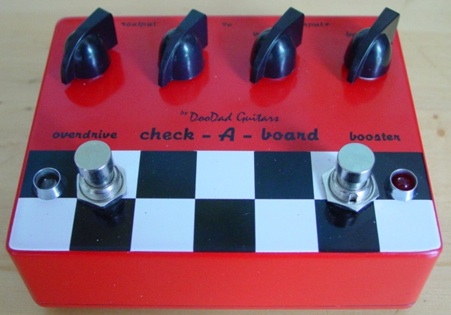
Summary: Two independent, true-bypass pedals in a single “bastard-proof” enclosure that can be used standalone or together. Overdrive is based upon the classic Tube Screamer, but has a voice all its own, and the booster is nice and transparent.
Pros: Fantastic overdrive tone! The overdrive is super responsive, and the sustain at high drive settings is killer!
Cons: I just keep the tone pot wide open. But the cut can be dramatic when you want to reduce some highs. Just a nit.
Features:
Both overdrive and booster are true-bypass.
Runs on a single 9V battery
Overdrive controls: Drive, Tone, and Volume
Booster controls: Boost (gain)
Price: $139 street
Tone Bone Score: 5.0 ~ I admit it, I’m partial to overdrive pedals, and while I love every single one that I have, I just never get tired of them. This pedal is going on my board! I’m buying the eval unit!
Holland Produces More than Just the Dire Straits
I’ve been wanting to review gear from European companies for awhile; that is, European companies that don’t have much of a US presence, so TC Electronics was kind of out. So when I discovered Doodad Guitars by accident through some research on Marble amps – another Dutch company – I knew I had to find a way to check out their gear. So hooking up with Mal Stich of the The Alternative Guitar and Amplifier Company in Southern California got me the Check-A-Board RED overdrive/booster. I’ve been having TONS of fun with this pedal since I got it for review. So much fun that I’ve decided to keep the pedal. 🙂
Gig Report
Not wanting to lug my full rig to the church this past Sunday – which usually includes an amp head, cabinet, PRX150-Pro attenuator, my pedal board, plus a couple of guitars – I opted to go a bit more sparse. This time, I loaded up my Champ 600, a 1 X 12 cab, my Squier CV Tele; then threw the Check-A-Board RED pedal and my TU-2 tuner in a gig bag. Setup time: Less than five minutes. 🙂
This past Sunday, my drummer was traveling on business, but even without a drummer, I like to have a little dirt at my fingertips. And since I wasn’t using an attenuator, an overdrive pedal was my only option, so what better way to test the RED pedal?
I needed to pop in a 9V battery, and I have to say that I dig the battery compartment in this pedal! As opposed to many pedals that have a separate lead wire that you have to attach the battery to, then place into the battery housing, the RED pedal’s housing actually swings out completely! You just slide the battery into the compartment, swing the housing back into the pedal, and you’re off to the races! Nice and convenient!
For volume setup, I first adjusted the Champ’s volume to my normal gig volume which, in a church as most worship players will attest, isn’t very loud; especially when you’re sans a drum kit. By the way, my guitar was also set to just above half-way on its volume knob, so I’d have some wiggle room. Once I had that dialed in, I set the RED pedal’s drive to about 2pm, tone wide open, and set volume at just above unity. That gave me a nice rhythm grind, and with the drive set where it was, if I added more volume on the guitar, it wouldn’t produce too much more volume – just more dirt, which is what I wanted.
At those pedal settings, the RED pedal really sustains. That’s what you’d expect from a Tube Screamer-like pedal. But as I mentioned in my “first impressions article,” it has a voice all its own, foregoing the huge mid-range hump, and presenting a much flatter EQ response that brings out the highs and lows a bit more (just so long as you keep the tone wide open as it is a high-cut filter).
While it responds dynamically much like a Tube Screamer, its voicing is darker and has more “balls.” That’s a great combination, especially when you’re playing through a naturally bright amp like the Champ 600. It provides an overall tonal balance, and that’s very pleasing to me. 🙂
There were two things that struck me during the service about the RED pedal: First of all, even when I was wailing on the strings, the string separation was phenomenal! This pedal doesn’t know how to get mushy! Even on our closing song where I cranked the Drive – and we could play with more stage volume because the congregation gets LOUD 🙂 – my sound never turned to mush, and I was able to weave in and out of power chords and little fills and not worry about producing just a wall of sound. KILLER!
Secondly, where I had the pedal set up for most of the service, the RED pedal’s dynamic response was much like an amplifier’s, and it responded incredibly well to volume and knob and pick attack. For instance, there was one song near the beginning of the service where I stepped into the aisle to egg on the congregation to sing with the band. When I stepped out, we were in the middle of a nice, driving section of the song. I kind of got a bit carried away 🙂 and lingered there a bit too long and couldn’t get back to the RED pedal to switch off the overdrive before the softer verse section. So I turned my guitar volume down just a bit, and used some light hybrid picking for the verse section. The pedal cleaned right up, and had just a tad bit of dirt on the high-end which served as some shimmer. Needless to say, I pretty much kept the pedal on for each song we did, with the exception of a meditative, prayerful song where I had to play absolutely clean.
Funny thing, while I set up the booster, I didn’t even use it this past service. I’ll definitely use it when I use my regular rig, as I’ll have my attenuator and can set my amp to its sweet spot. Then I can take advantage of slamming the front end with some gain. 🙂
I DIG THIS PEDAL!!! At $139 from The Alternative Guitar and Amplifier Company – and I don’t say this often – but this is a must-have pedal for me! Looks like I’m going to have to buy the evaluation unit! Yeah, I know, I’m adding yet another overdrive pedal to my collection, but as Tony Stark said in “Iron Man,” “I gotta have it.” But unlike Stark, I won’t box it up and put it in storage. This pedal is going on my board!
How It Sounds
I’m using the clips I recorded for my first impressions article again. I’m actually working on a video review of the pedal, so I didn’t want to record more clips. But here’s a sampling for your listening pleasure. For this, I’m using my Aracom PLX18BB 18-Watt Plexi clone.
Wow! I’m having A LOT of fun editing this series because I’m just blown away by Doug’s incredible talent! What a gift! In any case, this part of the series has Doug discussing tone shaping with the ODS pre-amp section, and talking about playing a Strat through the amp. Plus, there’s a little surprise at the end. 🙂 Cheers!
Over the past couple of weeks, I’ve had the privilege and honor to spend some time with one of the great guitar talents in the world, Doug Doppler. I originally was just going to just do a behind-the-scenes look of his new, upcoming DVD series, “Get Killer Tone,” and it kind of took on a life of its own, much to my surprise and pleasure. One of the highlights of our first meeting was having Doug demonstrate the Dumble amp he has on loan for the DVD. After we did the first taping, Doug contacted me and said he wasn’t satisfied with what we did for the first Dumble demonstration, so he invited me back to do a more organized and focused session. How incredible is that?!!
As it turns out, I’ve got enough footage to do a mini-series just on our single Dumble session, so that’s what I’m going to be providing over the next few weeks. This first video is just a quick overview of the Dumble Overdrive Special’s features, plus Doug demonstrating how incredible it sounds clean with a classic archtop guitar. Enjoy!
Sorry if you could hear my breathing in the video. Had the camera a bit too close to me… 🙂
Finally, what is a very positive fallout of this series is that it provides a much more in-depth look at the performance characteristics of a Dumble amp as opposed to just doing a “demo.” I think Doug wanted to share why the Dumble is so special, and not just by doing clips, but by providing demonstration as well as discussion. That’s not something anyone has done – at least not that I’ve seen – and I’m completely overwhelmed by the opportunity to provide this!
You know me… I LOVE overdrive pedals! I have several, and amazingly use them all, depending upon the voicing that I want, as I don’t think I’ve ever come across any two that sound exactly alike. But since I’ve been playing through really nice tube amps, I’ve come to really appreciate a great booster pedal as well. So it was very pleasant surprise to discover Doodad Guitars’ Check-A-Board RED overdrive-booster pedal that combines both OD and boost in a single pedal.
You might be thinking, “So what?” I certainly did, until I found out that you could operate either one separately or both in tandem to not only add some clipping before your amp, but to also slam the front end with more gain. That really piqued my interest!
I discovered this pedal through Mal Stich over at The Alternative Guitar and Amplifier Company (“Alternative” for this discussion) as I was searching for more information about Marble Amps, a Dutch company that makes vintage Fender clones. “Alternative” is their US dealer. I called up Mal to get info about the amps, and we had a great conversation. He shared that the amps were fantastic, but it was tough to sell them here in the states because shipping and duties are so high for such heavy gear that it makes it hard for Marble to compete in the boutique amp marketplace in the States. Then he mentioned that he was working with another Dutch company that had just released a brand-new overdrive-booster combo pedal. That got my ears up! So he graciously offered to send one to me for review.
So as a first impression, what do I think? This is a killer pedal, folks! I love both sides of the RED pedal. While the overdrive is supposedly based upon the classic TS-808 circuit, it doesn’t sound at all like a Tube Screamer (remember, I have one), but that’s a good thing, as it has it’s own voice. It can go from slightly gritty to super saturated and sustaining. But the coolest thing I dig about it is that it doesn’t compress your signal much with the drive set high. But like the Tube Screamer, at high drive settings, it sustains for days!
With respect to the booster, I dig it. It doesn’t give me as much boost as my Creation Audio Labs Mk.4.23, but very importantly, it doesn’t add any artifacts either; in other words, it boosts as expected, and does it transparently. And it comes in handy when I need a slight volume jump for a lead. I guess you might compare it to the VOX Satchurator’s “More” toggle, but with this booster, the gain is adjustable. Nice! While I really love the overdrive side of the pedal, I’ve found myself using the booster a lot more because my amps just loved to be slammed with gain on the front-end! 🙂 The booster really brings out the best in these low-wattage amps!
For controls, the RED pedal has four knobs: Three (Drive, Tone, and Volume) control the overdrive section, while the four controls the amount of boost the pedal produces when the boost is engaged. The Tone control is more of a high-cut filter than a true EQ, but that’s okay. I prefer that with overdrive pedals as I usually want all my tone, so I normally have it all the way up, or if I’m playing a naturally bright amp, like my 18-Watt Plexi clone, I just dial out a tiny bit of the highs. One thing that I noticed immediately with the overdrive besides its sustain, is the incredible note separation, even at higher drive settings. That makes it a no-brainer to use when I want singing lead tones! As I mentioned, the signal doesn’t compress that much, so having that note separation is killer!
In my short time using the pedal, I’ve actually preferred to use the overdrive and booster separately. My little low-wattage amps provide enough dirt that slamming them with overdrive AND boost is just overkill. If I had higher-wattage, high-gain amps, it probably would make more sense to use both. In any case, I have some clips of the pedal. I’m using my Squier CV Tele plugged straight into the RED pedal then into my Aracom PLX18BB Plexi-clone.
PLX18BB By Itself
Overdrive Engaged
Booster Engaged
I have some more playing to do with it before I do my full review, but I will be giving this pedal a pretty high rating!
I’ve never hid from the fact that I own Aracom gear, and as I’ve said in My Rig page, I’m a faithful customer who just digs the stuff that Jeff Aragaki, Aracom’s founder, comes up with. I’ve extolled the wonders of his attenuator, the PRX150-Pro, and I’ve mentioned my Aracom amps, the VRX18, VRX22, and PLX18BB several times.
One thing I’ve learned over the years with respect to gear is that you go with what works for you, and my Aracom gear simply works for me! In fact, my Aracom equipment has had a lot to do with me using less pedals, and relying on the raw sound of my guitar and amps; especially when I’m playing straight rock and roll.
I have yet to play a bad-sounding Aracom amp. When they’re cranked to the hilt, they have such an incredible mojo that’s just too hard to describe. Of course, I couldn’t crank them without the PRX150-Pro attenuator. No matter, there’s magic in Jeff’s creations! To demonstrate this magic, I’m going to share an excerpt from a song that I’m working on. I just finished laying down the instrument parts. Give it a listen:
The rhythm part is played with my Squier CV Tele in the middle switch position, and running straight into Channel 2 of the PLX18BB, which was cranked up all the way. Talk about cranked Marshall-esque tones! It sounds even better live! The lead was recorded with my Gibson Nighthawk 2009 into my VRX22. Master was at 3pm and Volume was at 2pm. This setting gives me a sweet, singing lead voicing that sustains for days due to the awesome solid-state sag circuit! Again, the guitar was plugged straight into the amp – no frills whatsoever. I did add some reverb to both parts, but other than that, that the raw sound of the guitars/amps with no EQ. Pretty killer tones!!!
To top it off, both parts were recorded at bedroom level as both amps ran into the PRX150-Pro! We’re talking conversation level, so if you heard some transient clicks in the clip, it’s stuff that was making noise in my garage/studio!
You gotta check this stuff out. Jeff is a true wizard with amps! Both the VRX amps start at $895, while the PLX18BB combo starts at $1750 ($1350 for the head only). If you’re after vintage Marshall tone at a non-vintage price, you owe it to yourself to check out these amps!
Wow! I didn’t realize how fun doing videos would be! Expect to see more video reviews in the future! In any case, here are some key points:
Tone Bone Rating
5.0
Notes
I LOVE this stand! I’m going to get a couple more! Very well built and lightweight, it’s a perfect stand not just for the stage, but also in the studio where its small footprint won’t take up much space!
Price
$34.95
Pros
Very easy to fold up and lug around
Cons
May not work for bass – it works for mine, but fat basses may not fit (this is not really a negative, just a warning)
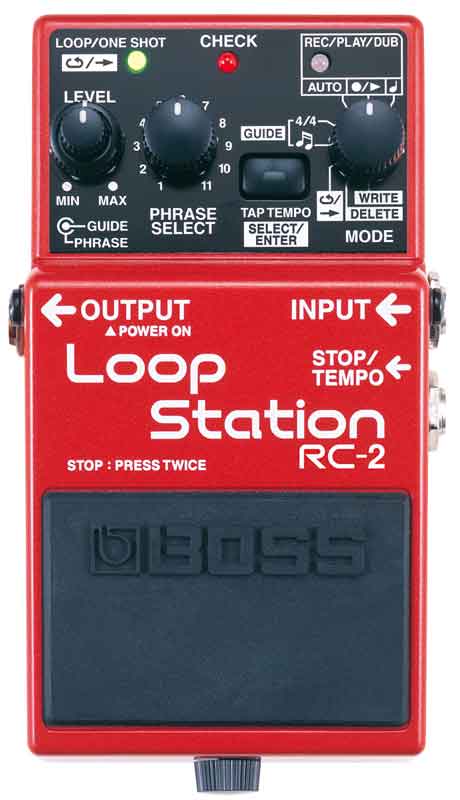 I’ve been playing a solo acoustic gig for about 7 years now, and in all that time I’ve wanted to do lead breaks in various songs. But being a solo artist, and not having all that much time to spend on backing tracks, needless to say, lead breaks were out of the question – until now.


 Guitar Gear