Feeds:
Posts
Comments

Posts Tagged ‘gear reviews’


65 Amps Soho
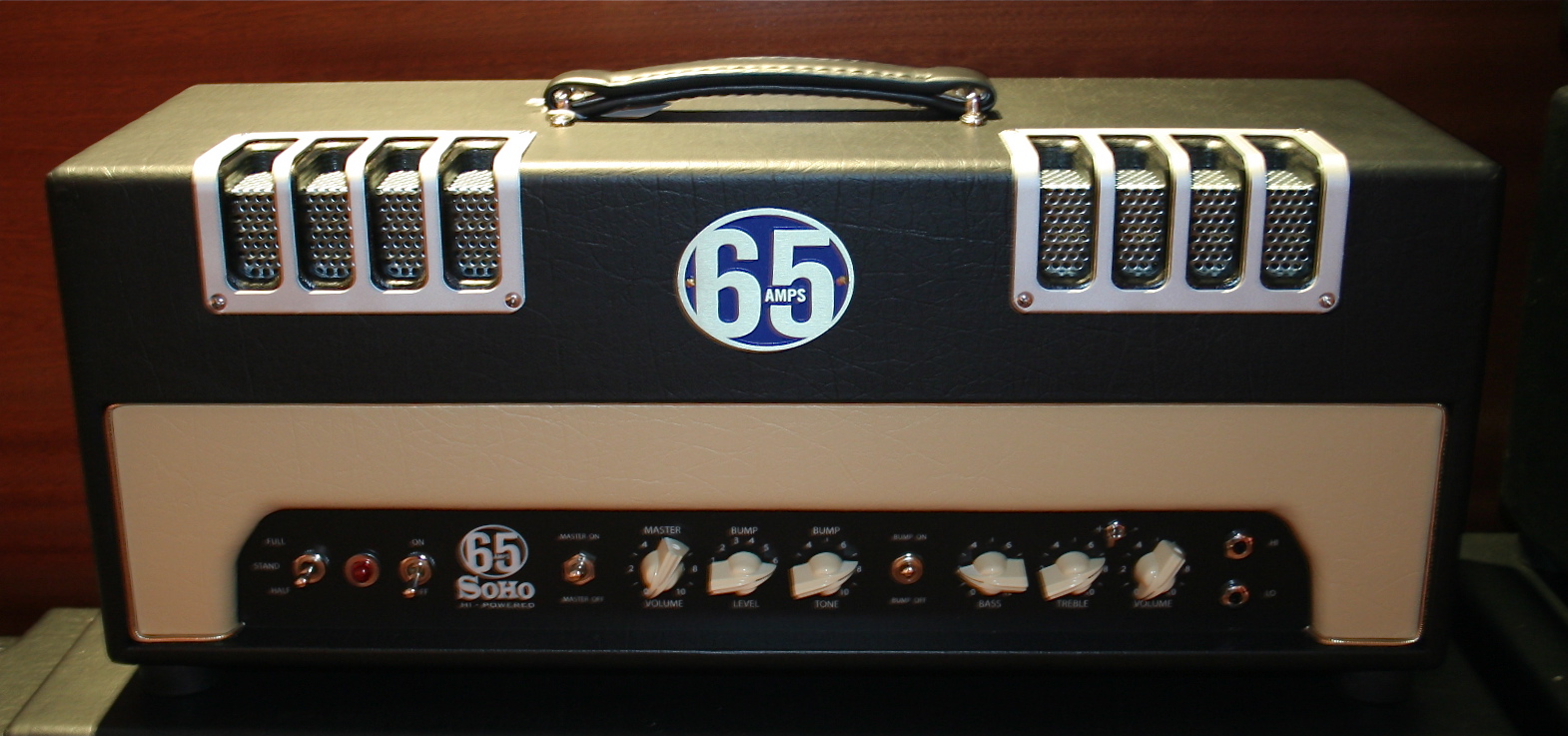
Summary: Super-versatile amp with LOTS of balls. Goes from AC30-like tones to cranked vintage Plexi. While definitely British-style in tone, it has a tone all its own.Pros: One of the very few amps I’ve ever played that REALLY responds to guitar volume knob changes. The Soho, while very versatile is also VERY efficient. The 20-Watt model I heard and tested had the feel of a 50 Watt amp! Very nice.Cons: None.

  • Features:Output: 20 Watts (SoHo) or 35 Watts (SoHo HP)
  • Tubes: Power amp 2xEL84 (SoHo) or 4xEL84 (SoHo HP), Preamp EF86-12AX7
  • Rectifier Tube: EZ81
  • Speakers (combo): Celestion Alnico Blue + G12H30
  • Panel controls: Volume, Treble, Bass, Booster, Bump™, Bump Tone™, Bump Level™, Master Voltage™
  • Extras: Footswitch input jack, dual speaker outs, switch for 8Ω & 16Ω impedance

Price: ~$2400 Street

Tone Bone Score: 5.0 ~ Yowza! I LOVE this amp! It is so versatile and expressive and responsive to input gain. As much as I love my Aracom amps, I think this is an amp that I have to have.

I really shouldn’t go to music stores. But then again, if I didn’t, I’d lose an important source for gear. Last week, I happened to go to my favorite gear store (Gelb Music in Redwood City, CA), and was just hanging out looking at gear. i was also in there to see if they had gotten their latest shipment of Gretsch guitars, as I want to get the Electromatic 5122DC. Unfortunately, it hadn’t come in yet. But Jordan (who’s the guitar dude at Gelb) said that Dan, the designer from 65 Amps was coming in to do a demo from 5-7pm. It was just after 3pm.

Just so happened that Dan had just walked in the door, and Jordan introduced me to him while he was setting up their back room with the 65 Amps they carried. Dan and I got to chatting about gear and gigging, and then I started asking him questions about the Soho, which is an amp that has continually gotten my attention because Andy at ProGuitarShop.com uses one for most of his gear demos. So a cool thing happened: I got a private demo of the Soho from Dan the designer himself.

Now as we were talking, my impression of Dan was that he was a very nice, straight-shooting guy. But I’ve also seen and tested lots of different amps, so I guess I’ve become a bit jaded about boutique amps. But as you’ll soon find out as you read through this article, my jadedness became completely irrelevant in this case…

Dan took me through all the features, and I was completely dumbstruck by the expressiveness and versatility of the Soho while he played. The response to input gain using the guitar volume knob was incredible! I confirmed this when I played through it myself. You can go from clean to dirty with just the knob, then get really nice driving, but not overly compressed hard gain. The tone was incredible!

Now the Soho might look like a two-channel amp from its control layout, but it doesn’t have two channels; rather, it has two modes: Normal and Bump, which gives you a “bump” in tone and gain which is controllable like a separate channel – but it’s not a separate channel. Believe me, it’s very cool!

The “Bump” feature makes the tone of the Soho thick and rich and incredibly expansive. I commented to Dan that when he had it cranked, the amp sounded as thick and loud as a 50 Watt Plexi. He just grinned, as he knew exactly what I was talking about. As I mentioned in the Summary section above, this little amp has BALLS!

Equally impressive is 65 Amps’ trademark “Master Voltage” which is a bit different from a master volume in that like a regular MV it varies the B+ voltage it also keeps the filament voltage up, so you can still break up at lower volumes. Not sure the tech behind this, and who knows, it might be hype. But hyped terminology or not, it works; and it works incredibly well! It acts like an attenuator, giving you all the grind you need at lower volumes, without the extra circuitry.

I didn’t get as much time to play with it as I would like, and I tend to be rather self-conscious in stores when I’m evaluating gear, so I didn’t try too much. But I took it through various things I might do in a gig, and all I have to say is that the Soho is a true player’s amp. It has everything you need to cover gorgeous cleans to hard-driving rock. It’s definitely not a metal machine, but for producing most rock sounds, you can’t do much better. It’s not a small wonder why a great player like Andy over at ProGuitarShop.com uses this amp for his demos.

Here’s another thing: The amp is absolutely unforgiving. You can’t be tentative with your playing when you play through this amp because every mistake will be picked up. I love that about this amp! That’s why I call it a player’s amp because you really have to play. When I first started playing around with it, Dan said, “Give yourself some time Brendan. It takes a little while to get used to…” Man, was he right! I twiddled knobs, found a setting I liked, then just closed my eyes and started to play (closing my eyes helps me lose my self-consciousness – beside if I suck, I know it’s not the gear). 🙂 Luckily, I didn’t flail too badly, and in the process, I fell in love with that amp. It simply rocks! I need to get this amp. Damn! There goes the GAS again!

BTW, here’s a video demo of the amp by Dan:

For more information, visit 65 Amps Soho page!

Read Full Post »

I’ve gotten to the point in my playing where I’ve pretty much established my base tone, so I’m extremely sensitive about the pedals I add to my rig; especially modulation effects. To me, they should only enhance my tone, and not define it. I should still sound like me whether I have a particular modulation effect on or off. In other words, if the effect is off, I shouldn’t feel as if something is missing from my tone. There are, of course exceptions to this rule of thumb, like my Boss CE-2, where I actually want my tone altered, but in general, I want my modulation effects to simply “fit” with my tone.

Such is the case with TC Electronic Corona Chorus. It simply “fits” with my rig. I’ve been playing with it for the last hour or so, and the more I get to know it, the more I absolutely love it. And all this for $129? This is a winner. In any case, I’ve recorded a couple of clips to demonstrate the pedal. Mind you, all these were done in the standard chorus mode. I haven’t started playing with the TonePrint or TriChorus much yet.

Subtle/Clean

The first clip has me playing clean fingerstyle with a short song. I do the song first without the pedal engaged, then play the song over with the pedal engaged, just adding some subtle chorus. The result is simply amazing:

Liquid/Clean

In the next clip, I do sort of a funky rhythm with a syncopated bass line. Here I’ve turned the FX Level to past 2pm, the Depth to 2pm and Rate to noon. What I get is a real liquid tone:

Swirling/Dirty

In this final clip, I add a little more depth and FX Level, then get into the dirty channel of my Hot Rod Deluxe. The result is a flange-like swirling tone. The interaction with the distortion of the amp is totally cool – at least to me:

Read Full Post »

I took the Corona to my weekly solo acoustic gig last night to give it a gig test. From the moment I started playing it, I was in love with this pedal! I actually got to my gig a little early so I could play around with the settings and find a “standard” setting that I could use. My thought behind this was that the pedal would just stay on all the time, except for specific songs that I just want my raw guitar sound.

My standard setting was Speed at 11am, Depth between 12 and 1, FX Level at just past noon, and Tone right in the middle. This produced a super smooth, lush, liquid, and sensual tone that also added a three-dimensional quality. It was total ear candy!!! Not only that, I was using no other processing, doing straight into the restaurant’s board and relying on the high ceiling to get my reverb. The result was absolutely stupendous!

I used the “standard” setting for the songs I play fingerstyle, which is most of the time. For songs where I was strumming, I backed the depth to noon. It’s a very subtle change, but an important one, as any chorus can muddy up your tone when you’re doing fast strums. I do this with all my chorus pedals. But the interesting thing with the Corona is that when I wanted to do any kind of adjustment, I didn’t have to move the knobs nearly as much as I would with other pedals. With the Corona, all the controls are interlinked, so it only takes minute adjustments to affect the overall tone. This is totally cool!

I didn’t use the TonePrint or TriChorus modes at all last night. I just didn’t feel a need to use them. As I mentioned in my review of the pedal yesterday, if the Corona only had the standard chorus mode, I’d still buy it. It sounds that good! I could get super-subtle chorus tones to gorgeous, liquid tones ala Andy Summers with this mode. In fact, I played “Every Breath You Take” last night, and just loved the chorus sound that the Corona produced for that.

Finally, a question I asked myself last night was: With how much I love the Corona, will it possibly replace my beloved Boss CE-2? Probably not. Not because the CE-2 is a better chorus, but simply because it has a distinctive tone that no other chorus I’ve every played can cop. Besides, I also like the slight gain boost that the CE-2 gives me when engaged. For bluesy stuff, that gain boost actually comes in handy. But for general chorus duties, I’ve found my go-to chorus pedal. This thing absolutely RAWKS!!!

Read Full Post »

TC Electronic Corona Chorus

Summary: Part of TC Electronic’s new Compact line, this is just about the most tweakable chorus I’ve ever played. Standard chorus most offers a wide range of chorus tone from subtle, ringing tones to thick leslie-like warble. But with TonePrint and TriChorus, you’ve got even more chorus sounds at your fingertips.

Pros: For the chorus lover, the Corona is a tone tweaker’s wet dream! There’s so much you can dial in with this pedal, and guess what? It all sounds great! Great TC sound in a standard-size enclosure? No problem, mahn!

Cons: None. Granted, I haven’t played with it much, but I just can’t think of anything NOT to like at this point.

Features:

  • TonePrint – instant access to custom pedal-tweaks made by your idols!
  • 3 chorus types – expansive tonal options from glassy shimmer to mind-boggling swirls of sound
  • Speed, Depth, Color and Level controls – sculpt your chorus sounds from subtle to extreme
  • Stereo in & out – for added flexibility to your set-up
  • True Bypass – zero loss of tone
  • Analog-Dry-Through – maximum tonal integrity and clarity
  • ToneLock – protects your presets under all circumstances
  • Easy battery access – makes changing batteries fun! (well, almost)
  • Small footprint – save precious pedalboard space
  • High quality components – only the best will do when it comes to tone
  • Road-ready design – ready to follow you wherever your playing takes you

Price: $129 Street

Tone Bone Score: 5.0 ~TC Electronic is finally coming down from the stratosphere. In the past, price was a big barrier to entry, but with the Compact line of pedals, that’s no longer the case. You get great TC tone at an absolutely affordable price.

Selling Like Hotcakes

I called up my buddy Jordan over at Gelb Music in Redwood City today to see if he had any of the TC Electronic Compact Line in stock. He said he had one chorus and one delay left. He had three of each two days ago, and people are calling, so he has a bunch on order. I’ve been reading the buzz about these pedals for the past couple of days, and it seems that dealers sell them as soon as they get them; and for good reason: At least for the Corona, the pedals sound INCREDIBLE! As soon as Jordan told me he had a Corona (which is what I was originally interested in), I told him I’d be down in a few minutes and he said he’d pull the pedal. He knows me too well; if I like and bond with some gear, I’ll walk out the store with it.

Well, such was the case with the Corona. As soon as I got to the shop, Jordan handed the pedal to me. I took it and got set up to test it. I tested it through a 100 Watt Sebago Double Trouble with a Gretsch Electromatic at the shop and immediately fell in love. This is a keeper, and will be going on my board – today! Let’s get to the review, shall we?

Fit and Finish

Can you say, “built like a tank?” 🙂 The enclosure is absolutely solid. The knobs feel totally sturdy, and the bypass switch (yes, it’s true bypass) feels solid. In other words, if the Corona is any indication of the rest of the line, these pedals will be gig-worthy.

How It Sounds

Sorry, no clips yet as I have yet to bring it home. 🙂 But all I can say is that the chorus is simply silky-smooth. The “Analog-Dry-Through” (ADT) technique that they’re using really works. Basically, with ADT, the dry signal stays untouched in the pedal, and the effect is simply blended in. I really like this technique, as it ensures that your signal retains its integrity. So there’s no signal loss, and no gain boost like you get with other pedals that modify the dry signal directly. It also gives you a lot finer control over how much effect  you want.

I tested all three modes: Chorus, TonePrint, and TriChorus. Here’s a synopsis of each:

Chorus Mode ~ If the Corona only had this mode, I still would’ve bought it. Based upon TC’s classic SCF circuit, this is a smooth, sexy chorus. There’s nothing bell-like with this mode, but it just adds some very beautiful character to your sound and it doesn’t sound at all processed. Based upon my initial test, this will most probably be the mode I use the most.

TonePrint Mode ~ This mode, of course, offers the ultimate in tweakability. Out of the box, the default TonePrint is an asymmetrical TriChorus that has some really cool swirls. But if you don’t like that, just hook the pedal up to your computer via the included USB cable and print a chorus sound you like. You can download TonePrints from the TC Electronic site, where they’ve had some major artists provide TonePrints. Want a Bumblefoot chorus sound? How ’bout one from Orianthi? Pretty cool stuff!

TriChorus ~ For me, used subtly in mono, this mode out of the box will give you very cool leslie-like tones. Apparently, it’s best used in stereo. While I liked it, it was the least of my favorites, but I can actually see where I can use it in one of my songs. It’ll work perfectly for that.

Overall Impression

As I entitled my previous article on the Corona chorus, I really thought I was done getting chorus pedals. But this is a must-have for me as I wanted to have another chorus pedal that could do sounds that me Boss CE-2 can’t do. The CE-2 is a really in-your-face type of chorus, while the Corona can be dialed back for a much more subtle chorus tone. I’ll be using this pedal – A LOT!!!

Read Full Post »

When I get any guitar, one of the very first things I do is to test it out clean. I know, I already did a clip of the guitar dirty, but that was just a spur of the moment thing, and I literally only spent 15 minutes with her when I recorded the first clip. But tonight, I wanted to really take some time to dig in, so to say, and run Lana through her paces.

So I hooked her up to my Fender Hot Rod Deluxe because it just has killer cleans. Came up with a simple chord progression in D, recorded it, then laid down the lead. The “rhythm” part of this clip is with the neck pickup coil-tapped. The lead is with the guitar in the middle position, no coil-tapping. Give it a listen:

One of the first things that struck me was the super-organic, acoustic quality of the rhythm track. The inherent sustain creates lots of resonance, so it acts like the resonance chamber of an acoustic guitar. That’s really amazing. The guitar is probably about an inch and a half thick where the neck meets the body (no joint as this is a neck-through guitar), then tapers out to less than an inch around the body. At first glance, you wouldn’t expect this guitar to have so much sustain and resonance, but Perry’s design somehow creates tons and tons of sustain. Excellent!

When I played the lead, the humbuckers were simply thick and juicy, but without even a hint of boominess, even through my Hot Rod Deluxe, which can get pretty fat in the bottom end. Though I ultimately recorded the lead in a single take, I recorded it after about an hour of looping through the chord progression, just playing lead lines.

To me, that’s the mark of a truly great instrument. I lose all track of time when I’ve got a great instrument in hand. I’ll play for hours on end, and not stop. That’s how good Lana is. She can absolutely sing! I’d put her up against a Les Paul any day; and that’s saying a lot! Can’t wait to hook her up to my Plexi-style amps!

As to the recording, the guitar was recorded completely raw. I didn’t add any compression or EQ or do any mastering. The guitar was plugged straight into my Hot Rod, and I just set the Reverb on 3 to give it just a little grease. But that’s it. What you hear in the recording is just that.

By the way, even before I do the formal review of Lana, she’s going to get 5 Tone Bones. I know, I’m letting the cat out of the bag, but this is such a damn great guitar that I’d be lying if I gave her anything less than a 5!

If  you’re looking for a great custom guitar, Perry is the man to talk to. I don’t have his contact info in front of me, so I’m not providing it just now. Perry, if you’re reading this, please let the folks here know how to reach you.

Read Full Post »

Okay… hmm… what to say… How about OH MY F-IN GAWD!!! I recently wrote about Perry Riggs last week, and true to his word, he sent me out the guitar. It arrived this afternoon via FedEx. Funny aside, my wife called me up as soon as it arrived, and asked me, “Did you buy another guitar?”

I replied, “No honey, I didn’t. Why?”

She said, “Because a Gibson box just arrived from the FedEx guy. You bought another Les Paul didn’t you?!!!”

“Really honey, I didn’t. I promise!” I exclaimed, “It must be the guitar that I’m reviewing.”

“Well,” she said, “As soon as it arrived, I said, ‘He got another guitar!’ but the FedEx guy said, ‘You can never have too many guitars!'”

Gotta love it!!!

Anyway, as soon as I got home, I didn’t wait. I opened up the box, took the guitar out to my studio/garage, plugged her into my trusty Fender Hot Rod, and started playing. Didn’t do an inspection, didn’t make any measurements. “Lana” as she’s called is one of the most beautiful guitars I’ve ever seen in my life! She weighs something like six pounds, and her neck is perfect – really similar to a 60’s Les Paul neck, so I felt right at home, right away!

Well, I just had to share how she sounds, so here’s a clip (sorry for my little “clams,” I did this quickly in one take before I have to leave for tonight’s Sharks game at the Tank):

I played the first part of the clip in the bridge pickup, then in the second part of the clip, I switched to the neck and activated the coil tap to get that spanky, single coil tone. But unlike a single coil, the notes continue to sustain. Man, I love this guitar!

You have to be here to appreciate it fully, but Lana sustains for days! I can’t believe the natural sustain this guitar has! It’s as much as any Les Paul I’ve ever played, and she’s an absolute dream to play! Notes even bloom like a Les Paul, which is amazing.

Read Full Post »

Gretsch Electromatic G5122 GuitarSummary: Big hollow body Gretsch tone in an affordable guitar. This is one impressive-sounding axe!

Pros: Unlike higher-end Gretsch models, this guitar is pretty basic and straight-forward. But that’s okay because it has tone for days! And for the price, it just can’t be beat.

Cons: None.

Features:

  • Laminated maple hollowbody 16″ W x 2.2″D
  • Laminated maple top
  • Laminated maple neck (24.56″ scale)
  • Rosewood fingerboard
  • 22 medium jumbo frets
  • 1-11/16″ (43mm) nut width
  • Vintage style machine heads
  • 2 Gretsch chrome-covered Dual-Coil humbuckers
  • #1 tone pot control setup
  • G-Arrow Knobs
  • Adjusto-Matic bridge on rosewood base
  • Bigsby® B60 vibrato tailpiece
  • Gretsch knurled strap knobs
  • Chrome-plated hardware
  • Urethane finish

Price: $675-$699 Street

Tone Bone Score: 5.0 ~I’m all about value, but when you get value along with fantastic tone, I’m all over it! This is a SWEET guitar that also feels as good as it sounds!

I’ve never been one for pure hollow body guitars, but the Gretsch Electromatic that I just played during my lunchtime has completely changed my mind about hollow body guitars. I literally was blown away by the sweet sound that the guitar produces, and also by its incredible playability. For me at least, this is one guitar that I’m going to have to take a real serious look at.

Fit and Finish

There’s a reason why this guitar is so affordable: It’s made in Korea. But that shouldn’t stop you from considering a non-USA made guitar. Both PRS and G&L use Korean manufacturers for their affordable lines and for good reason: The quality of the workmanship is excellent. The Electromatic line from Gretsch is no exception. The finish is incredible, with the poly coat evenly applied over the body with no bubbles or gaps. I played the walnut stain model, which is a reddish-brown, and the thin, translucent stain brings out the gorgeous grain of the wood, producing and almost wine-red effect. Very sexy.

The Bigsby trem bar finishes the look to give the Electromatic that classic, vintage Gretsch look. Truth be told, I’ve never been into Bigsby trems, but it just works for this guitar. I wouldn’t have it any other way!

For a Gretsch, the Electromatic Double Cut is quite simple. Not sporting the filter knobs and switches that you normally see in the higher end models, the Electromatic has a pickup selector, a single tone knob (next to the bridge pickup), independent volume knobs for each pickup, then a master volume knob. That’s it. If you’re looking for simplicity, then this is a great guitar to have!

How It Sounds

Most reviews of the guitar’s sound are very good, though there are some who don’t like it. I think it really depends on the amp you play it through. I played it through a Mesa Royal Atlantic at a local shop, and it sounded absolutely gorgeous! In fact, the tone was incredibly acoustic. The G5122DC is generally known for its “twang.” But dialed in correctly, I could see using this guitar in my acoustic sets. Really. The neck pickup was definitely my favorite, with the middle pickup, which allowed me to blend the two, coming in a close second. The bridge pickup’s tone is definitely twangy. Overall, tonally, this guitar is very versatile. I could see using it in a variety circumstances, not just limit it to blues and rockabilly. I love it! I’m going to get it! 🙂

Update May 13, 2011 – Since I’ve been seriously evaluating this guitar (and am picking it up today, as a matter of fact), I played it through a few amps and also directly through a PA board, and my Fishman SoloAmp. It’s going to do the job and then some for my solo gigs!

Playablity

Gretsch’s have always been known for their playability, and the G5122DC is no exception. Didn’t matter where I was on the neck, I could get great tones out of this guitar, and it always felt incredible. The action was perfect on the guitar I played, and frankly, I just don’t have a single complaint about the guitar; not a one. I love the thinner profile of the neck, and the gentle “C” feels like a 60’s Les Paul neck. Not sure what kind of rosewood they used, but it’s very smooth to the touch, and digging in feels amazing!

Overall Impression

Here I was all GASsed out after getting my Les Pauls, but this Electromatic G5122DC is a clean machine. Add a little ‘verb and some slapback delay, and you’ve got a great rockabilly tone. Take out the delay and add just a touch of ‘verb and back off the volume knobs, and you’ve got an incredible acoustic tone. How incredibly versatile!

Read Full Post »

As you know, I’ve had a guitar custom built for me by Saint Guitars. It’s a thing of beauty. Well, another custom guitar builder contacted me about doing a review on one of his guitars, and I have to say that that is an absolute thing of beauty! Made by “part time” luthier Perry Riggs out of Houston, TX, I have to say that just based upon the looks of the guitar in the pictures below, that if that’s the result of a part time gig, then this dude is onto something!

This slideshow requires JavaScript.

I’ll provide more details once I have the guitar in hand, but here are specs on the guitar above:

  • Through neck – flamed hard maple with mahogany center
  • Pau Ferro fretboard – 24 frets, Gotoh mini tuners
  • 25.5 string length, bone nut
  • Gold tint jumbo frets
  • 1 ¾ neck width
  • .88 at nut
  • .94 at 12th fret
  • Abalone dots, both side and position
  • Mahogany body with a ½ inch quilted maple top, tinted cobalt blue
  • PRS style “binding no binding”
  • Fralin unbuckers – Coil splitting available via the tone cntrl
  • Gotoh wraparound bridge
  • Approx. weight: 6.5 lbs

I absolutely DIG that Gotoh wraparound bridge! It makes setting action and intonation so easy, plus string vibrations seem to transfer so much more efficiently to the body with just a single point of contact.

Stay tuned for a review!

Read Full Post »

Just came across this today, and it is the most comprehensive OD shootout I’ve seen/heard – EVER! This isn’t a simple A/B. This is 36 OD pedals. Very good!

NOTE: If the video keeps stopping, watch the video on the YouTube site directly: http://www.youtube.com/watch?v=WuTt8YFblcE

Read Full Post »

Click for larger image

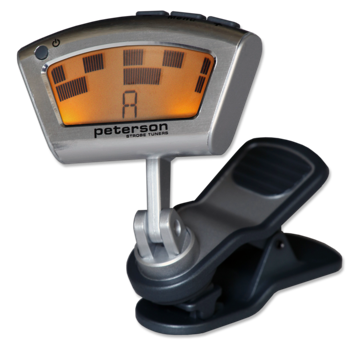
I just did a review of this awhile ago, but I thought I’d go into a bit from an actual usage perspective.

As I reported in my review, I took it to my weekly solo acoustic gig, and it worked fantastically. I also took it to my Sunday church gig and used it on another guitar: My Fender Stratacoustic, which is a really tough guitar to tune. I also use it regularly in my home studio and it works flawlessly.

Okay, I know. It’s just a tuner. However, what I find so special about it is that it’s the first clip-on tuner I’ve used that is really accurate. Plus, it has Peterson’s sweeteners built in, and to me, the sweeteners make all the difference in the world. Sweetners are minute adjustments to the tuning so that chord intervals sound, well, sweeter. Guitars are generally built to even temperament; that is, they’re set up so that each string is tuned to an exact frequency.

The idea behind the Peterson tuning sweetners is that even temperament is fine until you play chords. We’ve all been there. Tune up the guitar with a standard tuner like a TU-2. The tuning sounds fine. Then you play a chord, and you have to make adjustments so the chord sounds good. The sweetners take this in to account, and instead of tuning to the exact pitch frequency, tune a little off to account for presses on the strings. The result is that when you tune with a Peterson tuner, you rarely make post tuning adjustments. Very cool.

Originally, I thought I’d simply use the StroboClip in my home studio, but I’ve found it to be an invaluable tool for gigs. For instance, as the lead guitarist in my church band, I often do solos with a lot of bending which, after awhile, will make the tuning drift a bit. With my StroboClip, it’s simply a matter of turning down my volume, then doing a quick tune. Oh that reminds me! I totally dig the LCD screen for tuning. Even for how small the unit is, the movement of the checkerboard pattern makes tuning a lot easier than trying to nail it with a bank of LED’s.

Read Full Post »

« Newer Posts - Older Posts »