Feeds:
Posts
Comments

Posts Tagged ‘gig report’

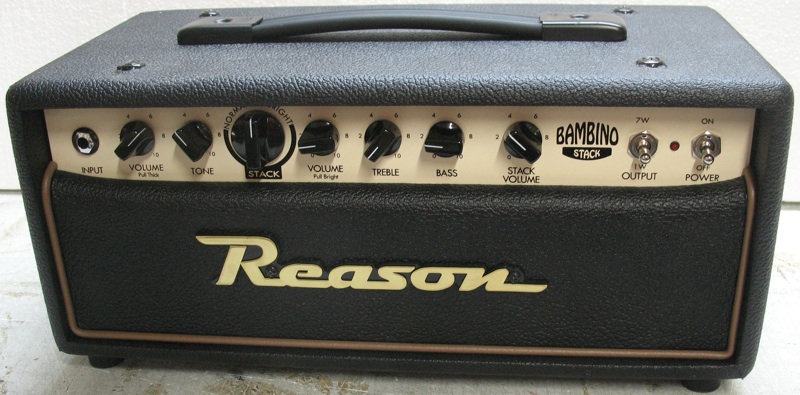
bambinoDid my weekly church gig this evening and took the Reason Bambino along. Didn’t bring a pedalboard; just a 1 X 12 cabinet and a couple of cables. I wanted to test out the amp in its pristine state, with no added accoutrements. I also wanted to test the balanced line out to see how it worked with the building’s PA.

I have to tell you, Obeid Kahn being a noted Strat guy, even though the Bambino sounds killer with a guitar with ‘buckers, this amp seems to just love a Strat. It really makes it come alive. Whether I played fingerstyle or funky, the Bambino really made my Strat sing. Well… nothing helps to inspire me to play better than great tone. Like I mentioned in my review, the tone of the 6AQ5 sits right between an EL-84 and a 6V6, and that tone seemed to bring out the best of my Strat. The cleans were classic Strat, and the drive, oh yeah, the overdrive was open and bright, and just floated in the air. I may have been in worship, but I was also in tone heaven!!!

As for the balanced line out, oh man! The tone coming through my church’s PA was great! We have a pretty nice PA system, and the tone, whether clean or dirty, didn’t sound any different than what was coming through my cab. That was a concern for me because I’ve played through amps with line outs that just didn’t sound like the amp. The Bambino’s line out is very transparent, and that’s especially important with this amp because it’ll give you plenty of volume to monitor your tone on stage, but the line out going into your PA will ensure that it’ll get out faithfully to the audience. Make no mistake. This amp may only have 8 Watts, but it has plenty of volume to be used as a stage amp. I suppose it’s another way to approach performance. Especially in a church setting where lower stage volume is critical, having the ability to keep your stage volume down but knowing that it’ll get out to your audience is just so awesome. The Bambino rocks in this department!

***Quick Update*** I just spoke with Anthony this morning and he nor Obeid didn’t anticipate the DI to be plugged directly into a PA, so he was pleasantly surprised to hear my application of it. Note that I went direct out and into my cab at the same time! This amp has versatility written all over it!

And if ever the 8 watts isn’t enough, the Bambino can be used as a reference amp to define your tone, and with the line out, you can re-amp into another amp or a power amp to boost your output power. I’ve tried this, and it works great. I can’t wait until I get to try this at a real gig!

So what’s the verdict? The Bambino rocks – plain and simple.

To get a Bambino…

I don’t think Anthony and Obeid anticipated the popularity of the Bambino, and the positive response has been enormous. If you’re interested in getting this $699 tone monster, contact the guys directly either through e-mail at info@reasonamps.com. They also hang out at the Gear Page (http://www.thegearpage.net/board). Search for “bambino” or find the users “Reason” or “OKahn” and send a private message. There will probably be a bit of a wait time to get the amp as it has create quite a buzz and they’re already getting orders. The amp is just out of prototype and review for goodness’ sake! It’s amazing!
Read Full Post »

Just got home from my weekly gig at the restaurant where I was really able to put the Tuff-Tone Tri-Tip through its paces. I’ve never played with a Tri-Tip shaped pick, let alone gigged with a Tuff-Tone, so it promised to be interesting – especially if I didn’t like the pick – because like a dummy, I forgot to bring a spare! Fortunately, I didn’t need a spare. The Tuff-Tone worked out great!

Admittedly, I was a little nervous, not because of the Tuff-Tone material itself but because it’s a lot thinner than what I’m used to playing. If you’ve been following my blog, you’d know I’ve been using a V-Picks Snake and also a super-thick prototype Red Bear Tortis as of late. The Snake is 4.1 mm thick and the Red Bear is 4 mm. I believe the Tuff-Tones are only 1.75 mm thick. I really didn’t know if I could make a clean adjustment. All my nervousness was washed away within a few bars of the first song I played. The pick felt so natural in my fingers, I just played without thinking. Whew! That was a relief!

So how did it perform? Practically flawlessly. The Tuff-Tones feel a lot more rigid and dense than their Tortis counterparts, but the material seems to weigh much lighter. That perception could be due to having played with thick, weighty picks. But to be perfectly honest, I really loved playing with this Tuff-Tone. As I mentioned above, it felt very natural in my fingers, and all the accuracy that I’ve come to expect from rigid picks was there from the get go.

Dave mentioned that in blind tests there was no difference between the tones of the Tuff-Tones and Tortis picks produce. But I noticed a definite difference. The Tuff-Tone produces a much brighter, jangly tone than the Tortis picks. Tortis picks, on the other hand, produce a smoother, more evenly balanced tone. Neither is better than the other; they’re just different. For me, when I want a brighter tone, I’ll use a Tuff-Tone. But when I want a fatter tone, I’ll use a Tortis.

I played all sorts of tunes tonight, ranging from full-on strum songs to songs that combined strummed chords and single note runs. I could be as expressive as I wanted with this pick, and that’s really the test. Lighten up your grip and let the pick glide, and the tone it produces is marvelously bright and ringy. Dig in and be greeted with a nice snappy tone. Want to do some quick alternate picking runs? No sweat!

This is a great pick, people, and a pick I highly recommend trying out and adding to your arsenal! I know that kind of goes against the common thought of using one pick for everything, but I’ve come to realize that using different picks will produce different kinds of tones, and different “moods.” It’s kind of hard to explain, but I’m now a multi-pick player.

Read Full Post »

Yeah, yeah, I know… My last few posts have pretty much centered around this amp, but hey! I just can’t contain my excitement about how good it sounds! This afternoon, I brought it to my weekly church gig to try it out in a live situation. I already loved it in my little home studio, but you just don’t get to really know what am amp can do until you play it live.

Today was one of the first days that I didn’t use my pedal board all that much. In fact, I only used my chorus on one soft song, and then only used my booster at the very end of last song to throw the gain over the top to finish off the service. Other than that, I just played the amp straight. Most of the songs I played were through Channel 1, and with my Strat, the VRX22 delivered gorgeous, bell-like tones that seemed to hang in the air, with so much presence that you could almost touch them – it doesn’t even have presence knob to up the mids and highs! Switching over to Channel 2 for a couple of numbers, I was rewarded with layers of open and complex overdrive that were so very smooth; none of that phasing in and out that you often get with lesser amps at high gain. It stayed nice and even. And the sustain and touch sensitivity at high gain was just to die for – all on a Strat, no less!

When I slammed the front-end with my booster pedal, I was in compression heaven! But luckily the 6V6’s don’t compress so much that they make the amp lose volume. The compression is noticeable, but the gain tone stays fairly open. It tightens up, but not too tight.

I’ve tested several Aracom amps, and they’re all very sweet sounding. But the higher wattage amps need tons of volume before they really start sounding good. The VRX22 is so versatile. With a 1 X 12 cabinet, it can be used with ease in small to medium-sized venues, like clubs and small halls. For larger venues, a bigger cab will get you the volume you need. On top of that, both the amp and cabinet are pretty light in weight, making lugging to and from a gig real easy!

All in all, I’m just tickled to death with this amp! You gotta check this amp out at the Aracom site!

Read Full Post »

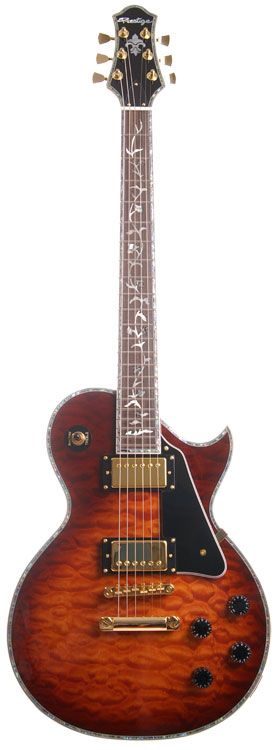
Prestige Heritage Elite - Lite Sunburst

Prestige Heritage Elite - Lite Sunburst

It’s one thing to test gear in a controlled environment, it’s an entirely different matter to use it for a gig. After receiving the Prestige Heritage Elite, I took it through its paces in my home studio, and it performed quite well; so well that I gave it very high marks, reflecting the excellent build quality as well as how it sounds, which was awesome in the studio. The operative word here is “studio.”

As I mentioned above, it’s an entirely different matter of testing gear in a gig situation. After all, during a gig, you don’t have the luxury to stop to make corrections on the fly. Furthermore, during a gig, an instrument’s tone interacts and reacts completely differently to the environment than in the studio.

Hope that little section above doesn’t make you nervous about how the Heritage Elite performed 🙂 because it worked great! I played the guitar at my weekly church gig with a full band. Now before you dismiss this venue, let me say that playing in a church is one of the most sonically challenging environments to play in because you don’t have the luxury to crank it up, and churches have pretty high ceilings so dealing with sound bouncing around a big space makes it even more challenging. In light of that, you have to rely a lot on the natural tone of the gear you’re playing. Especially with something like a guitar, it has to sound great at lower volumes, and have voicing that won’t get lost in the ambient.

In this, the Heritage Elite really excels. Surprisingly enough, it doesn’t have the deep ballsy voicing you’d expect from a Les Paul-type of guitar. In fact, the voicing is much brighter, but from the standpoint of playing live, that’s a good thing, and something for which I’ve always praised Saint Guitars. But like a Les Paul, it has that distinctive chirp – that kind of hard to describe, subtle sound. It’s very pleasing to the ears – I dig it!

The other great thing about playing at my church is that I can play a variety of musical styles throughout the course of the service. I played some hard driving rock as well as some soft, finger-style music. Whatever the style of music I played, the Heritage Elite performed great. I especially dug its clean tone while finger-picking.

I also forgot how fun it is to play with independent volume and tone controls. I usually peg the tone controls, then use varying amounts of gain between the neck and bridge pickups to dial in just the right tone for a song. I actually played most of the service in the middle position so I could take advantage of both volume controls, though I used the treble position for leads – the SH-4 JB in the bridge position rocks!

So, whether you use it in the studio or on the stage, the Prestige Guitars Heritage Elite will do the job handily!

By the way, I found out why these boutique-like guitars come in at such a low price point compared to their more expensive counterparts: The guitars are cut, built and finished in Korea, then shipped to Canada to have hardware added and set up. For people who care about build location, this might be an issue. But PRS does _everything_ in Korea for their SE guitars, and they sound and play great! And I guess that’s the point I’m trying to make. Who the hell cares where Prestige guitars cut and constructed? All I know is that the guitar I’ve reviewed has no finish flaws, and more importantly, it sounds and plays great! I’ve even lent it to my close friend, and he’s diggin’ it! He’s amazed at how well it plays and sounds! That’s the most important thing with any instrument.

Read Full Post »

« Newer Posts