What do you do when you have two kick-ass overdrive/distortion pedals and don’t know which one to choose because both pedals bring so much to the table? The obvious answer is to use both. But my problem in choosing is exacerbated by limited pedal real estate, so I have to make a choice.
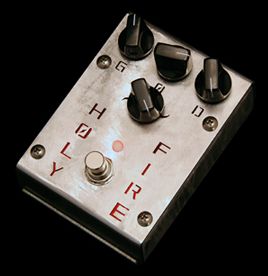
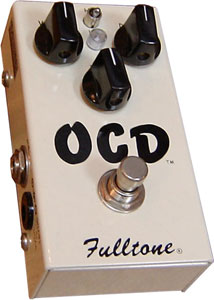
Actually, the choice wasn’t too hard to make once I started playing with the Creation Audio Labs Holy Fire. While I love the OCD, the Holy Fire wins hands-down for its versatility and total transparency. While the OCD is somewhat transparent, it can get kind of muddy and a little choppy at high drive settings, whereas the Holy Fire’s distortion section reacts a lot like a power tube at high gain settings producing a compressed effect that just rocks the house!
I still love the sound that the OCD produces. It really brings out harmonics and overtones, and set in a “sweet spot” produces a nice sparkly distortion that really sounds great. But as of late I’ve been gravitating towards retaining the natural sound of my guitar and amp, so the added artifacts that the OCD adds aren’t really what I want right now.
On the other hand, the overdrive on the Holy Fire is totally unique, and nothing like I’ve ever witnessed in all my tests of overdrive pedals (and believe me, I’ve tested a lot). The overdrive has what Creation Audio Labs calls a “wave shaping” circuit that evenly distorts the entire bandwidth of the incoming signal as opposed to creating a mid-range hump, or scooping the EQ. It really is completely even. You don’t lose any lows or highs, which is common in overdrive pedals. And the circuit reacts to both volume and pick attack, providing more wave shaping as you hit the front-end of the pedal harder. Simply put, you retain all the natural tone of your guitar! It’s insane! And it’s so special, Creation Audio Labs is trying to patent it!
I gigged with the Holy Fire for the first time this evening at my weekly Church gig. Make no mistake, this may be a church service, but we regularly hit above 100db in our sets, so there is plenty of room to let our amps breath, and take advantage of the higher gain settings on our equipment. Tonight, I made sure to pick music that would allow me to use the Holy Fire throughout my set. Talk about being inspired! I used it with my Strat and a Reason SM25 amp. What a combo! I set the gain to just above unity with the clean channel (about 10am), the overdrive at about 2pm, and distortion at about 3pm (so the distortion section would compress – it does this at around 2pm). The breakup was so smooth and delicious, I wanted to keep it on all the time! Unfortunately, I couldn’t do that with some songs, but where I had the entire band playing all out, the Holy Fire just made my heart sing!
The Holy Fire also plays well with other pedals. My mainstay overdrive pedal is my trusty green machine, an Ibanez TS-808 Tube Screamer. That’s one pedal that will NEVER leave my board! But here’s the cool thing: Running the Tube Screamer in front of the Holy First was like nothing I’ve heard before. I did this with my OCD as well, essentially getting a combined tonal effect that the TS and OCD produce. But the Holy Fire maintained the tone the Tube Screamer produces! On the other hand, it smoothed out and thickened the distortion. The result was the expected mid-range hump from the Tube Screamer, but with super-creamy distortion, plus the TS tone, that was like candy to my ears. No extra coloration that I came to expect by running my TS into the OCD. It was like playing a fatter Tube Screamer!
Believe me, despite playing in a worship service, the way I was feeling with both those pedals running together made it seem I like I was flying with the angels! I’m not exaggerating! There is absolutely nothing compared to the feeling you get when you’re playing with wonderful tone. It inspires and emboldens you, and you take your playing to places you didn’t think possible.
That was the feeling I got when I first started playing with the OCD, and frankly, I didn’t think it could get much better. But the Holy Fire has changed everything.
On top of that, I was using another Creation Audio Labs pedal, the Mk.4.23 clean boost, yet another amazing product from those electronics wizards. I used the booster to give me just a slight gain boost for when I was doing solos, or was in the refrain section of a song when I needed just a bit more volume. It too is a totally transparent boost, adding ZERO artifacts to your signal, so all the time I spent dialing in my settings wouldn’t be lost when the Mk.4.23 was engaged.
I swear, I must sound like a twitterpated, googly-eyed schoolgirl! 🙂 But it’s been a long time that I’ve felt truly inspired, like everything was totally right with my world of tone. I’ve finally (at least for now), found total balance in my tone. The circle is complete…
G & L Tribute Series Comanche Summary: Super-affordable, production version of the venerable Comanche. Has the same swamp ash body and rock maple neck with Fender Avenue parts. Comes with either maple or rosewood fretboard.
Pros: This guitar is a great value! My eyes almost popped out of their sockets when I saw the price! Plays just like the original I played last year, and the Z-coil hybrid pickups produce a creamy-smooth tone with sustain for days. Bridge pickup is the most tonally balanced bridge pickup I’ve ever played!
Cons: I prefer a satin neck finish with maple necks (it’s that Strat thing), but the Tribute still sports the same vintage gloss neck finish as the original. It’s still very playable, but it’s a feel thing for me.
Price: ~$1300 list / $799-$899 street
Tone Bone Rating: 4.75 – This guitar would be perfect with a satin finish on the neck.
Back in March of last year, I had my first encounter with G & L Guitars in a little shop in Sacramento. At the time, I didn’t have any idea of the existence G & L company and how it was Fender Version 2 (I was still getting acquainted with the non-big-name manufacturers). But no matter, I picked up a Comanche off the rack, and instantly fell in love. So much so that I just had to write a review about it! But I had to temper that love with the reality that the street price for the guitar at $1700 was just way out of my price range. And having worked with Saint Guitars these past few months, $1700 is not that much to pay for a handmade guitar, but it’s still more than I can justify considering I have a mortgage and tuition to pay, not to mention food to put on the table.
So it came as a complete surprise to me yesterday to finally play a G & L Tribute Series Comanche and be completely blown away by the price of $799! All the feelings that the original guitar I played back in March came flooding back. This was the same, sweet-sounding guitar that made my soul just sing! The skies opened and I envisioned a chorus of angels singing sweetly to the music I was playing. All was right with the universe. Okay, I’m exaggerating… But a choir of angels should’ve been singing because my heart soared to even greater heights as the Tribute was over half the price less than the handmade version, and it still sings as sweetly!
So why the big price difference? The Tribute series of G & L guitars are their mass production versions of their original makes made in Korea. Using overseas production but the same parts typically lowers the price point of items assembled this way. However, that doesn’t mean that build quality is sacrificed. A good example of this is the SE series of PRS Guitars. These guitars are also produced in Korea, but their build quality is practically flawless! I totally dig the SE Soapbar II that I have. It plays like a dream, and has a nice, aggressive, yet expressive tone. G & L didn’t skimp on quality with respect to the Tribute series. The Tribute Comanche I just played had no build flaws that I could detect, and the guitar in Amber Burst is GORGEOUS!!! So looks great, sounds great, and affordable is a great combination!
From what I’ve been able to find out in my research is that G & L actually researched doing overseas production in Japan, but Korean production quality is now on par with Japan, and costs far less to produce there. G & L also spent two years teaching the Korean facility the correct way to construct the guitars. The end result is a very high quality instrument!
Fit and Finish
From a distance, I couldn’t tell an original Comanche from a Tribute. They look the same, though closer inspection yields slightly different hardware, but you would swear they’re just different styles of the same model of guitar. The Amber Burst finish is absolutely gorgeous! And I detected zero build flaws. Nothing was misaligned, and all the joints were perfectly matched and mated. This is one well-built and guitar!
Playability
One might expect a production model guitar to be a little less refined with respect to playability. Not so in this case. The narrow neck with the jumbo frets make playing the Comanche a dream to play! You can be light to the touch or really dig in, and the guitar just responds. And especially for me right now, where I’ve been gigging a lot as of late, having an easy-to-play guitar is simply wonderful.
How It Sounds
At first blush, since the Comanche looks so much like a Strat, you might think it sounds like a Strat. It kind of does to a point in that tonally, it’s thinner sounding than a guitar with humbuckers. But the tone is much thicker than a Strat. Furthermore, the tonal character between the different pickup combinations is not as dramatic as with a Strat. For instance, with a Strat, positions 2 and 4 produce that distinctive, ringy and jangly Strat tone. With the Comanche, you get the ring, but it’s definitely not as dramatic; especially in position 4 which is the middle/bridge combination.
With position 4, the less jangle has a lot to do with the bridge pickup, which is a hell of a lot fatter sounding in the Comanche than it is with the Strat. Frankly, I love the tone of the Comanche’s bridge pickup. It’s really the first bridge pickup I’ve found to be truly useful. It’s brighter-sounding than the other pickups, but not nearly as tinny sounding as a typical Strat bridge pickup. But then again, it’s just different; it has its own unique character.
If I could pick a single word to describe how the Comanche sounds, I’d have to say, “smooth.” Everything about the tone the Comanche produces is silky smooth. I love the tone it produces.
Overall Take
On value alone, the Comanche gets a 5 Tone Bone rating. But as I stated above, I prefer a satin finish on the neck – it’s more of psychological thing – so I took a quarter point off. But make no mistake about it. This guitar kicks ass!
Note: This isn’t going to be an instructional piece… just a sharing piece… mostly…
I’ve been playing guitar for over 35 years, but it hasn’t been until the last couple of years – actually the last few months – that I’ve really started focusing on scales and modal theory. Chord theory I had down cold, but I really didn’t focus on the scales part of the equation. I figured that if I could get some lead patterns and tricks down, I’d be in pretty good shape; and for awhile, that worked just fine.
But then I realized that in many of my recordings, I was using the same patterns and tricks, albeit in different keys and in different combinations, but the same stuff nonetheless. This prompted me to rethink how I approached playing solos, so I started out by learning major and minor scale patterns. I got a couple of books to help me along, and I proceeded to practice them.
But in the back of my mind was this idea of modes. I’d heard them bandied about for years, and pretty much ignored them partially out of the thought that as a rhythm player, they weren’t too important; though that really masked an innate fear that modes were WAY beyond my ability to grasp. But during this past weekend’s study/practice session, I realized that modes are not difficult at all! The names of the modes just scared the livin’ crap out of me! 🙂
Think about it: The mode names are all in Greek: Ionian, Dorian, Phrygian, Lydian, Mixolydian, Aeolian, and Locrian. From my previous life as a bio-sciences major, terminology in Greek or Latin would evoke feelings of anxiety similar to, “Oh shit! More frickin’ terms to memorize just to regurgitate later on.” 🙂 Such was the case when faced with modes.
I now feel a little foolish about my anxiety with modes. Once you understand what they represent, they’re totally easy to play!
Here’s my explanation in a nutshell, just in case you too have the same anxiety about modes as I did:
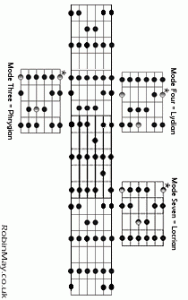
Modes are simply starting points within the scale of a particular key.
For instance, if you’re playing in the key of C and want to play in the Mixolydian mode, you’d start and end on the 5th degree of the C scale which is G.
Now don’t get confused here: You don’t play a G scale. You merely start at G, and play the notes of the C scale, so: G A B C D E F G
So what’s the big deal? Lots of players don’t give a whit about this stuff. For me as a teacher, this stuff is pretty important. But from a player’s standpoint, it gives you a much deeper understanding of the fretboard, and also, playing in a mode gives you a different tonal center to play from, which actually has an effect on how a solo sounds and feels.
I found that a great example of this is to play the Lydian mode. The Lydian mode starts on the 4th degree of a scale. Going back to the C scale, this means that the Lydian will be F. If you’re familiar with chord theory, a chord with an added 4th is notated as Csus4. The sound of this particular chord connotes a feeling that the chord must be resolved – it’s not something you’d finish with; you’d typically use a “sus4” chord before either the major root chord or minor root chord. In our case of a C chord, we’d do something like: Csus4 – C. In playing in the Lydian mode, you’ll evoke a sense that you have to resolve your scale somehow. After all, starting and ending on the 4th creates a feeling that your phrase is unfinished. The point of all this is that where you start will have a huge effect on the general coloring of what you’re playing.
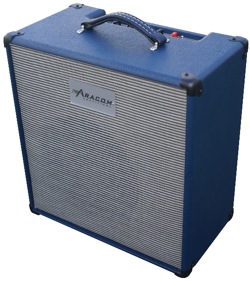
Summary: The RoxBox is an ideal small to medium size venue amp. Don’t let it’s diminutive size fool you. This amp is LOUD, and packs a real punch. Oodles of clean headroom in Channel 1 and capable of super-sinister drive in Channel 2 due to the “hidden” extra gain stage. Very pedal friendly.
Pros: Crystal-clear clean tone in either channel, though the second will break up earlier. Switchable from 18 Watts down to 9 Watts, so you can use this on stage and in the bedroom. Master volume kicks ass, and acts very similar to an effects loop attenuator. At 18 Watts, it’s loud enough to blow your ears off! Very pedal friendly.
Cons: Only a nit, but I wish this thing had a spring reverb. Also, overdrive can be a bit harsh at lower volumes, especially with single coils, though it’s gorgeous at louder volumes and moderate volumes using hubuckers.
Combo Cabinets
Standard Tolex: Navy Blue Levant (as tested)
– Dimensions
1×10 Combo: 18″w x 19h x 10″d
1×12 Combo: 18″w x 19h x 10″d
– Weight
1×10 Combo: 36 lbs
1×12 Combo: 39 lbs
Tone Bone Score: 4.75 On value alone, this would get a 5, but the mildly harsh breakup at lower volumes gives it just a slight mark off. Still, it’s a great amp!
Jeff Aragaki, the owner and designer/builder of Aracom Amps is on a mission to transition from his telecommunications business entirely into his amp building business. I’d say that based upon playing just this one amp (both the head and combo versions), and having a look at a couple of other amps in his line (which I will probably review in time), he’s well on his way to successfully completing that mission. And Jeff’s not alone in this quest. A few folks I know here in the Silicon Valley have preceded Jeff, moving from their high-tech careers into the music equipment business; and while they may not have become super-wealthy off these new endeavors, they’re certainly living their dreams.
It’s like that in the Silicon Valley which, for decades has been a hotbed of innovation and dream-chasing. And while its star has faded somewhat as the global technology leader and the market has opened up allowing more players to the tech scene (China and India, for instance), the spirit of innovation and going after your dreams upon which “The Valley” was built remains alive and well, as evidenced by guys like Jeff. And true to Silicon Valley form, what these guys produce is quality stuff, and Aracom amps definitely follows suit!
When Jeff and I first hooked up, I was really excited about his 18 Watt RoxBox. First of all, I just dig the EL-84 tone, and secondly, I was amazed that he could offer this amp for less than a grand, and it’s a hand-wired amp, for goodness sake! I knew I had to check it out. And lucky for me, the city where Jeff lives is a half-hour away (if the traffic’s good), so two days after I first spoke with him, he personally delivered a head and a combo. I’ve been playing with both since (though I was so excited, I let my buddy borrow the head for a couple of days to see how he likes it). I’ve tested both amps in the studio as well as at gigs, but I’m writing this review about the combo. If you want to hear how the head sounds, check out this clip:
My Tests
For my tests, I used my Strat, my PRS SE Soapbar II with P-90’s, and a Saint Baritone Messenger that I’m also testing. The amp performed excellently with all three guitars, but was especially responsive to the baritone which has active humbuckers in Channel 2. But before I get ahead of myself, let first me go over the amp’s features apart from its technical specs.
Controls and Equipment
The RoxBox features two independently voiced channels, each equipped with a volume and tone knob. The Tone control functions similarly to a high-freq sweep. It also has a Master volume which is available to both channels. The Master volume is very cool as it functions as an attenuator between the pre-amps and the power tubes, so you can slam the front of the amp with tons of input gain to get that sweet, mid-rangy pre-amp distortion while keeping the output volume at bedroom levels. Great for edgy blues and classic rock tones. The combo I tested also sports an Eminence Red Fang Red Coat 12″ speaker. Operating at 30W, this sucker has a lot of balls! As expected, the sound was a little harsh when I first tried it out, but after several hours of playing, it’s starting to break in and the tone is starting to become a lot more smooth. Now with that out of the way, let’s get into some details.
Channels
Channel 1 would be considered a normal channel, while Channel 2 is a drive channel that will break up a lot earlier. But with Channel 1, the name of the game is “clean.” With my Strat plugged in, this channel has so much clean headroom that I had to really dig into the strings to produce even a slight amount of grind. My PRS with P-90’s and the Saint Messenger could only produce moderate amounts of grind when the volume was dimed. That’s pretty impressive, and definitely not what I expected. With so much clean headroom, Channel 1 is VERY pedal friendly.
Channel 2 on the other hand definitely breaks up early and is voiced just a tad brighter than Channel 1. But it also has a lot of clean headroom as well. With my Strat, I had to turn the volume knob past 7 to get some decent grind, and had to peg my guitar volume. Believe me, that’s not a bad thing either. On the other hand, My PRS SE Soapbar II and the Saint Messenger had no problems producing grind. I could get breakup at around 4 with the Messenger, and around 5 with the PRS.
To get earlier breakup, Channel 2 actually has a third “hidden” pre-amp gain stage in series behind the pre-amp you plug into with fixed settings. It’s voiced a bit hot, and as Jeff puts it, it’s like having a built in tube overdrive. The end result is you get breakup a lot earlier. I have to say that while I like Channel 1’s tone, for pure versatility, Channel 2 really does it for me, as it is lively and responsive to changes in attack and guitar volume. And putting a booster in front of this Channel really brings on the growl that this channel is capable of producing.
How It Sounds
Tonally, this is definitely an EL-84 amp. It’s bright and chimey, and with the Red Fang, it also has lots of balls. For sweet, clean tones, Channel 1 produces a lush clean tone, and my Strat in the Neck/Middle position sounds gorgeous through this channel. As I mentioned, it’s a bit brighter than Channel 1, which made me tweak my guitar tone knobs a bit, but not so much so that it’s unusable. And where this amp really shines in the tone department is when it’s moving lots of air. Plugged into Channel 2 with the volume turned up around 12-2 o’clock, and the Master past three, the amp simply sings its heart out, though at those volume levels in an enclosed space like a home studio, the assault on your eardrums can get a bit uncomfortable.
And while I don’t want to say anything negative because I truly dig this amp, I have to say that at lower to moderate volumes with a Strat, a driven Channel 2 (Volume around 8, Master around 2) seems a little flat sounding. At this level, the pre-amps are distorting with little contribution from the power tubes. Don’t get me wrong: It’s not bad sounding, it’s just a bit uninspiring. But turn the master up so that the second gain stage starts clipping and the power tubes start getting hit, and the world is made right again. I did, however, find a couple of workarounds to this. The first was easy: Just engage my Tube Screamer to add to the grind produced by the pre-amps at lower volumes; instant sweetness. Also, slamming the front-end with input gain from my booster worked wonders as well. The best solution I found that will also engage the power tubes was to use my Dr. Z Air Brake Attenuator. The world definitely became right with that in the signal path.
Versatility
The RoxBox is very versatile and is comfortable on both the stage n in the studio. I really dig the master volume on this because that’s really what makes this amp so versatile. And one feature that is mentioned in the specs but something I’ve found incredibly useful is that the amp is switchable from 18 Watts to 9 Watts with the flick of a toggle switch underneath the amp chassis. For home studio use, this is a godsend as the lower wattage allows the tubes to saturate earlier, which means you can get grind at lower volume levels. Some people think this means lower volume – it doesn’t – for any variable wattage amp. All it means is that the amp breaks up earlier. But having this capability means that you can gig with it at 18 Watts, then bring it into your home studio and get some great tube distortion without keeping the neighbors up late at night while you’re wailing on your guitar.
Also, as opposed to having a single output jack for external speakers, the RoxBox sports three, for 4, 8, and 16 ohm extension cabs.
Overall Comments
This is an amp that I’ll definitely be considering to add to my arsenal because of its tonal similarity to the classic Vox AC15, plus its gorgeous and plentiful clean headroom in Channel 1, but also for its value. At $995 for the combo the tonal versatility you get for the price is well worth the expense. If I had a nit, it would be the same nit I have with the Reason SM25, and that is the absence of a nice spring reverb. But that is just a nit because both amps sound great without it – it would just be icing on the cake.
Fuzz pedal? Me? GoofyDawg? I know, I know… I’m an overdrive and overdrive/distortion pedal kind of guy. I usually prefer soft clipping pedals that throw just a hint of clipping and lot of input gain at an amp to make the amp’s tubes saturate and overdrive. And up until this point, I haven’t even discussed any fuzz pedals. But after hearing some of the sound clips from the new Algal Bloom from FH(fx), I have to say that I’m now rethinking my predeliction for overdrive pedals only. But don’t let me do the talking. Check out the clips on the Fuzzhugger.com site!
This pedal looks awesome! And from what I could tell from the sound clips, it’s capable of producing some gnarly fuzz and, as the guys at Fuzzhugger.com say, “[the Algal Bloom’s] name is inspired by its tone – thick and destructive – but very alive.” From the sound clips, I’d say that’s a pretty accurate description of the Algal Bloom.
It’s weird isn’t it? I’m normally not into that kind of sound, but it’s so ugly, it’s lovable! I had a little dog like that when I was growing up. It was a mix of Chihuahua, Toy Poodle, and Wire-haired Fox Terrier. Ugliest freakin’ dog you ever saw – like a little rat. But I loved that dog! He was smart and playful and so loving! Sorry, reminiscing… not that I could say that about the Algal Bloom, but there’s something about how it sounds that I just dig! Check it out!
Just wanted to share some initial sound bites that I created with a couple of new pieces of gear. The first is a Saint Guitars Messenger Baritone. Before now, I had never played a baritone, and really didn’t know what to expect. But after playing around with it for a few days, I have to say that I just love how this thing sounds. Baritones have been getting more and more popular as of late due to their very low, natural tone, and several metal players have started using them because of this. But I truly believe that a good test of a guitar or an amp is how it sounds clean. Played clean, you can’t hide mistakes. So here’s a clip that I created this morning to demonstrate the beautiful, clear tone the Messenger Baritone creates.
The guitar was played through the Normal channel of a Reason SM25 amp. As you can hear, the tone is deep, but surprisingly chimey due to the bright-sounding walnut body and neck, Adam Hernandez’ tone wood of choice. It took awhile to get used to playing the wider frets, but once I got a handle on it, I just started loving how this guitar plays and sounds!
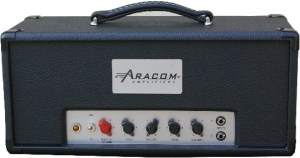
Aracom Amps RoxBox 18 Watt Head
Aracom Amps RoxBox 18 Watt Head
You know me, in addition to just digging on overdrive pedals, I love low-power amps! When Jeff at Aracom initially contacted me, I had never even heard of Aracom amps! And I pride myself on knowing about these things! Yikes! So when I perused his site, I was immediately taken by the RoxBox. And after just a day of using it, I have to say that I LOVE THIS LITTLE AMP!!! First, because it’s a low-wattage amp, which makes it very versatile, and secondly because it comes equipped with EL-84 power tubes! There’s a brightness in the EL-84 tubes that just makes my soul reverberate, and I just dig the sounds that this amp can produce. But just as with the Messenger above, the big test for me is how the amp sounds clean. And baby, it sounds great clean! The sound bite I have here uses the same clip above, but layers on a lead part using just my Strat played through Channel 1 of the RoxBox. Channel 1 has TONS of clean headroom, and even ‘buckers have a hard time making this channel grind. This will definitely score well with the pedal freaks like myself. Anyway give it a listen:
This little amp is nothing short of impressive, and priced at $895 for the head, it’s also an incredible value!!! Kudos to Jeff at Aracom for creating an attainable hand-wired amp! Looks like I’m going to be shelling out bucks for both the Reason SM25 AND the Aracom RoxBox.
I don’t know why I love overdrive pedals so much, despite my recent discovery of the beauty of using a clean boost. I just do. I can’t help myself. So when I hear about new drive pedals appearing on the market, I’m keen to check ’em out and better yet, see if I can play ’em; but that’s besides the point of this entry… 🙂
Anyway, I just found out about a brand-spankin’-new company called Fairfield Circuitry, who’s just come out with a new overdrive pedal called “The Barbershop.” In their own words,
“Have you ever sat in a barber’s chair wishing your tone was as slick as your freshly shaved upper lip? With the Barbershop Overdrive on your pedalboard, you could keep your moustache and sound good doing it.”
That’s pretty amusing! But the sound of this pedal, at least from the samples provided on the product page, is absolutely serious. According to the Fairfield Circuitry spec sheet, this is an original design and completely handmade from JFET’s. It has three controls: Drive for driving the gain, Sag (which I find very cool) to control voltage into the internal amplifiers, and Volume to control output volume without changing the effect. The Volume control is a very cool feature – it’s like a Master Volume on an amp. I dig it!
The Barbershop is the first of three pedals to be produced by Fairfield Circuitry. Two more will be coming out in the near future, but there’s very little information on these right now. In any case, check out the site for yourself!
And by the way, this pedal, though handmade is actually quite affordable: $175 CAN. That converts to $141.68 US! Not bad at all!
Need a tube amp? Now you have a Reason. Sorry, couldn’t resist the pun. All right, I know what you’re thinking, “Another amp manufacturer?” That’s what I thought at first until I saw some video clips (I’ll get to those in a sec). But on the flip side of that mild complaint, thank the universe that people have the creativity to come up with different approaches to existing paradigms.
I found out about Reason amps from none other than Mr. Phil Vickman of Fat Tone Guitars just outside of Chicago, Illinois. Being a fellow blog freak, I found Phil’s Fat Tone Blog awhile ago, and signed up for his newsletter. Much to my surprise, his latest newsletter featured an upcoming in-store demo from the guys at Reason Amps on November 12 at 5-7pm. Go to Fat Tone Guitars for address information, or give ’em a call at: 866/512-8663.
So, being curious, I checked out the Reason Amps web site, checked out their sound bites, and much to my surprise, they didn’t have a dealer list, and they didn’t even list MSRP’s for their amps! So, I gave Phil a call, and we had a nice chat. Apparently, Reason Amps is NEW. So new, that not too many people have heard of them. But I have a feeling that their amps are soon going to get some traction.
So what makes Reason amplifiers so special?
Whether you go low wattage or up to their 50W amps, they all come with three modes: Normal, Bright, and Stack. It’s actually two channels, with the third mode being a blend of the two channels that Reason calls “Stackmode.” Stackmode uses a “cascade series connection that sets up the circuit architecture to blend the independent gain stages” of the two channels.
The net result? Yikes! Tones that you wouldn’t expect to find from an amp that is essentially a vintage-style amp. But don’t take my word for it. Check out the YouTube demo:
Granted, YouTube audio is not the most desirable audio to be heard, but if the amps sound that good over YouTube, you gotta believe they’re going to sound outstanding live. So check out the Reason web site!
A Little Plug for Fat Tone Guitars
Phil Vickman has a nice little business going with Fat Tone Guitars. I go to the Fat Tone site to get on my drool factor for the wonderful gear he sells. Amazingly enough, there’s not a Fender guitar listed on his site, though he does carry Gibson. But make no mistake, Fat Tone sells high-end gear from several boutique guitar makers like Baker, St. Blues, and Ram. From my recent conversation with Phil, he likes unique approaches to guitars. For instance, Ram guitars make Tele-style guitars made from pine! Wow! We spoke at length about Saint Guitars and how Adam Hernandez likes using different kinds of woods like walnut or bloodwood. That’s cool and unique. Adam told me he spoke to Phil, and will be sending him a couple of demo guitars. That’s so awesome! Way to go Adam, and way to go Phil! You won’t be disappointed!
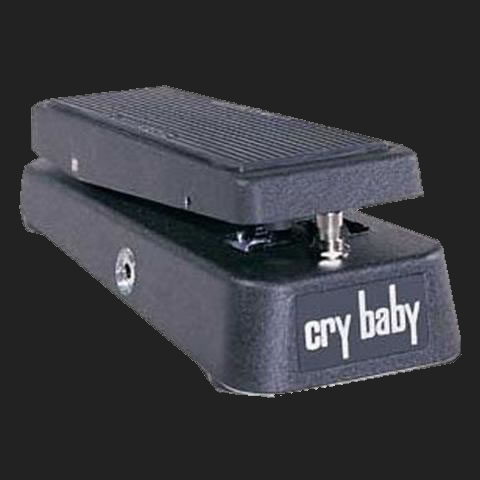
About a week ago, I wrote an article about getting a wah pedal. I had tried out and listened to several, and actually dug on a lot of them, but I just kept on coming back to the original Cry Baby. There has just been something about the classic sound of the Cry Baby that just makes me close my eyes with a smile of complete satisfaction while I’m playing.
For other players, this classic wah sound may not be their cup of tea, but this is the sound I grew up with. Every cop show on TV in the 70’s had a guitar played through a wah, and of course, let’s not forget Jimi who took it to another dimension. And it’s not like I’m going to try to play like Jimi – frankly, no one can – it’s just a sound that I’m used to, and it puts me in a time warp, back to when I was a kid.
Did nostalgia make me pick the GCB-95? It probably had a lot to do with it, but that’s the thing about tone: It’s what you like that matters. I didn’t get that nostalgic feeling of my youth with a lot of the other pedals. Yeah, I do admit there were some really awesome ones out there that I was ready to buy, but I figured that those could actually wait. I just couldn’t justify making a substantial investment into something that was so new to me. But I could get a Cry Baby at a fraction of the price, and I figured that since I was so new to playing with a wah, it would be best to instead make a minor investment to try out the technology before I spent a couple of hundred on a more expensive model. So, I forked out a reasonable $49 bucks at my local used gear shop for Cry Baby in excellent condition and saved even more money to hedge my bet.
So after a day, what’s my take? Well… I should’ve gotten a wah a long time ago! Don’t know what it is about it, but I’ve taken to it like a fish to water! Not to say that I’ve completely mastered it in a day, but it sure does feel natural. And you know what? The Original Cry Baby may be bordering on the vintage with respect to tone, it may only cost $69 used, and may be considered way too low tech for more modern players’ likings, but it totally does the job for me. I’m very satisfied.
One of the things I’ve looked forward to each day when I open my browser for almost two years is going to IGBlog, Ignacio Gonzales’ guitar blog site. I stumbled upon it early last year, and have been a faithful reader and occasional contributor. Ig is an awesome guy, but in September, his posts started becoming less and less regular, until they finally stopped altogether. As Ig explained in a post, his area of Texas got hit hard by hurricane Ike, and posting was not a priority.
I guess it must be really bad, because I went to the IGBlog (http://igblog.wordpress.com) this evening to find that it no longer exists!
Ig, if you’re out there, just know that your friends only wish you the best, and more importantly, wish that you and your family are safe. If and when you decide to come back to the guitar blogging community, you’ll certainly be welcome wholeheartedly!
By the way, if you know Ig, please send him my regards, and let us know how he’s doing!




 Guitar Gear