There are some things in life that you just can’t pass up. About a week ago, my friend Jeff Aragaki of Aracom Amps mentioned people finding great vintage gear in pawn shops. I kind of stored that tidbit away for future reference, mainly because there aren’t any pawn shops really close to where I live. But today, I happened to park in front of a pawn shop (I work about 20 miles from where I live), and after lunch, on a whim, decided to go in. This was a little pawn shop that mostly specialized in jewelry, but they had a number of amps and guitars as well.
I wasn’t overwhelmed by the selection of gear; mostly no-name brands that I had never heard of, and as far amps were concerned, cheapo solid-state practice amps. But tucked in behind some guitars was a Fernandes Strat-copy that caught my eye. It had a nice, white finish with a maple neck (I LOVE maple necks), and it was obviously well-used from where I could see it. The shop owner walked up, and I asked to inspect the guitar. I was really impressed by the workmanship. I had heard of Fernandes guitars being very high-quality for a great price, but upon seeing the workmanship up close for the first time, I was very impressed. And even though this guitar was well-used, I could tell it was taken care of because of only minor scratches and dings on the body.
The tag on the guitar said it was for sale for $115 (sorry… if you came from the gear page, I mistakenly listed it at $125), and I asked if she’d take $100 including tax, and she agreed. Unfortunately, they didn’t take plastic in any form, so I had to decline on the guitar. But that was a good thing because it gave me some time to do some research. From what I could glean, this Strat-copy is a late-80’s (’86 and later) model of this guitar. What’s ultra-cool about this one is that it’s pure white. Almost all the pictures I saw today of late-80’s Fernandes Strat-copies were either tobacco burst or a solid that was other than white. This made the guitar a bit more unique. This was confirmed by a former Fernandes endorser that I hooked up with on The Gear Page.
In any case, I got this guitar for a steal!!! I’m going to fix it up, swap out pickups, give it a good cleaning and setup. Don’t know if I’m going to keep it, but no matter. It was a great deal!
So if you have a chance, take a peak into a pawn shop sometime. Oh wait! Another place you could look is at estate sales. A few years ago, I met an older gentleman and acoustic guitarist who SCORED a 1940’s Martin for a couple of hundred bucks at an estate sale, and had it appraised at around forty-grand! Amazing! Talk about a steal!
In my quest for gear to review, I literally spend hours each week poring over the Internet and trade rags, looking for cool, new stuff, and I get especially excited when I come across familiar gear that’s expressed in completely new ways, such as the Quantum Drive from Acoustic Imaginearing that uses quantum tunneling to provide distortion. But a couple of weeks ago, I ran across a brand-new guitar company up in Washington called “Woody B Internal Combustion Guitars,” that is doing something so totally unique it has the potential of completely changing how we as guitarists approach tone. I don’t say this lightly. What Woody has invented is nothing short of amazing, and I am extremely excited to have run across this new guitar.
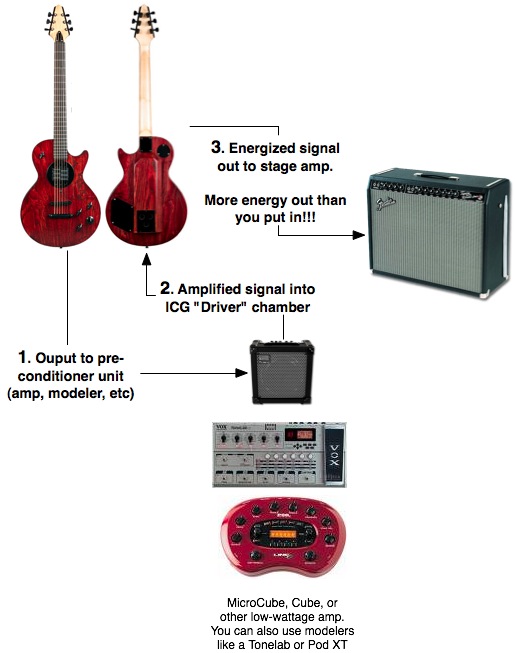
What makes these guitars so revolutionary is Woody’s invention: The Internal Combustion Drive System. This consists of a speaker transducer and special baffles and tone ports that direct added resonance to the strings and body. Essentially, the Drive System is a resonance chamber that builds up the guitar signal (with the help of a pre-conditioner that I’ll get into later) before it goes out to your main amp. According to Woody, whom I had the pleasure of speaking with for quite awhile yesterday, this is a guitar where you can feel your tone resonating throughout the guitar’s body.
So how does it work? Here’s a diagram. I’ll discuss it below:
That signal is returned via a special plug that Woody provides that I assume returns the “conditioned” signal as a line-level output (though with a Cube, you should be able to use the Recording Out). The signal then passes into the Drive System, where it’s run through the speaker transducer and allowed to resonated withing the chamber. The signal is buffered, then sent out to your main stage amp.The way it works in principle is actually quite simple. You first send your output to a pre-conditioning unit. This could be a low-wattage solid state amp, or even a valve amp. This is also where you add effects, so you could run this into your pedal board, then into the low wattage amp. The net result is that the guitar outputs more energy than was put in, providing for what Woody calls a much fatter, fuller tone than you would get from other guitars.
In addition, adding to the natural resonance are copper bars that run through the body to the neck, creating a direct coupling between the neck and the guitar. Very cool. Woody B also uses very high-grade woods with four to choose from: Swamp Ash, Alder, Mahogany, and African Black Limba (I dig the Black Limba, myself).
For those of you “in the know,” you might ask, “Moog already did something like this.” Yes and no. Yes, from the perspective that the Moog guitar uses a pre-conditioner. But no from the perspective that Woody has taken a completely different approach to the electronics in the Drive System. First of all, where the Moog has around 3000 parts to produce its sound, and I believe requires external power, the ICG Drive System has only twelve parts. Furthermore, the Drive System is completely passive, not requiring any external power source. Finally, the Moog guitar costs in the neighborhood of $6000, whereas you can get into an Internal Combustion Guitar for as low as $1700. Woody is really trying to keep the price below or as close to $2000 so his guitars are attainable by a wider audience.
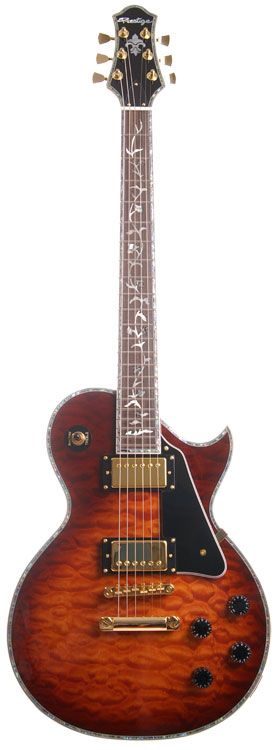
Pictured to the left is “Sugar,” my beloved Prestige Heritage Elite. It lists for $1800 Canadian (~$1450 US). But amazingly enough, you can get this guitar for $700-$800 on EBay!!! Click on this link to see items up for sale on EBay.
I’m absolutely amazed by this pricing! This is a guitar that has workmanship and features, not to mention sound and playability that rival boutique guitars five times its price! I’m so blown away by the prices that these are going for on the street, and it’s another reason to consider getting one of these guitars! Here are some sample clips:
Clean or dirty, this guitar sounds amazing!
Prestige Amps
Prestige also carries two tube amps, the VT-10 and VT-30. Here’s an EBay link to a VT-10 for $160!!! That’s absolutely ridiculous! Based on the price alone, I’m going to pick one of these up!!!
My good friend Jeff recently lent me his Nash Tele – a T-52. He’s one of those guys who’s totally into that relic look. Me on the other hand? Give me a nice shiny guitar any day! And even if I found an old guitar at an estate sale, I’d have it cleaned and brightened – though to retain its value, I wouldn’t do anything other than to freshen it up). But as you can’t judge a book by its cover, so it goes with guitars. Just because a guitar looks beat up and old, in the end, it’s how it sounds and plays that really matters, and the Nash Tele I just got done playing with is a total joy to play, with very nice tones to boot!
One thing that really impresses me about the guitar is how fast the neck is. It is so easy to move around on the neck that I was making tons of mistakes at first because I was able to play with a lot of speed. A lot of that has to do with how easy it is to play a note. Just lightly press, and the guitar starts to sing! Of course, there’s not much sustain, but that’s to be expected out of a Tele or tele-like guitar.
Just in case you missed all the excitement, I had written an article about the Fender Roadworn series awhile back. I basically said in the article that I just really don’t get the relic thing, and that I’d rather to the “relicing” myself. If that’s your thing, more power to you – what inspires us is what makes us great. But cosmetics aside, it’s also how a guitar feels and it enables you to express yourself. So even though I don’t get the relic thing, just based on playability and sound, I could easily own one of these. They are very nice guitars!
Rating Summary:Surprisingly enough, my little ding didn’t come from my not “getting it” with the relic look. The guitar I tested had a weird buzz in the second string, and it wasn’t due to fret buzzing either. It didn’t really show up when the guitar was plugged into an amp, but it was really evident. Otherwise, the guitar played and sounded great!
Summary: Modeled after the Hamer USA Studio, this Chinese-made axe is an affordable alternative to its American cousin. Featuring a solid mohagany body and neck with flame maple top and rosewood neck, the XT Sunburst has a naturally bright voice that’s both versatile and expressive. Very nice build quality.
Pros: Sweet, gorgeous voice at mild breakup levels, but is quite comfortable doing high-gain, which is probably where it’s best applied. This would be a great starter electric guitar!
Cons: Not much inherent sustain, especially in the upper registers where the guitar seems to lose gas. Hamer headstock is huge (that’s just a personal nit)!
Tone Bone Score: 4.0 – This is not a bad guitar, and it would definitely be something I’d consider as a starter instrument for one of my kids. It’s a nice-looking and with a little work, a nice playing guitar that would be perfect for which to start out a new guitarist.
In addition to being an incredible amp builder, Jeff Aragaki of Aracom Amps is as much a gear slut as I am, probably more so with guitars. Recently, he made the purchase of a Hamer XT Sunburst that he let me test. I had only played USA Hamer’s in the past, so this was to be my first experience with one of Hamer’s Chinese-made guitars.
Fit and Finish
Taking the XT Sunburst out of its gig bag, I was struck by its looks. It is a very beautiful guitar, and the burst finish really accentuates the flame maple top. It is also extremely light in weight, which is a huge point in its favor. Hamer calls it an “archtop,” but it’s more of a carved top, with gorgeous lines. The body wood is made of two pieces mahogany that look like they came from different parts of the tree. It’s not bad, it’s just kind of funky looking. Overall though, the finish is quite nice.
The neck is an extremely shallow C-shape neck. It felt pretty good in my fretting hand, and made it easy to get around the neck with ease. I love the short neck butt of this guitar, which allows you to reach real high notes without first having to do hand-stretching exercises.
Playability
Here’s where the poor setup that I mentioned above came into play. The action was set pretty high, and lowering the action just a fraction immediately caused some string buzz which means that there’s a bit of a bow in the neck. I confirmed this with a quick spot check. It’s not my guitar so I didn’t want to adjust the truss rod. The high action made it difficult to move with speed across the strings. But mind you, it’s not so bad that the guitar is unplayable. I would suspect that with a good setup, this guitar has the potential to play very nicely.
Sound
Tonally, this is a very nice-sounding guitar. I just wish there was more of it. The thin body and neck don’t provide enough resonance to hold notes for very long, so if you’re looking for a guitar that will sustain for a long time, this ain’t it. The saving grace is the very beautiful voice it does have. Here’s a clip I quickly recorded:
The guitar was plugged straight into the drive channel of my Aracom VRX22. Volume was set at just the edge of breakup. The guitar was recorded dry, and I added just a touch of reverb after the fact.
Like I said, the XT Sunburst has a sweet, bright voice.
Overall Impressions
For a sub-$500 guitar, it’s not bad at all, and as a start guitar, it would be perfect. And as long as you keep your expectations aligned with what this guitar has to offer, it’ll serve you well. I did get a chance to plug it into my pedal board, and playing it through a compressor/sustainer or an overdrive pedal that adds some sustain will work wonders with this guitar. It does play nice with pedals, which is a saving grace.
I know, I know… I’ve been singing the praises of this amp and cab for the last couple of months since I got them. But folks, what Jeff Aragaki of Aracom Amps has put together in the VRX22 is simply magic. I just can’t say enough about how much I love this amp. It doesn’t matter what guitar I plug into it, the VRX22 delivers the goods.
A New Option for the VRX22
I have the standard production model, the first in the series. In its stock mode, I wouldn’t change a thing. But I know there are some vintage gear and tube amp buffs out there that would frown upon the fact that the VRX series in stock configuration has a solid state rectifier. For me, it makes not a bit of difference; I just love the tone.
But for those that require a tube rectifier, Jeff also offers an option of a GZ34 or 5AR4 tube rectifier in place of the solid state rectifier. An A/B test didn’t reveal a tonal difference, but for the purists out there (and by no means do I mean this derisively), this is certainly an option, and a reason why you should consider this amp in your amp evaluations. And here’s another consideration: All Aracom Amps are hand-wired, and cost FAR LESS than equivalent amps. For instance, the VRX line in stock configuration costs $895! That’s unheard of in the boutique market!
Have a Cab, Will Travel
But on top of all that, the 1 X 12 mini-cab that Jeff custom built for me is simply magical as well. Jeff went against the common wisdom of not using a cube shape and porting and such, and built a simple cube shape with a width that exactly matches the width of the amp (about 19″ wide). Amazingly, this cabinet is incredibly resonant. The reason for this is that instead of using 3/4″ board, Jeff opted with 1/2″ board. This resonates a lot more with the speaker, and provides a bass response that adds depth to the output. Granted, I also have an absolutely kick-ass Jensen P12N Alnico speaker, but that cabinet even sounds good with just about any speaker you put in it. Like I said, amazing.
To further demonstrate the versatility of the VRX22 and the Aracom 1 X 12 mini-cab, I recorded a short blues clip using three different guitars, all running straight into the VRX22 with no effects. There are to overlapping rhythm parts panned left and right, and a solo in the middle. For the left pan, I used my gorgeous Prestige Heritage Elite (“Sugar”) plugged into the VRX22. For the right pan, I used my Strat (“Pearl”) plugged into my Fender Champ 600 and ran the speaker out into the 1 X 12 (I didn’t think the Champ could sound this good wow!). For the lead, I used “Sharkie,” my PRS SE II Soapbar with P-90’s in the bridge position straight into the VRX22.
Sorry for the slight mistake in the solo; or as my buddy Phil calls it, a “clam.” But overall, I was just amazed how good Sharkie sounded on that clip. I added a touch of reverb to that track, but made no modifications to the guitar signal at all. It was the guitar plugged straight into the amp.
As I’ve said in the past, I’m not affiliated at all with Aracom. I’m just a faithful customer, and just can’t sing the praises enough for the job Jeff has done!
Summary: Based on the original “RoxBox” (no longer available), the VRX18 sports an improved master volume inherited from the VRX22, and a reworked, smoother overdrive profile.
Pros: As dynamic and expressive as its 22 Watt sibling, the VRX22, but oozing that bright, chimey EL84 goodness. When driven, produces a nice, tight overdrive.
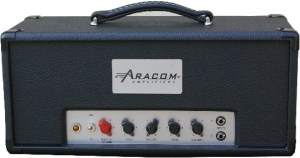
Head Cabinet
Standard Tolex: Black Levant. See options below for other colors.
– Dimensions: 19″w x 8″h x 8.25″d
– Weight: 23 lbs
Also available in 1 X12 and 1 X 10 combos (or Jeff can custom build one to your liking)
Tone Bone Score: 5.0. When I can swing it, I’ll be getting this amp to complete the VRX Series!
Jeff Aragaki, founder and builder of Aracom Amps, always chuckles when I tell him that he’s onto something with his VRX (short for Vintage Rox) series amps. With the VRX22, he seemed to have stumbled onto a sweet spot that produced an amp that has an incredible and beautfully balanced tone that bring out the best tonal aspects of the 6V6 tube. He’s done it yet again with the updated RoxBox 18, now renamed the VRX18, but incorporating many of the same features he built into the VRX22.
I just purchased the VRX22, having fallen in love with the tone that it produces, and I’ve fallen love yet again, but now with the VRX18. I’m like a hopeless romantic that loves two women for their individual virtues, but in this case, the women don’t mind – they can co-exist with each other. Okay, bad analogy… 🙂
I originally reviewed the RoxBox 18 back in December. At the time, I totally dug its tone, but took marks off because of the mildly harsh breakup at lower volumes. There’s nothing harsh about the tone of this amp now – at any volume! It’s a great amp to play, and as expected, it’s pedal friendly, and responds really well to overdrive pedals. Also, I played four guitars through it, and it sounded incredible with all of them!
I won’t go into a lot of detail, since I already covered pretty much all the descriptive information I needed to in the original review, so I’m going to cover some important things I’ve learned about the VRX 18 and the VRX series in general. But first, as opposed to doing this last, here’s a short clip featuring the VRX18 to show you how kick-ass it sounds:
For this clip, I used a Strat with just the middle pickup, plugged directly into the VRX18. I just dig that EL84 grind! I had the Channel 2 volume dimed, and the master volume at halfway in full-power mode. It was very loud, much to the chagrin of my wife. 🙂 But I needed to capture at least some of that EL84 compression.
What’s cool about the EL84 is that it compresses nicely when pushed, but still seems to retain a certain openness in its overdrive. This is unlike something like a KT-66 that compresses so much when pushed you lose volume.
The Best Master Volume in the Business
I don’t say this lightly when I say Jeff has the best master volume in the business. I’ve played many amps. But when Jeff created the VRX22, he did something with the master volume that is pure magic. It has a nice, even volume sweep that seems to act independently of the channel volume. This means you can crank the channel volume to get some serious grind, but control the output via the master, and it won’t suck your tone! I’ve found this to be a real problem with other amps. That master volume is incorporated into the VRX18.
The Best Half-Power Switch in the Business
A lot of manufacturers use a pentode/triode switch to achieve half-power settings in their amps. I’ve played several amps with this feature. But in half power mode with the pentode/triode configuration, I’ve noticed a distinct tonal difference between the two modes in amps configured this way. It’s not that the tone is bad. In fact, many I’ve played around with sound great in half-power mode. But it’s like two different amps.
Jeff Aragaki takes a different approach and instead adjusts the B+ voltage to maintain the usage of all pins in the power tubes. I’m not an electrician, and can’t even begin to explain this technically, so I’ll just say it this way: When you switch to half-power mode in any Aracom Amp, the amp doesn’t change its tonal characteristics. It sounds and plays the same!
The Difference Between Old and New
In addition to the great master volume Jeff incorporated into the VRX18, the first thing I noticed was that it was nowhere near as easy to get this amp to overdrive in channel 2 as it was with the original RoxBox 18. This is not a negative thing at all because as I mentioned in my original review, the overdrive was pretty harsh at lower volume levels. I spoke to Jeff about this, and he said that based upon my original tests and review, he decided to mellow out the extra gain stage in the VRX18 so you could get a nice overdrive tone at any volume level.
You won’t get over-the-top gain with the VRX18. But for that, I have a simple fix-all: Get a great booster pedal like a Creation Audio Labs Mk.4.23 (again, the best booster on the planet), and SLAM the front-end of the amp. 🙂
But all that said, if you’re in a venue where you can dime both master and channel volumes, you will be rewarded with gorgeous harmonics and overtones and luscious feedback!
Overall Impressions
Like I said, this is my next amp… It just rocks the house! And at $895 for the head, you could get both the VRX22 and VRX18 for under the price of a single boutique amp! This isn’t a sales pitch. The value proposition of the VRX series is something that should be seriously considered. You’re not getting a production line amp that’s built overseas. With the VRX series of amps, you’re getting a US-made, handwired amp for under a grand!!!
Admittedly, I was a little skeptical when I first ran across Aracom Amps. But I’m now a believer, and a faithful customer!
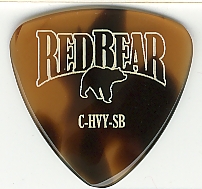
Imagine a pick shaped like the one to the left, but at 4 mm thick! That’s the Super Thick Gypsy Jazz Pick!
A couple of weeks ago, I was having a conversation with Dave Skowron, maker of Red Bear Trading picks, and said, “You know Dave, I just dig this Gypsy Jazz thick pick that I just bought. But as you know, for electrics, I play with a V-Picks Snake because I love the 4.1 mm thickness.” As background, I had just purchased a standard GJ thickness to replace the Heavy that I gave to a friend so she could try it out. I continued, “Do you have anything that is even close to that thickness? I would love to have that kind of thickness for playing acoustic.”
Dave replied, “Yeah, I have a sheet of the Tortis material that is pretty close to that thickness at about 4 mm. I did something even thicker for a guy once.”
“No, no any thicker, Dave, and I think it would be too much. But if you have a 4 mm thick pick, I’m all over it!”
“Okay, I’ll make up a prototype and send it to you to evaluate.”
All I can say after playing with “the prototype” for a couple of days is I hope that pick goes out of prototype because it is an incredible pick! You know how I love the feel and sound of Tortis, especially on acoustic guitar. In fact, I love the sound of Tortis with acoustic guitar that I won’t play any other type of pick on my acoustic. On electric, I dig my V-Picks Snake for its speed, tone, and thickness. Put all that together in one pick, and what you’ve got is a “Super Pick!”
The thicker you go with picks, the deeper and richer the sound. It’s not that you lose the highs; you don’t. It’s just that the thicker picks also bring out the lows, so what you get in a nice, even tonal presentation. That’s why I dig thick picks! On top of that, there is something magical with the way a Tortis pick interacts with an acoustic guitar’s strings. With me at least, playing a Tortis pick on acoustic evokes a certain visceral feeling that makes me want to close my eyes and just soak up all the tonal goodness. Not only that, Tortis, being made of a natural material, just feels natural. It’s the perfect complement for playing acoustic guitar!
So what about this super-thick Gyspy Jazz gauge? OMG!!! I am in guitar-playing heaven with this pick! It has the thickness of my beloved V-Picks snake, but all the feel and tone that I’ve come to love with my Tortis picks! To just call it “awesome” would be a complete understatement.
I first played the “Super Thick” last Friday at a gig that was primarily acoustic guitar. It started with playing some dinner entertainment music before a re-enactment of Christ’s passion. I was playing my Ovation Celebrity directly into a Genz-Benz 100 Watt upright. When I struck the first chord of the opening song. I actually had to pause and let the chord just ring and hang in the air. It was quiet enough in the room where I was playing that I could hear my guitar, as the amp was there for simple sound reinforcement. I thought my original GJ as awesome at 2.3 mm. What this pick did to the natural tone of my guitar was otherwordly!
I spent most of the day yesterday playing guitar, much to the chagrin of my wife! It feels so incredible!
In any case, if you’re interested in getting one of these, contact Dave Skowron at Red Bear Trading. I’m sure he’ll make one for you. Mind you, this thickness of pick won’t be cheap, but it’ll be well worth the investment!
If I could go higher, I would with this rating. But this pick gets my highest rating!
Summary: This brand-new 22 watter is the newest in the Aracom low-wattage amp series now called the Vintage Rox or VRX series, which includes the original RoxBox 18 (now called the VRX18). Loaded with a pair of 6V6 power tubes, this amp oozes vintage American clean and dirty tone ala Stevie Ray Vaughn.
Pros: More clean headroom in Channel 1 as compared to its EL84-based 18 Watt sibling. And despite its lower wattage rating, this amp is capable of getting LOUD! Plus the VRX series sports what I think are the best power switching and master volume in the business!
Cons: None.
Price: $895 Head / $995-$1095 for Combo (dep. on speaker)
Specs:
– (2) 6V6 Power Tubes
– (3) 12AX7 Preamp Tubes
– S.S. Rectifier with “sag” circuit
– Hi/Low B+ voltage switch (22/10 watts)
– On/Off Switch
– Indicator Lamp
– Custom Heavy Duty Aluminum Chassis
– Custom Wound Transformers
– 4, 8, 16 ohm Speaker Jacks
– Custom Handcrafted
Turret Board
– HandwiredTone Bone Rating: 5.0 – Jeff Aragaki has hit the ball out of the park with this amp! I loved the original RoxBox 18, and gave it a 4.75, but with this amp, Jeff “fixed” the harshness of the breakup at lower volumes. To me, it’s the perfect amp!
Let’s roll back the clock a couple of months. I get a call from Jeff Aragaki. The conversation went something like this…
“Hey Brendan! How’s it going?” asks Jeff.
“Not bad. Howzit with you?” I ask.
“It’s going good. Listen, I’m experimenting with a new tube compliment for the RoxBox and put a pair of 6V6’s in it to see how it sounds,” says Jeff.”
“Oh REALLY? Kinda tryin’ to get an American voicing, are ya…”
“Yeah, plus the output rating should be bit higher at around 22-25 Watts,” Jeff states.
“Okay,” I say, “Now you’ve got my attention. When can I try it out?” I ask.
<chuckle> “Well, I called to see if could bring it over to you for you try out and give me some feedback,” replies Jeff.
“Brand new amp? Experiment? Need you ask to see if I’d like to try it out? I’m free Saturday morning!” I exclaimed.
Fast-forward to the following Saturday, and Jeff lets me try the amp for a couple of days before he has to take it back, and I immediately start taking it through its paces. I even gig with it. I’d instantly fallen in love with it! I call Jeff and tell him that I think he’s onto something with this amp. He’s glad for the feedback, then a couple of days later, he picks it up to finish it out.
A few days later, he calls and tells me that he had to tweak the circuits a bit to handle the increased power. Uh-oh. So I asked, “Did it change the tone?”
“Hahaha… not at all. In fact it was actually running at way below 22 Watts. Since I reworked the circuitry, it has tons of power now, and it sounds even better. I even adjusted Channel 1 so you get even more clean headroom, and Channel 2 breaks up real nicely now. In any case, I’m going on a business trip to Indonesia and you can play with the amp for a couple of weeks while I’m gone.”
And play I did! That was one of the most exhausting two weeks of my life because I was up till late (like 2-3 am) playing that amp. I just couldn’t get enough of it, especially playing “Goldie” (a Saint Guitar Goldtop I recently reviewed) through the amp. And in all that time, I wanted to write a review of it, but I had agreed with Jeff to not talk about it (though I hinted a lot) until he got back from Indonesia and turned it into a production amp.
Once he returned from Indonesia a couple of weeks ago, he came over to pick the amp up. He asks me the usual questions about how I liked it, and I just said, “Jeff, this is a PERFECT amp! I can’t say anything bad about at all. Channel 1 is gorgeous and works great with pedals. Channel 2 just rocks the house! It’s the channel I used the most, and it’s also real pedal-friendly. And for once in my life, I’m at a total loss for words; that’s how much this amp affects me to the core.”
Jeff just laughed, and said, “Well, I’ve got a couple of other amps for you to try out…”
I cut him off, and told him that it’s fine if he wanted me to review them, but as far as what amp I’d choose to go with for my personal amp, the VRX22 was it. Search over. He laughed again, and said he’d get started on it….
Okay… fast forward to yesterday…
Jeff called me up to give me a status on my amp, and that he talked to someone this past week who is also getting one, choosing the VRX22 over a well-known boutique manufacturer. So it was definitely going into production, and he was almost done with the web page and announcement. Of course, I couldn’t keep my mouth shut and immediately wrote an announcement, despite his recommendation to wait until today). 🙂 I just promised I wouldn’t say too much, which I didn’t because I wanted to write a review.
What’s in a name…
To create alignment in the series, Jeff has renamed the “RoxBox” line to the “Vintage Rox” or VRX series. If you recall, the original RoxBox 18 sported a pair of EL84 power tubes and is now called the VRX18; and the only difference between the two amps is that the VRX22 employs 6V6’s and circuits that can deal with the increased power. In essence, with the VRX series, Jeff is providing both British (VRX 18) and an American (VRX 22) voicing options. The EL84-based VRX18 breaks up very similarly to a VOX AC15, with a lot of high-freq shimmer. The VRX22, on the other hand, breaks up like a classic Tweed. Frankly, once I have the bucks, playing both together will sound absolutely awesome!!! And priced at $895 each for the head models, that’s A LOT cheaper than a single hand-wired amp from most boutique manufacturers.
Hand-wired goodness at an affordable price
I can’t stress this enough: The thing that originally blew me away with Aracom Amps was the price of the RoxBox. I couldn’t believe Jeff could sell a hand-wired amp for less than a grand – even with a solid-state rectifier! As I’ve gotten to know Jeff, and I’ve come to understand one thing about him: He’s an incredibly shrewd businessman. As he shared with me this morning, “It’s a matter of philosophy. Some guys make boutique gear, give their stuff a nice paint job, then charge a bunch of money for their gear. Then there are other guys who just want to make a few bucks off their gear, but sell it at a lower price so more people will play it.”
The net result is that we consumers reap the rewards of that philosophy, and probably one of the reasons why Jeff’s amps are starting to gain a lot of traction in the industry. And artists have started to find out about Jeff’s amps. Gene Baker of B3 Guitars fame plays an early-model Evolver, and just recorded his new album using the Evolver in all the songs. Obviously, a guy like this who gigs all the time is a believer. I’m nowhere near Gene’s abilities, but I totally dig his amps – I think you can tell. 🙂
How It Sounds
I’m not going to rehash features here, since the features are the same as the original RoxBox 18 that I reviewed a few months ago. Again, the fundamental difference is the use of 6V6’s.
If you’re looking for a classic American tone, this amp is it. Yeah, you COULD go with a classic Tweed from Fender or other boutique manufacturers. But you’d pay way more for the sound. But I also need to qualify that. The tone is “American-like.” It has a voicing that whether Jeff stumbled onto it or not, is a voicing that is at once familiar, but all its own at the same time. To me, I don’t give a rat’s ass about the power rating of this amp. All I know is that it sounds like nothing I’ve played before. That’s the feeling I get with the Reason SM25, which is another 6V6 beauty, but has a sound all it own.
Channel 1 is bright and gorgeous. It’s chimey as you’d expect from a classic Tweed sound, but it’s amazingly very lush as well – which is where this amp is really distinct. The words that come to mind with this clean channel are “subltely sensuous.” It’s not like a hot chick dressed in a tight mini skirt. It’s more akin to a gorgeous woman dressed in a simple cotton summer dress who doesn’t need any makeup to enhance her looks, and she has nothing to prove. She just looks to be all-woman. The net result is that you’re just drawn into aura without really knowing why – nor caring. The clean channel of the VRX22 has a similar effect on me. It’s just a gorgeous tone with any guitar (though I especially loved play “Pearl,” my Strat through it. The raw tone just draws you in, and when you add effects, it just handles them beautifully.
Channel 2 is also bright and ballsy, but its breakup is incredibly smooth. This is the channel where I think Jeff has really hit the ball out of the park. One of the things that has bugged me about the power tube distortion in a lot of Tweed-types of amps is the harsh grind from the power tubes that you oftentimes have to tame with some filter cap and capacitor changes – it’s a bit too open. Not so with this amp. The “hidden” gain stage that acts as a tube overdrive pedal that’s always on helps smooth out the distortion by making it a bit tighter, but not so much that you lose that openness that you expect from a Tweed-type amp. I loved slamming the front-end of the amp with tons of input gain, and pushing both pre-amp and power tubes at the same time. Talk about compression and sustain!
Here’s a clip I used for my review of “Goldie.” The amp is in Channel 2 for the lead, and I added just a tad of Tube Screamer to get a more punchy midrange response. The TS overdrive was maybe at 10 am – not much at all. Plus I layered on some reverb with my Hardwire RV-7 Reverb. The bulk of the breakup came from the amp. The rhythm track was recorded with Pearl on Channel 1.
Man! I just listened to that track again, and can’t get over how great the amp sounds. Normally I record at bedroom levels, but I wanted the amp to move a bit more air this time, and I recorded it at gig levels (for me, that’s around 90-100db, so it’s fairly loud but not over the top), and I used a ribbon mic to pick up the ambient a bit better. The mic was placed at a 45 degree angle along the speaker cone about a foot and a half away from the amp.
Overall Impression
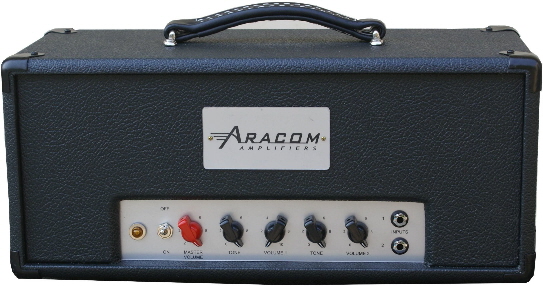
I just can’t rave about this amp more! To me, it’s the perfect balance of tone and power for practically all my needs! I’m getting the head with a 1X 12 cab, both wrapped in that awesome blue tolex that you see in the picture above!
Admittedly, the purist in me originally scoffed at the idea of a solid-state rectifier in the original RoxBox series. But as I told Jeff this morning, what people are typically after is the voltage sag you get with a tube rectifier. Jeff has built a custom “sag simulator” circuit that does the job so well that frankly, I can’t tell the difference. Besides, it’s what the amp sounds like that counts, not necessarily its components. Look at the classic Roland JC-120. That has to be one of my all-time favorite amps – even Satch played with one for years. It’s completely solid-state and it sounds freakin’ awesome!
But circling back to the VRX22. You can’t go wrong with this amp. Yes, it’s priced for value, but the tone that you get for that far surpasses anything that I’ve played at these lower wattages.
It’s one thing to test gear in a controlled environment, it’s an entirely different matter to use it for a gig. After receiving the Prestige Heritage Elite, I took it through its paces in my home studio, and it performed quite well; so well that I gave it very high marks, reflecting the excellent build quality as well as how it sounds, which was awesome in the studio. The operative word here is “studio.”
As I mentioned above, it’s an entirely different matter of testing gear in a gig situation. After all, during a gig, you don’t have the luxury to stop to make corrections on the fly. Furthermore, during a gig, an instrument’s tone interacts and reacts completely differently to the environment than in the studio.
Hope that little section above doesn’t make you nervous about how the Heritage Elite performed 🙂 because it worked great! I played the guitar at my weekly church gig with a full band. Now before you dismiss this venue, let me say that playing in a church is one of the most sonically challenging environments to play in because you don’t have the luxury to crank it up, and churches have pretty high ceilings so dealing with sound bouncing around a big space makes it even more challenging. In light of that, you have to rely a lot on the natural tone of the gear you’re playing. Especially with something like a guitar, it has to sound great at lower volumes, and have voicing that won’t get lost in the ambient.
In this, the Heritage Elite really excels. Surprisingly enough, it doesn’t have the deep ballsy voicing you’d expect from a Les Paul-type of guitar. In fact, the voicing is much brighter, but from the standpoint of playing live, that’s a good thing, and something for which I’ve always praised Saint Guitars. But like a Les Paul, it has that distinctive chirp – that kind of hard to describe, subtle sound. It’s very pleasing to the ears – I dig it!
The other great thing about playing at my church is that I can play a variety of musical styles throughout the course of the service. I played some hard driving rock as well as some soft, finger-style music. Whatever the style of music I played, the Heritage Elite performed great. I especially dug its clean tone while finger-picking.
I also forgot how fun it is to play with independent volume and tone controls. I usually peg the tone controls, then use varying amounts of gain between the neck and bridge pickups to dial in just the right tone for a song. I actually played most of the service in the middle position so I could take advantage of both volume controls, though I used the treble position for leads – the SH-4 JB in the bridge position rocks!
So, whether you use it in the studio or on the stage, the Prestige Guitars Heritage Elite will do the job handily!
By the way, I found out why these boutique-like guitars come in at such a low price point compared to their more expensive counterparts: The guitars are cut, built and finished in Korea, then shipped to Canada to have hardware added and set up. For people who care about build location, this might be an issue. But PRS does _everything_ in Korea for their SE guitars, and they sound and play great! And I guess that’s the point I’m trying to make. Who the hell cares where Prestige guitars cut and constructed? All I know is that the guitar I’ve reviewed has no finish flaws, and more importantly, it sounds and plays great! I’ve even lent it to my close friend, and he’s diggin’ it! He’s amazed at how well it plays and sounds! That’s the most important thing with any instrument.


 My good friend Jeff recently lent me his Nash Tele – a T-52. He’s one of those guys who’s totally into that relic look. Me on the other hand? Give me a nice shiny guitar any day! And even if I found an old guitar at an estate sale, I’d have it cleaned and brightened – though to retain its value, I wouldn’t do anything other than to freshen it up). But as you can’t judge a book by its cover, so it goes with guitars. Just because a guitar looks beat up and old, in the end, it’s how it sounds and plays that really matters, and the Nash Tele I just got done playing with is a total joy to play, with very nice tones to boot!



 If I could go higher, I would with this rating. But this pick gets my highest rating!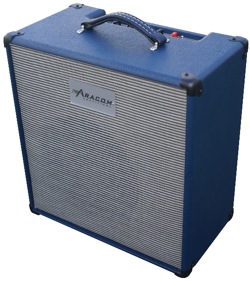
 Guitar Gear