There’s no guitar like a Les Paul that will distract me from considering other guitars. Just when I thought my next axe would be a Strat HSH, I think I have to get this new Les Paul with the Premium Plus finish. Last updated in 2008, this new Les Paul sports some freaking awesome features. But the thing that has me buzzing is that all four control knobs are push-pull knobs. The volume knobs split their respective pickup’s coils, but the neck tone’s push-pull is a phase switch to put the neck pickup out of phase with the bridge. Nice! And finally, the bridge tone’s push-pull routes the bridge pickup’s signal directly to the output jack, bypassing both the volume and tone knobs to deliver full volume and tone to the output jack for a lead tone. SO AWESOME!!!
The guitar has other accoutrements such as locking Grover tuners, but I DIG the tone shaping possibilities with this guitar. Plus, it’s actually coming out at a reasonable price for a new LP at around $2500, which is less than the 2008 model, but sports more features. Go figure.
Unless you’re a dealer or a distributor of speakers, there are only a couple of ways to pick out a speaker:
Go down to a dealer or distributor of speakers and listen to a bunch, then go and buy the one you like -or-
Buy some speakers, listen to them, and pick the one you like. Oh wait! There’s a third way of choosing a speaker!
Go on the forums, ask people what speaker they’d recommend, buy all the recommendations, listen to them, then pick the one you like.
I know, I know… It all sounds flip. But think about it. How the hell do you choose a speaker? The plain fact of the matter is that you have to listen to it to determine if it works for you. Descriptions, conversations, and recommendations are helpful indeed, but in the end, it’s the sound that the speaker produces that vibrates your eardrums that will be the ultimate deciding factor.
Of all the parts of the signal chain, I’ve found that in comparison with other parts of my signal chain, I’ve probably spent the most research time on speakers; much of it anguishing over having purchased a speaker I thought might work, only to find that it sucked! Let’s face it: A speaker is the endpoint of your signal chain, and produces the sound from everything in the chain before it. If it doesn’t sound good to you, it doesn’t matter how good everything else is in front of it.
There’s no “pat” advice I can give. You just have to listen to a lot of speakers, or take a chance on buying one and hope you get lucky. I’ve been lucky so far with my Fane Medusa 150 and with an evaluation Jensen Jet Electric Lightning that I got from Jensen that I decided to buy because it sounded so good. But there are lots of speakers that I’ve tried that I’ve never written about because they just didn’t work with my rig.
There is sort of a fourth way, and that is to listen to the recommendations from someone who knows your tone. My friend and amp builder Jeff Aragaki of Aracom Amps is that guy for me. Since he personally built and customized to my specs most of the amps I play, he knows what I like, so when he has recommends speakers, I listen. It was that way with the Jensen Jet Falcon 12″ speakers I have in three of my cabinets. He got one to try out from a distributor, and called me up, asking if I’d test it since he didn’t time. We met a few days later for me to get the speaker from him, and once I installed it in my cab, I loved it so much, I kept it, then bought two more since then to go into other cabinets. Mind you, this replaced a Celestion Blue – which is a GREAT speaker – that costs three times as much!
Oops… got a bit side-tracked. So while it ultimately takes listening to speakers to see if they will work, there are some preparatory things you can do to at least narrow your search:
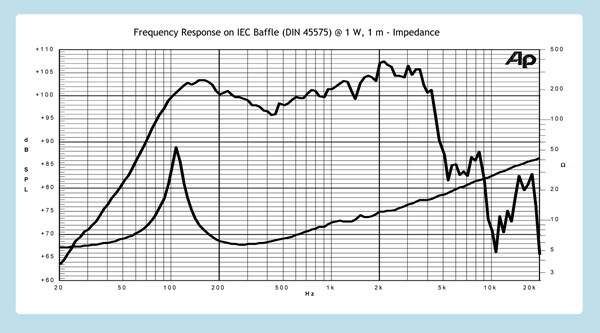
Go to the manufacturer’s site and look at the frequency response charts. For instance, check out this chart for the Jensen Jet Falcon 12″:
This told me to expect a bit of a scooped tone as the lows and mids had peaks. Or check out this one for the Celestion Gold:
This shows a more moderate low- and midrange response, with slight emphasis on higher freqs.
Once you see a pattern that you’d like to explore, start listening to clips, taking note of the gear used.
Finally, see how you can try one out or hear one in person.
As I mentioned, there is no “pat” way of deciding on what speaker to buy. But with a bit of research, you can narrow the field down significantly.
I got an email today from Online Guitar Books asking me to post a link or an article. I’m pretty wary of spam, so I put my browser in stealth mode, and went to the site to check it out. It’s legit. Not only is it legit, I came away pretty impressed with the wealth of information on learning and playing guitar. Of course, being curious about modes, I dove into the modes article, which is VERY long and involved. If you’re really after the theory behind modes and practical application of them, then this article covers pretty much all the bases. Be forewarned though, because while the author has a non-formal tone in explaining modes, he takes a very academic approach to them, and it’s A LOT of material. He even admits at the beginning of the article that he went “overboard.” My advice if you use this article is to read it in chunks; practice what you learn in each chunk, then continue on to the next. As with any academic subject, learning is iterative.
So you might be saying, “Oh no! Not another guitar book marketing site!” Yeah, that’s exactly what I was thinking when I first read the email. But this site is different in that instead of giving you a little information, then saying something to the effect of: For more information on this subject, click here to buy the book! The articles they provide are complete lessons. They don’t even have their storefront up yet, but the information they are providing is complete and thorough! So yeah, I’m kind of endorsing it as a good source for guitar lessons.
I read a very sad article on SF Gate today that reported that Ronnie’s actual cause of death wasn’t due to complications from cancer, but rather, from suicide. Apparently Ronnie suffered from life-long depression, and it finally just got the better of him.
I’ve had my own battles with depression throughout my life, but nothing so bad that I couldn’t bring myself back from the edge. But that type of deep depression Ronnie suffered from is something I couldn’t even fathom.
But cheers to you anyway, Ronnie! You touched a lot of people in your lifetime, and even though you couldn’t fully appreciate it due to your depression, you will always be remembered with kindness.
I posted a little video of Gene Baker yesterday and I just have to say that in addition to making some freakin’ incredible guitars, he’s a MONSTER on guitar! In this video, he does a medley of Just Got Paid and a blues song with which I’m unfamiliar. But in Just Got Paid, Gene’s guitar work is right up there with Joe Bonamassa’s, whose version I totally dig. Check it out:
And of course, Gene is and has been a faithful Aracom Amps player for a long time. In his live rig, he uses a VRX22 and 50 Watt Evolver. The Evolver is played dry, and he loops out to the VRX22 for his modulation effects. His tone is amazing with that setup.
As a little plug for Gene and the “Mean Gene Band,” they’ve been a high-energy cover band for years, but they’re now starting to do some original stuff and will hopefully be touring outside of Central California a lot more in the future. Gene was also good friend with Ronnie Montrose before he passed away and Ronnie would occasionally have Gene join him on stage – that’s how good he is!
As far as Gene’s guitars go, Gene is most known for his “Baker Guitars,” but because of financial and legal issues years ago, he had to give up the name. For last few years, he’s been successfully running a whole new operation in the Central Coast of California, called “Fine Tuned Instruments.” I personally have yet to play one of these, but I have played an original Baker, and no doubt this new rendition of the original Baker Guitars has got to be every bit as good. For more information on Gene and his guitars, check out the Fine Tuned Instruments site!
A friend posted this on Facebook today, and I just couldn’t resist sharing it here. As a guitar gear and Star Wars nerd, I found this bass to be the perfect expression of the things I like in life. 🙂 Don’t know too much about who built it, but apparently it was made from an actual Millenium Falcon toy. Freakin’ cool!
Gene Baker, creator of the original B3 Guitars, isn’t just a talented luthier, he’s a total badass guitar player. For those who know, Gene uses Aracom amps, including a modified 50 Watt Evolver, but also the wonderful VRX22, a 6V6-powered, Blues Breaker-style amp. If you’ve read this blog with any regularity, I too have the VRX22, and it’s my go-to amp for both stage and studio. In this video, Gene demonstrates these two great drive pedals from Xotic Effects, the BB Plus and the EP Booster and then shortly talks about the VRX22. Great to see a pro plugging this wonderful amp!
Sebago Sound PrototypeSummary: I don’t know what an original Steel String Singer sounds like, but if Sebago’s take on that amp is any indication, we have a winner here! This is an incredibly versatile amp that can fit any genre of music. This is my next amp.Pros: Versatility is the key with this amp. The notch High and Low notch filters let you dial in your tone to fit the genre or help fine tune the amp to your guitar.
Cons: None. But not a 5.0? I’ll explain below…
100-150 Watts (150 with 6550’s) from 4 power tubes
Reverb “loop” with send and receive knobs (send is signal gain into tank, receive is similar to mix)
Single input with switchable FET circuit
Gain control
Three-band EQ
Bright, Mid, Rock/Jazz mini toggles
Master control
Presence control
Individual High and Low notch filter knobs.
Power and Standby switches
Price: TBD, but will probably be somewhere between $2500 and $3000
Tone Bone Score: 4.75 ~ The only reason I took off a quarter point is because the reverb receive circuit was a bit noisy. I was able to dial back the hum by upping the send gain and dialing down the receive signal, but this is a prototype, so it’s understandable that there would be some tiny issues, and believe me, this is tiny.
My First Impressions article pretty much said everything that I had to say about this amp. My opinion hasn’t changed. This is an absolutely SUPERB amp that has me GAS-ing VERY BADLY. And after playing with this amp for the last few days, I’m in a dream state from the hypnotic tone that this amp produces – with all my guitars.
One thing I will add is that Bill Dunham emphasized that the amp is a great pedal platform. I still agree with that assessment, but frankly, this amp produces almost all the tones that I need, so I haven’t hooked my pedal board once this past week. The reverb is fantastic, and when I’ve taken the amp into overdrive, I just haven’t seen the need to use a pedal. The only exception to that is with the last clip I recorded where I ran my Strat through my Timmy overdrive before going into the amp, which was not quite at the breakup level; just slightly below.
Granted, at 100 Watts, I couldn’t take the amp into breakup without an attenuator. But luckily, my trusty Aracom PRX150-Pro comes to the rescue yet again in that department. A quick note on the distortion. I wasn’t really liking the fully cranked up tone of the amp with my Strat. It’s an entirely different matter with my Les Paul. The lead tone – which you’ll hear shortly – is just incredible. With the FET activated, and both Gain and Master cranked up (Gain at 9, Master at 10), the sustain, harmonics and overtones create this absolutely gorgeous lead tone. Now by itself, this amp won’t do metal. It’s not made for that, and I don’t think it was ever intended to do that. But crank it up and throw a distortion pedal in front of it, and I believe you could easily do metal.
Fit and Finish
I really won’t comment on this much because the final face plate is being produced so Bill modified a Double Trouble face plate. That’s also why I didn’t take pictures. It’s not finished, and I don’t want people to get the wrong idea that the amp will be in the condition in which it was tested. It looks great, but I’d rather get pictures of the finished product.
How It Sounds
Bill kept on saying when he dropped off the amp that it’s real strong point was clean. After playing with it, I heartily disagree. 🙂 Clean, dirty, it don’t matter. I dug the sound. In any case, I’ve recorded three clips to give you a general idea of the amp’s tonal possibilities. Mind you, I don’t have a mild breakup clip with a Strat. Once I get the real thing, I’ll share lots more clips. For now, you check out the ones I’ve recorded thus far. Note that these tracks are raw tracks. I used no EQ nor compression because I wanted to ensure that I’d capture all the dynamics of the amp.
Clean, Gretsch Electromatic (thin body)
Clean, Les Paul
Rock, Crunchy Rhythm (left), Solo (right)
Clip from an SRV tribute song I wrote called “In The Vibe”
All the clips were recorded using an Avatar 1 X 12 closed back cabinet with the fantastic Fane Medusa 150 speaker. I used a single mic – a Sennheiser e609 – positioned about 18″ from the cabinet pointed directly at the center of the cone. Part of why you might hear a little static is the ambient room noise from my garage. Barely detectable, but it’s there.
With the rock clip, one thing I had to get used to was the note separation in touch sensitivity of the amp when I’ve got it cranked; actually, even in heavy overdrive. I didn’t really have to change the way I play, I just had to make sure that if I was chording, then I needed to be smooth with my strums, otherwise you’d hear every dang string being plucked. 🙂 It was a pretty easy adjustment.
With the SRV tribute song, as with the other clips, I didn’t EQ the guitars at all, though with the lead, I did add some reverb and a touch of delay to give the tone some air. I also ran the guitar through my Timmy overdrive in front of the amp. Other than that, what you hear is what the amp and the Strat are producing naturally though the final recording has a touch of compression. With the first part of the clip, I’m playing through the neck pickup, then switch to the bridge pickup and turn the volume of the guitar up a couple of notches.
In any case, to me, the clips I’ve provided tell a good story of what this amp is capable of. As I mentioned, in a clips, what I’ve laid down is the raw amp sound, completely unprocessed except for the SRV tribute. The tones are absolutely gorgeous!
Overall Impression
I suppose you can pretty much guess what my impression is of this amp. Once Bill gets this into production, it’ll be my next amp. Better start saving my pennies. 🙂
Watch this scene from Harry Potter and Sorcerer’s Stone:
I recently re-watched this wonderful movie, and when I heard the line: “The wand chooses the wizard, Mr. Potter,” it struck me that it seemed as if the drive pedals I purchased sort of “chose me.” Like Harry Potter trying out magic wands, there were some that I tried (and bought) that were so harsh they seemed to throw things around the room. Some were so funky-sounding, that they’d break things. But then there were four that spoke to some inner part of my being that seemed to fill me with creative power. Those were my Timmy, Tone Freak Effects Abunai 2, and my EWS Little Brute Drive, and Creation Audio Labs mk.4.23 boost. I may get other drive pedals in the future, but those will always stay on my board. They’ve become an integral part of my tone.
I suppose that this goes for any gear that I have, but my search for the right drive pedals was long and expensive; not necessarily in terms of money, but most especially in terms of time. I tried out hundreds over the years, but none have moved me as much as these four. And frankly, that “moved” feeling is the main criteria for me purchasing drive pedals.
Of course, I can’t play everything, but I do a lot of research before I buy. To me, a drive pedal is an incredibly personal piece of gear. I can’t just play any drive pedal. Some folks might be able to do that and sound good, but my ears are particularly sensitive to drive sounds. If something is off, just by a bit, then it bugs me to no end. Can’t necessarily describe the exact sounds I’m looking for in a drive pedal, or what might turn me off, but I do know when I hear something that I just have to have. Then I’ll buy it.




 Guitar Gear
