Lovepedal has been around awhile, and has been known for creating some killer pedals; among them the awesome “Church of Tone,” Plexi-in-a-box drive box, and the Eternity drive, an incredibly versatile overdrive pedal. Just recently, Lovepedal released a line of four pedals that while diminutive in size, create huge tone. These are the Echo Baby, a nice straight-forward delay; the Amp 50, which is a miniaturized version of the Church of Tone pedal; the Pickle Vibe, a VERY nice vibe pedal; and finally, the Mini Buffer, a signal buffer to live on your pedal board to bolster and condition your signal chain. Each pedal measures 3 5/8″ long X 1 1/2″ wide X 1 1/4″ high. As Lovepedal puts it, these are small enough to fit on a keychain. 🙂 Of course, that’s a bit of an exaggeration, but that’s pretty small nonetheless. Check ’em out at lovepedal.com! Here’s a cool video to make you salivate a bit…
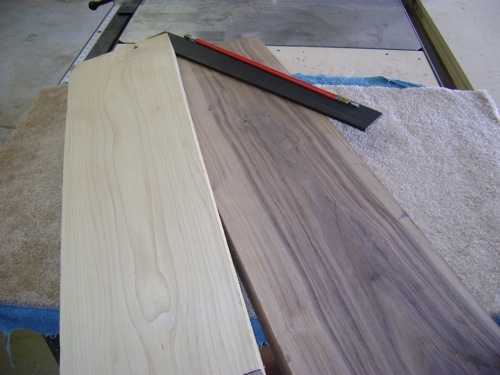
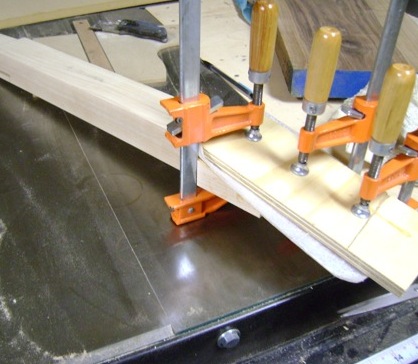
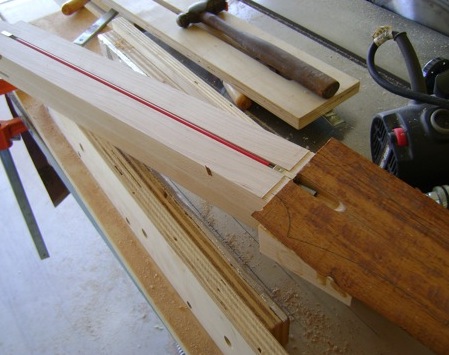
It’s hard to imagine that I’m actually having a guitar custom made for me from Saint Guitar Company, but it’s happening. This post will be a “sticky” post so you can follow the progress of the guitar with me. By the way, with this guitar, I’ve picked a fairly unconventional combination of woods: Walnut back, maple top, rock maple neck and ebony fretboard. Adam Hernandez and I are hoping the result will be a brightly voiced guitar that will have the incredible sustain Saint Guitars are known for.
Progress Report
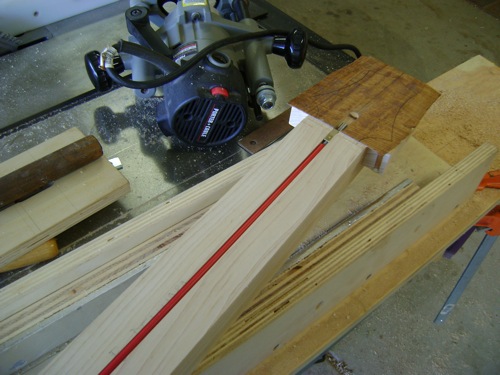
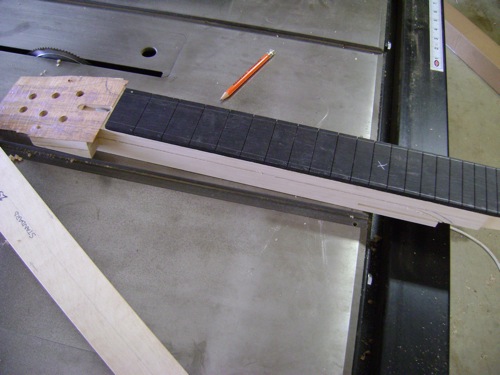
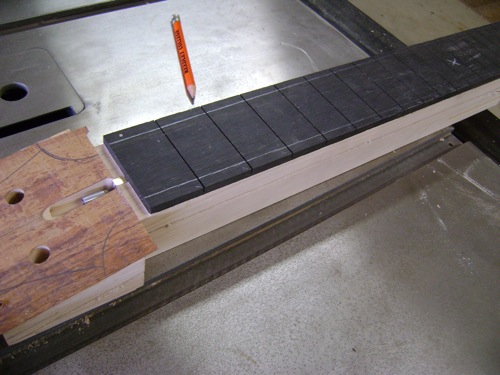
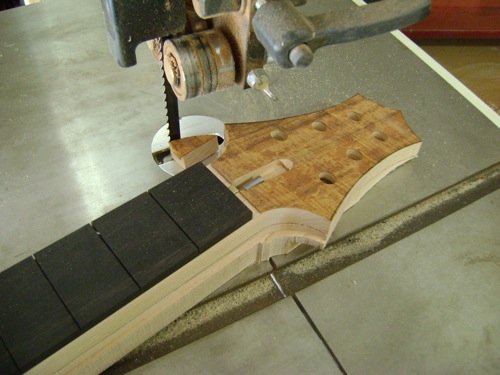
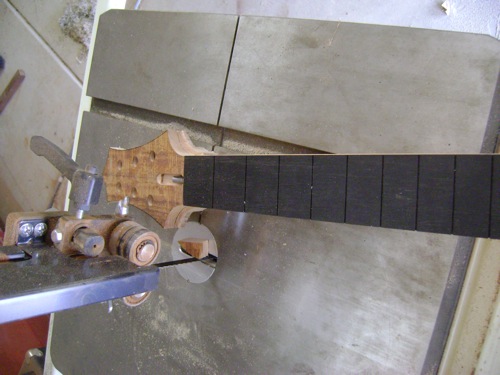
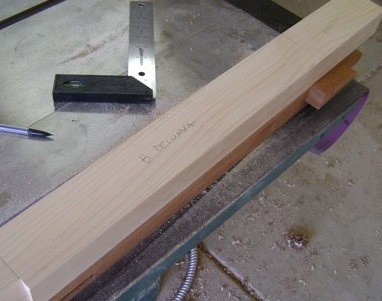
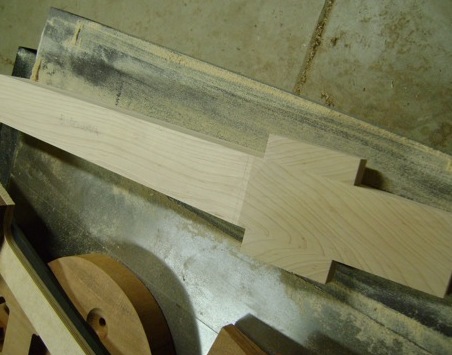
May 4, 2009 – With the first set of pictures, the billets have been selected and cut, and the neck is being shaped. Forgot to mention that the headstock plate is koa. I know that I chose a bunch of woods, but I chose each wood to achieve a specific tone profile that I’m hoping the woods will produce, and this was done with literally a couple of hours of discussion with Adam. Working with Adam is just so easy. The cool thing is that he’s so open to exploring different things at this point in his luthier career, so it has been really fun discussing the building of the guitar with him.
Posted in custom guitars, gear, guitar, guitar gear, guitarists, Guitars, Music, musicians, new gear, Saint Guitar Company, saint guitars messenger | Tagged custom guitar, custom guitars, GAS, gear, goldie, guitar, guitar construction, guitar gear, guitarists, Music, musicians, Saint Guitar Company, saint guitars | Leave a Comment »
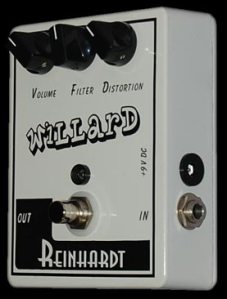
Just ran across this brand-new fuzz pedal from Reinhardt Amps, called the "Willard" distortion pedal. This pedal is pure 80’s fuzz, a sound that I came to love! From the video, it’s clear that this pedal is capable of producing some serious hair, but it also retains a lot of clarity. Built around a true NOS LM308N op-amp chip and based around a big-box Rat of that era, this is a very nice-sounding distortion box. Check out the video below:
Posted in buying gear, distortion, effect pedals, Effects, fuzz, GAS, gear, gear announcements, gear find, guitar, guitar effects, guitar gear, guitar pedals, guitarists, Guitars, Music, musicians, new gear, pedals | Tagged distortion, effect pedals, Effects, GAS, gear, gear announcements, gear find, guitar, guitar effects, guitar gear, guitar pedals, guitarists, Guitars, Music, musicians, new gear, pedals | Leave a Comment »
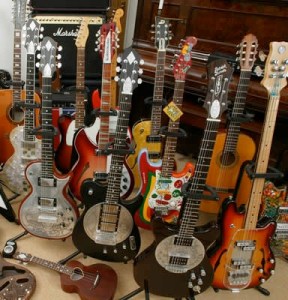
This is a bit of a continuation of my previous article about not getting fooled by pedigree. While I was singing the praises of a Saint Guitar Goldtop Benchmark that I was testing, my buddy commented to me, “You sure about wanting to get one of these? It’s gorgeous, and it plays and sounds amazing, but the problem I have with most boutique guitars is I’m not sure how well they retain their value. What if I wanted to sell it later on? Would I get what I paid for it? Will it appreciate in value?”
All valid concerns, but I simply replied that it’s all about your perspective: Are you a collector or a trader?
If you’re a collector, chances are you obtain gear to keep it and use it for a lifetime, or even just hang it on a wall (I know of someone who has 300+ guitars, most of which he never plays). I consider myself a collector. And from that standpoint, I’m what’s called “brand blind.” All I care about is if the gear looks good, plays good, and sounds good, no matter what the brand.
On the other hand, there are those whom I call “traders.” They get gear, but are always open to trading for another type of gear that might be better from their point of view. From that standpoint, brand awareness is important as people will tend gravitate toward known entities, and the brand-names definitely attract more traffic.
Mind you, I’m not saying one is better than the other. It’s just a matter of perspective in making a purchasing decision. I used to be pretty brand-centric, but ever since I started writing this blog, I’ve come across some awesome gear that I don’t think I would’ve even considered evaluating had I focused on the brand-name stuff.
And let me say that it’s not that you’re either one or the other. It also depends on the gear. For instance, I swear by V-Picks and Red Bear Picks. I won’t use any others. But I’ll buy off-brand pedals and guitars and amps.
So are you a “collector” or a “trader?”
Posted in buying gear, GAS, gear, guitar, guitar gear, guitar lifestyle, guitarists, Guitars, Music, musicians | Tagged buying gear, GAS, gear, gear reviews, guitar, guitar gear, guitarists, Guitars, Music, musicians | Leave a Comment »

I recently read a press release on Harmony Central where this company, Hypnobusters, has just released a self-hypnosis audio to improve your guitar playing. I snickered at first because when the word “hypnosis” is mentioned, my gut reaction is, “Yeah, right… just some more of that New Age crap…” But then again, over the years, I’ve developed meditation techniques to help focus and quiet my consciousness to develop and extend my “chi” (for those martial artists out there), and even so far as performing self-healing. In a way, those meditation techniques are a form of self-hypnosis. And if I’ve used self-hypnosis to accomplish different things, why not apply it to guitar playing?
The mind is a very powerful tool. And if you have the ability to quiet your consciousness, and filter out the hustle and bustle of your waking mind, you’ll find that you can much more clearly analyze different subjects or help steer yourself towards accomplishing many things. It’s not hocus-pocus. It’s pure focus.
For instance, have you ever been playing guitar at a gig or in the studio, and you close your eyes because you’re so in tune with the song that what you’re doing is just pure expression? While you’re in that “groove,” nothing else exists. It’s just you and your axe reverberating with the song. That, my friends, is a form of self-hypnosis. That’s happened to me many times in my studio, and when I listen to the printed track, I’m sometimes in total disbelief that I actually played what I played! I’m not really all that good of a soloist, so I suppose any clean take is a good take. 🙂
In any case, I went to the HypnoBusters site, and found their guitar improvement page. The audio session only costs $9.95, so I said, “What the hell? I’ll give it a whirl. Besides, I could use a little mind quieting time.” And really, that’s what it’s all about – quieting your mind, and allowing yourself to explore the limits of your playing. I’ve often found that the limits of my skills on guitar aren’t merely technical – there is definitely that – but also because my conscious mind often tells me “You can’t do that.” It’s like an inherent fear. But as I break through those boundaries, I find that my actual limits are much further than what my conscious mind tells me.
I’ll give this audio a try, and report back. I’m not sure that it’ll make me a better player – that’s purely up to me. But one thing I know about things like this: They help you give yourself the permission to improve.
Posted in guitar, guitar instruction, guitar lifestyle, guitarists, Guitars, inspiration, instruction, learn guitar, Music, music theory, musicians | Tagged guitar, guitar gear, guitar hypnosis, guitarists, Guitars, hypnosis, learn guitar, Music, musicians | 10 Comments »
 Can’t believe I missed the announcement of its release – I’m usually good about keeping on top of new gear – especially since VOX has been coming out with some pretty awesome stuff as of late. But here it is, the VOX Time Machine Delay. As with the other pedals of this VOX line, this pedal is the result of a very close collaboration between VOX and Professor Satchfunkilus (Joe Satriani). This pedal completes the three pedal line.
The Time Machine Delay features two delay modes (Modern and Vintage) and two EQ modes (Hi-Fi and Lo-Fi). The Modern delay mode provides a transparent delay to retain your orginal tone, while the vintage mode mimicks a vintage analog tape delay. The Hi-Fi/Lo-Fi switch does something similar to the delay modes. Hi-Fi retains your tonal color, while the Lo-Fi mode delivers a “distinctive EQ, combining both high-pass and low-pass filters” to blend better in a mix.
But the thing that I think is pretty incredible is that the pedal has up to 5600 milliseconds of delay – that’s almost 6 seconds! With that you could really do a nice lead loop that you can play over! Damn! Six seconds is a LOT of time. There are lots of layering possibilities with that! That length of delay alone compels me to try the pedal out!
While there are several demos, there aren’t a lot of reviews. Reviews on Harmony Central are mixed. Sound-wise it gets high marks, but one user did point out that the switches seemed a little “rattly,” with no click. Hmmm…. that could be a potential problem. But so far, I haven’t seen any quality issues – but the pedal’s new, so that remains to be seen.
The pedal ain’t cheap, coming it a $199 street, but it has some really great features that definitely worth consideration. Me? I’m really leaning towards the TC Electronic Nova Repeater, mainly because it’s no frills and the tap tempo function using the strum of your guitar is friggin’ awesome – it’s also only $150 street. And based upon the venerable, Nova Delay, it’s a known quantity. However, to be fair, I’m going to have to an A/B to see how the two pedals stack up.
For more information, go to the VOX Time Machine web page.
Posted in buying gear, delay, effect pedals, GAS, gear, gear announcements, gear find, guitar, guitar effects, guitar gear, guitar pedals, guitarists, Guitars, Music, musicians, new gear, pedals, vox, vox time machine | Tagged effect pedals, Effects, GAS, gear, gear announcements, gear find, guitar, guitar effects, guitar gear, guitar pedals, guitarists, Guitars, Music, musicians, pedals, time machine, vox, vox time machine | 4 Comments »
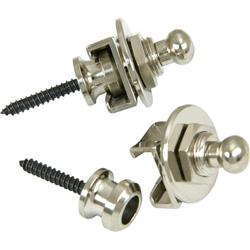
The title kind of sounds like a spam ad, doesn’t it? But it’s totally serious!
We’ve all heard of or even personally experienced guitars straps coming off their strap buttons, potentially causing serious harm to them. I’ve played for years without mishap without using strap locks. I’ve had some close calls, but no catastrophic accidents. My buddy Phil warned me awhile back that I was just asking for trouble by not having them on my guitars. I just said, “Yeah, I know I should do it, but hey, I’ve been lucky so far…”
Well, my luck almost ran out because I almost had a terrible mishap the other day. If you follow my blog, you know that I’ve just gotten my new Prestige Heritage Elite. I was in my studio jamming, and at the end of the song I was jamming to, I did a harmless thing: I reached over to my amp to turn it down; at which point, my body must’ve been at the right angle, and the strap came off the bottom strap button. My guitar quickly swung toward my amp, aimed straight at the grille cloth! Luckily for me, I was able to catch the guitar and press it against my leg to prevent it from doing any serious damage to either itself or the amp!
Soon after, I put the guitar down, turned off my amp, walked back into the house, told my wife I was going down to the local music store, got in my car and got a set of strap locks. I will NEVER be without strap locks again! Once I got them, it literally took five minutes to install them, and I thought that this would be good forum to share my experience, and to share how I installed them.
Installing the Strap Locks
I got Schaller strap locks because I could also use the locks on my Strat that came stock with Schaller butttons (Fender owns Schaller), so it was a no brainer to decide. So here’s how I did it:
- First, remove the original buttons with a screwdriver.
- When they come out, you’ll probably notice that the screws are a bit thicker with wider threads than the Schallers. This is not a problem.
- To be safe, as opposed to using pure wood filler (I used Plastic Wood because it dries evenly), I happened to have really thin dowel material that I could use as a shim in addition the wood filler. I placed the dowel in the screw hole, and marked where it would be flush with the surface of the guitar, then simply cut that length.
- Once the dowel was cut, I put some Plastic Wood into the screw hole, and with a toothpick, spread it up and down the hole. Take your time with this, and be as neat as possible. Then I wiped off the excess from the hole, then inserted my dowel. This made some Plastic Wood ooze a bit, so I cleaned that up as well.
- Then with my little power drill, I screwed in the new Schaller button.
- Repeat steps 3 – 5 for the next hole.
- Let it dry for a couple of days.
- Install the locks on your strap. That’s it!
That process took literally ten minutes! My strap ain’t coming off any time soon!
Posted in GAS, gear, guitar gear, guitarists, Guitars, Music, musicians | Tagged GAS, gear, guitar, guitar gear, guitar maintenance, guitar repair, guitarists, Guitars, Music, musicians, strap locks | 1 Comment »
 This is one of the toughest songs I ever wrote; not from a technical standpoint, but from an emotional one. It’s really an emotional purging. I’m glad I got through it!
Anyway, give it a listen and let me know what you think! Thanks!
Gear Used:
Guitars: Prestige Heritage Elite and Strat
Amps: Aracom VRX22 and Fender Hot Rod Deluxe
The VRX22/Heritage combo is just insane! You gotta check this gear out!
Aracom Amps : http://www.aracom-amps.com
Prestige Guitars: http://www.prestigeguitars.com
The only effect I used was my lovely Hardwire RV-7 reverb on my VRX22 (this is by far one of the best reverbs I’ve ever used). I also used the spring reverb in the Hot Rod.
And lest I forget, I used my trusty V-Picks “The Snake” pick for the lead. What an incredible tone it produces.
Posted in gear, guitar, guitarists, Guitars, Music, musicians, new song | Tagged guitar, guitarists, Guitars, Music, musicians, new song | 4 Comments »
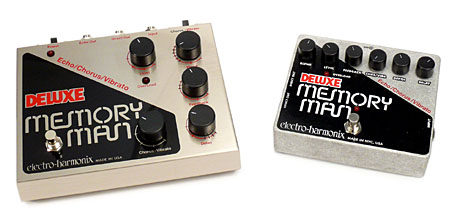
When I first saw the pictures of the new Deluxe Memory Man, I wasn’t too impressed only because I didn’t see the actual size difference between the old and the new version. But Electro-Harmonix has done it: They’ve made a DMM with a smaller footprint. I’ve played the DMM before, and really dug it. There is a certain mojo about this analog delay. But I never considered it because of the real estate it would require on my already space-starved board (though admittedly, it’s time to get a bigger board if I want all my pedals on a single board). Now, with it’s smaller size, this is definitely a pedal I’m going to consider – especially since I’m in the market for a good delay pedal. In any case, here’s the press release from EH:
The original Deluxe Memory Man is considered to be the finest analog delay ever designed. Organic and musical, it has been used by rock and Roll legends and countless musicians since its introduction in 1978. With the desire to make a flawless and smooth transition, Electro-Harmonix proudly announces the “new” Deluxe Memory Man in our rugged and pedal board friendly die-cast enclosure.
Exactly the same components are used in order to maintain the superior analog sound with exactly the same performance qualities. In this case, downsizing to a more rugged chassis was important and only second to maintaining the legendary sound. The exact same sound!
The original Deluxe Memory Man will still be available for a limited time. Musicians in the US and UK can now choose to get the new Deluxe Memory Man, or opt to get the classic. Musicians in the EU can now choose to get the classic original (as right now they only get the die-cast)
Posted in announcements, buying gear, delay, effect pedals, GAS, gear, gear announcements, gear find, guitar, guitar effects, guitar gear, guitar pedals, guitarists, Guitars, pedals | Tagged effect pedals, Effects, GAS, gear, gear announcements, guitar, guitar effects, guitar gear, guitar pedals, guitarists, Guitars, Music, musicians, new gear, pedals | Leave a Comment »
 Guitar Gear